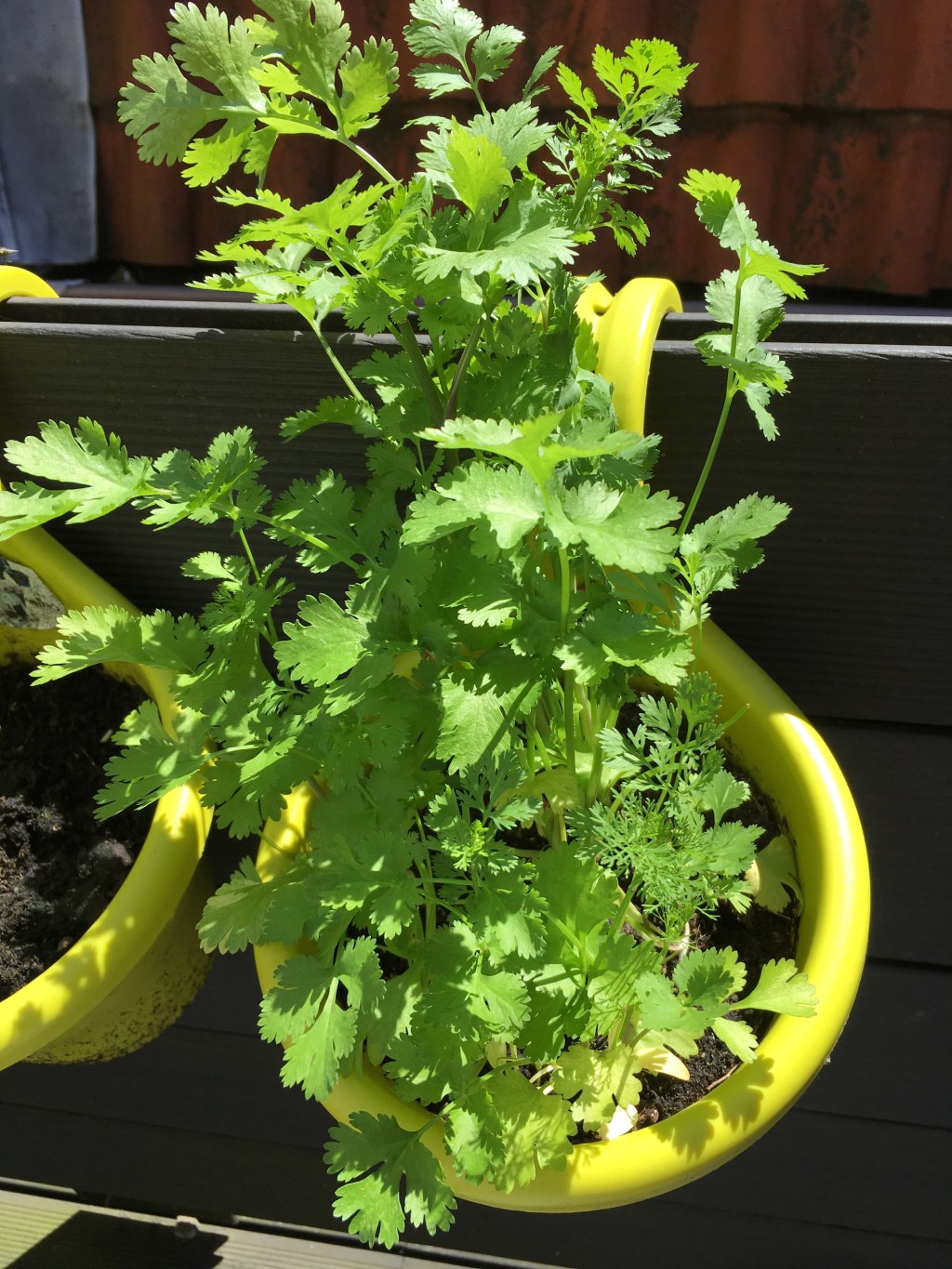
I started growing coriander because of my food waste aversion.
For the many Vietnamese and Thai dishes that I like to cook, the leaves of a coriander plant (or cilantro in American English) are often needed but not of a substantial quality. It means whichever is left from a supermarket bunch will end up in the fridge, rapidly turning mushy brown and (even more rapidly) losing their signature coriander smell.
One day a few years ago, after throwing away so many half-used, supermarket-packed coriander bunches, I decided it was enough.
The first transition was to buy coriander pots from the supermarket. They did last a bit longer, but hardly over a week. Ian told me that those containers were designed to give shoppers the maximum leaves in the smallest areas. They look like they offer good value for your money, but that’s all. You often can’t keep growing those plants.
So, my problem was left half-solved.
Till the day I bought, on the spur of the moment, a big plastic pot and some soil from my local florist to re-pot a supermarket pot. Somehow, the coriander plants flourished. Perhaps it was beginner’s luck. (All the gardening guides I read later on unanimously advise not to report coriander to avoid bolting)
I put the repotted coriander on our balcony, watered it, and untangled the fragile branches at the end of most windy days. They grew taller, thicker, and so fragrant that I decided coriander was my new black.
I went back to the florist and got some more soil and cheap plastic containers. The seeds I bought from the supermarket are also nothing fancy. Yet, that’s how it all started.
My potted coriander plants aren’t always strong and healthy. Many died before reaching 20 cm high. Some didn’t exactly give me as many leaves as I hoped for, but all in all, growing coriander gives me so much joy and allows me to be more spontaneous with cooking and more generous with garnishing my stir-fries, noodles, salads, and so on.
Care for Pot Corianders
Most plants need sunlight and water, but the specific details depend on where you live and how much space you have. I’m growing coriander in the temperate area of Northern Europe. It means a sunny and fairly warm summer, a wet and cold autumn but little snow over the winter. I put my coriander plants in medium-sized plastic pots so that I can move them indoors when the weather is too cold, wet, and windy, which is not uncommon in this seaside town.
Sunlight
Coriander likes the sun, but it can bolt and start flowering if it’s too hot. Some shade in the afternoon is good if you want bigger foliage.
Space
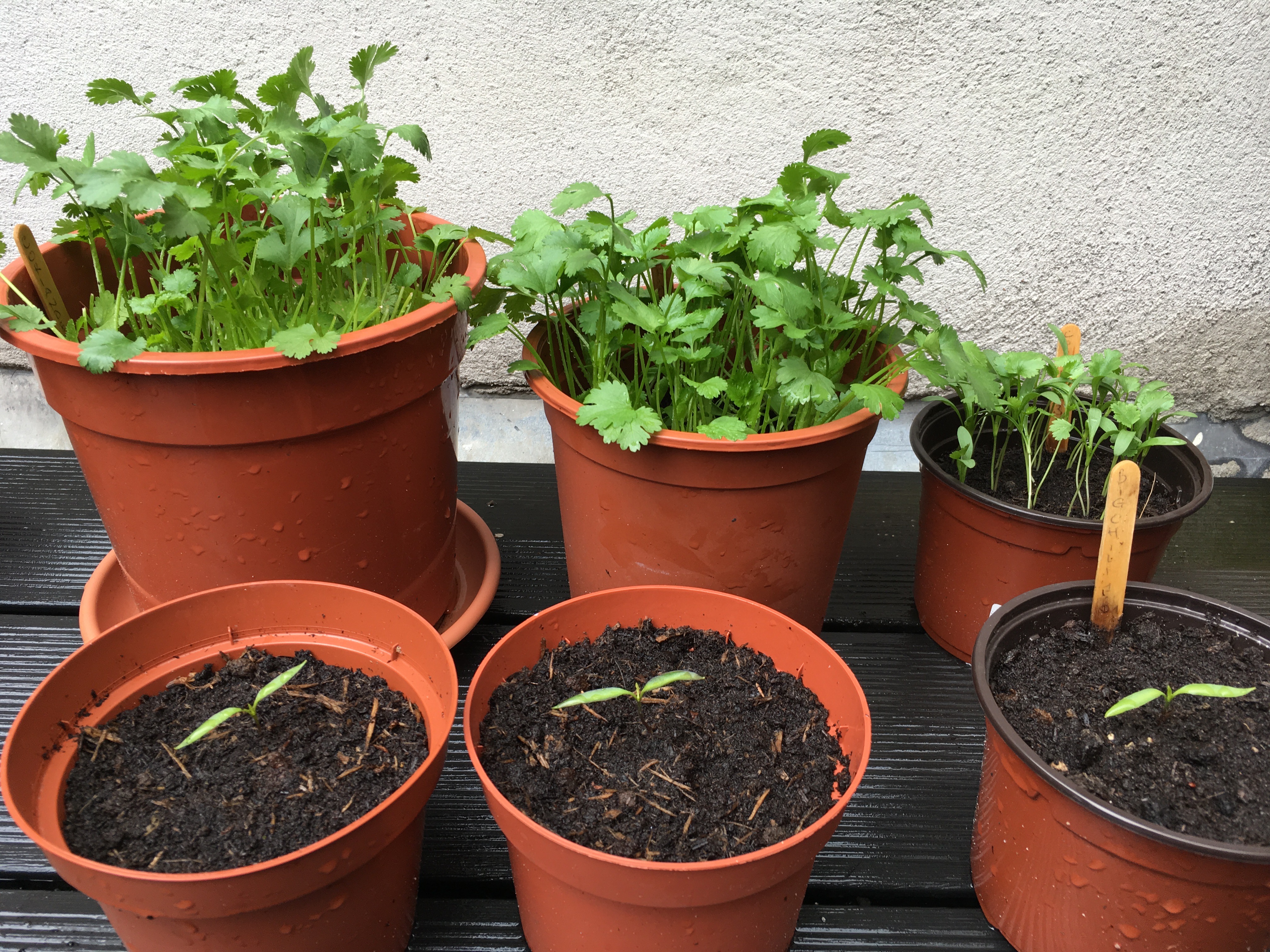
Most coriander seed packages would tell you to space the seeds out every 12-15 cm.
(Full disclosure: I don’t do that, really. The coriander plants are so small and fragile that I feel they would be lonely being so far from each other. I usually spare 5-8 cm in between each seed.)
Deadheading
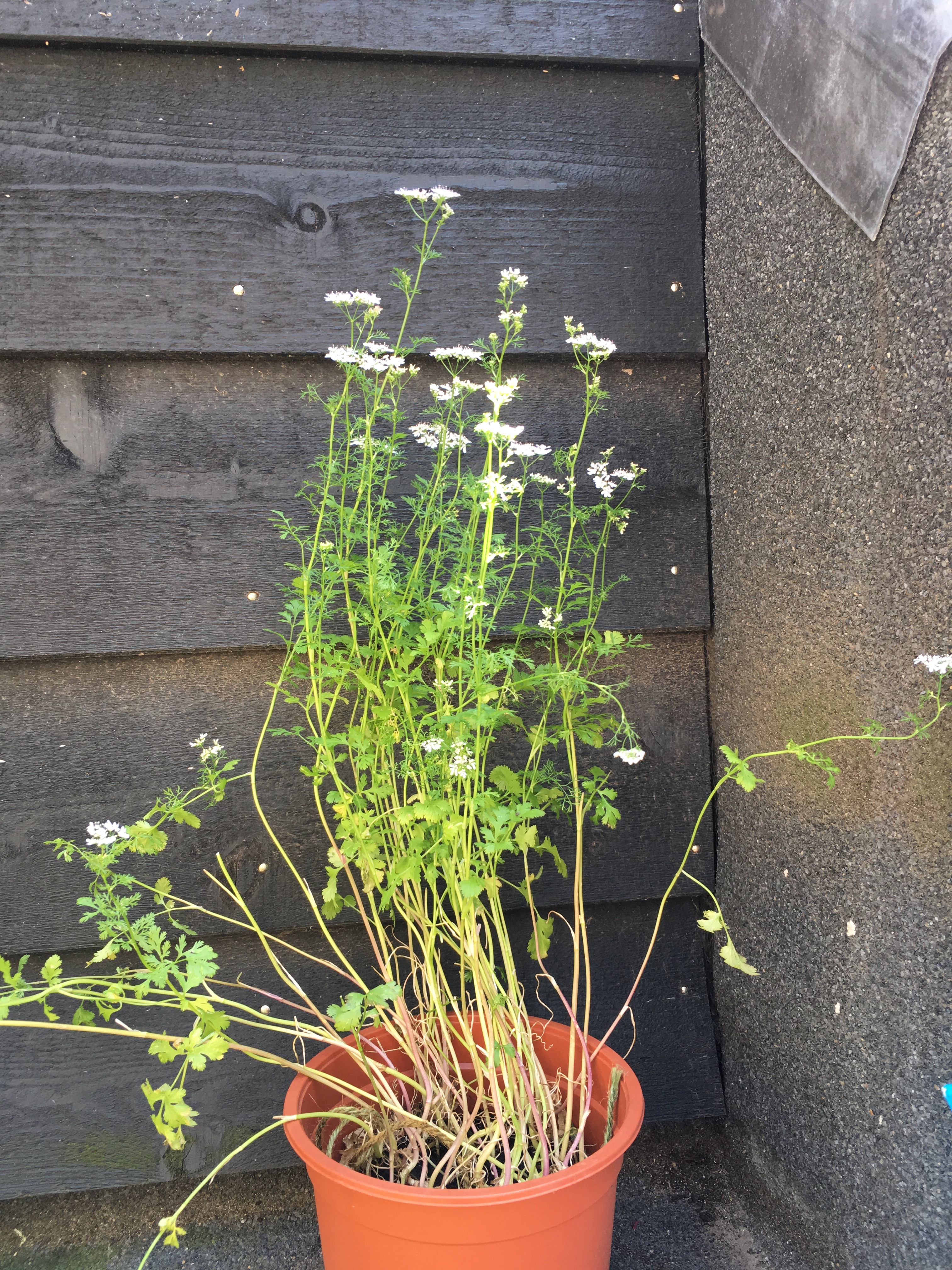
This term sounds dreadful, but all it means is that you should cut off the top of a plant when the leaves grow smaller and flower buds appear. People do this to prevent seeding and prolong the leave harvesting period.
In my experience, when a plant starts to show the sign of wanting to flower, there’s not much you can do to stop it. My plants seem to do this randomly (probably just to mess with me).
Bolting Coriander
I found it’s more efficient to sow the seeds every few weeks instead of deadheading. If some plants start to flower too early, I just let them be and harvest the seeds at the end. I always seem to have a backup for the leaves by growing new pots regularly.
Untangling
I treat untangling coriander leaves like therapy. It clears my mind. I feel it helps my plants, but I never did an experiment to prove the inkling or read anything claiming the benefits of untangling.
If you enjoy this post, you might also appreciate our FREE cheat sheet with 12 Tested Gardening Ideas for Small Spaces.


The Use of Coriander
I would say that coriander uses are in plenty, as far as herbs in small gardening spaces go.
Leaves
I use coriander leaves for salads, noodle soups, salsa, and guacamole.
Seeds
The seeds can be used to grow the next batch of coriander or in Indian curries. I do the former, and my husband does the latter.
Roots
The use of coriander roots is a recent discovery to me. Lately, as my eating has become a bit picky, I have tried to cook the most-known dish in Vietnamese cuisine: Pho.
Most Vietnamese eat pho in a market stall or in a restaurant. My family never cooked it at home, and I didn’t know anyone who did when I lived there. Since I am away from home, the options are much more limited, but the idea of not cooking pho at home is so ingrained that I only set out to prepare pho myself in the 8th year I lived abroad.
And the discovery: coriander roots make the Pho taste.
Man, I have eaten and loved the dish my whole life, and now I know 😀
Pho is another reason for me to love coriander.
Winter Coriander
I haven’t tested this practice yet, but I read about it from my favourite garden blog Vertical Veg. Mark wrote that coriander doesn’t bolt in the winter and would come out with a much stronger flavour in spring. You need to sow the seeds before mid-September and don’t do any cutting until spring. Don’t be tempted by the fragrant leaves. Keep them out of the wind and cover up if there are snow and frost.

Here is one of my winter coriander pots I keep indoors to admire daily. The rest is currently outside, suffering constant November rain. What doesn’t kill you makes you stronger, right?
Before I go, I just have to share the tango between coriander and mushroom. This is not why I grow coriander, but I treasure the spectacle all the same:
Plant Companions for Coriander
Coriander can grow with other tender and shade-tolerant plants like chervil. Grouping different herbs into bigger containers helps save water and maximize your space.

 Grow More With Less
Leave a comment