I started growing plants in a tiny space: the modest balcony that came with our massively overpriced Amsterdam flat.
As the planting experiment turned into a true hobby and then an obsession, the balcony was taken over by containers of all shapes and sizes. Unknown to me then, I was lucky with the sun and the heat on that balcony, or else I would not have been able to keep so many healthy plants growing in such a cramped space.
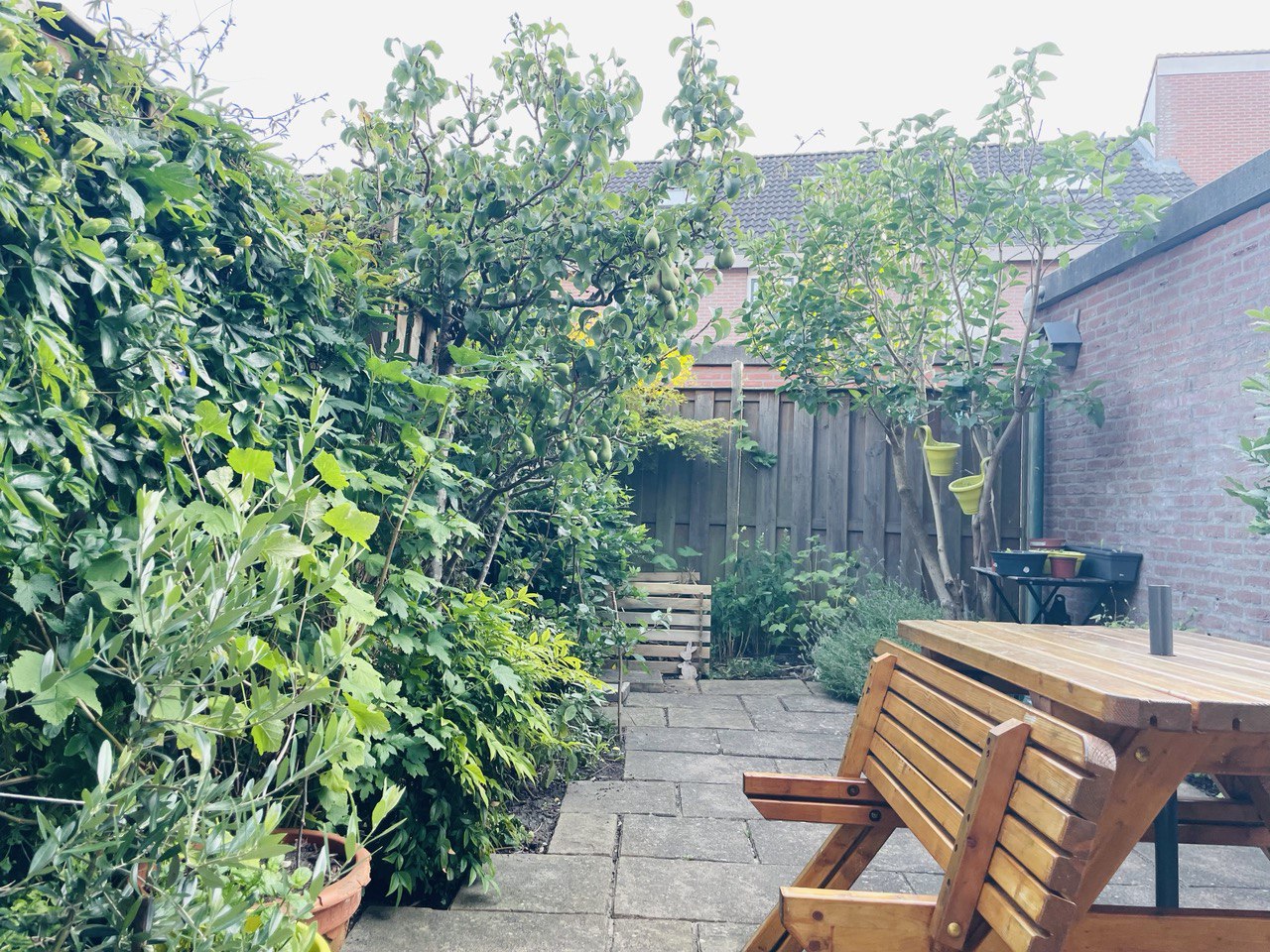
Six years and two roof terraces later, I got my first garden. It was rather bigger than my previous gardening hideouts. Yet, the previous owner seemed to share the same obsession with me. After the first summer in the new house, I started to see the magnitude of plant companions left in my care: It was a lot relative to the garden size.
So, I was forced to seek out and experiment with techniques that optimise and increase the growing space (to add more plants of the flavour, taste, and smell that I like).
- Put Up That Trellis
- Make Use of Containers
- Grow Plants in Squares
- Opt for Two-Dimension
- Plant in Succession
- A Few Final Words
Keep reading for the five techniques to help you maximise your growing space and nurture more plants.
Put Up That Trellis
Vertical gardening techniques are one of the most effective ways to increase your growing space. Instead of relying solely on ground space, vertical gardening involves growing plants upwards on trellises, walls, or specially designed structures.
Vining plants like cucumbers and beans are excellent candidates for vertical gardening. You can save precious ground space by training them to climb a trellis and create a visually stunning garden.
Additionally, vertical gardening allows for better air circulation and easier access to plants for maintenance and harvesting.
Make Use of Containers
Container gardening is ideal for those with limited outdoor space. Using pots, hanging baskets, or raised beds, you can grow various plants on patios, balconies, or indoors. Herbs, flowers, vegetables, berries, and even dwarf fruit trees can thrive in containers.
Note: Choose containers of different sizes and shapes to accommodate plants with varying root depths.
Growing plants in containers provides flexibility as you can easily move the containers around to take advantage of the best sunlight and protect delicate plants from adverse weather conditions.
Container gardening can be coupled with vertical gardening to increase your growing space. Pots can be stacked up on vertical shelves, hooked onto a trellis, or hung over the rail of your balcony, enabling multiple layers of greenery.
Raising the pots has another advantage: potted plants are further away from the team of slugs and snails, who are always hungry for your seedlings and young plants.
Grow Plants in Squares
Square-foot gardening is becoming increasingly popular, especially in urban areas, as this technique is highly space efficient. Instead of traditional row planting, plants are closely spaced in grids.
This method minimises wasted space between plants and promotes a dense, lush garden. By carefully planning and arranging your crops, you can grow more plants and increase overall yield.
Intensive planting also makes weed control more manageable and conserves water by shading the soil and reducing evaporation.
If you are enjoying this post, you might also appreciate our FREE cheat sheet with 12 Tested Gardening Ideas for Small Spaces.
Provide your info for a link to the downloadable resource and be opted into our email list for the (very) occasional product promotion.


Opt for Two-Dimension
Espaliering is the technique of training and growing a woody plant on a flat plane, opting for a two-dimensional shape instead of the natural three-dimensional form.
An espaliered tree usually has a central stem and several tiers of horizontal arms, compact enough to thrive in smaller spaces.
The two-dimension trees also allow more sunlight to reach the lower level, where you can grow different types of shrubs and ground cover plants other than shade-tolerant options.
Plant in Succession
Consider employing succession planting to make the most of your growing space throughout the growing season. This technique involves staggering crops so that as soon as one crop finishes, another is ready to take its place. By carefully timing your crops, you can ensure the specious ground doesn’t lay empty for an extended period.
Succession planting is especially useful for growing annual vegetables. For example, in the same spot, you can grow spinach in the spring, followed by a relatively short-season summer crop like peas, and then plant another fall crop like broccoli.
A Few Final Words
Don’t let the limited space deter you from growing more plants. You can create an abundant and thriving garden with creativity and strategic planning.

 Grow More With Less
Leave a comment