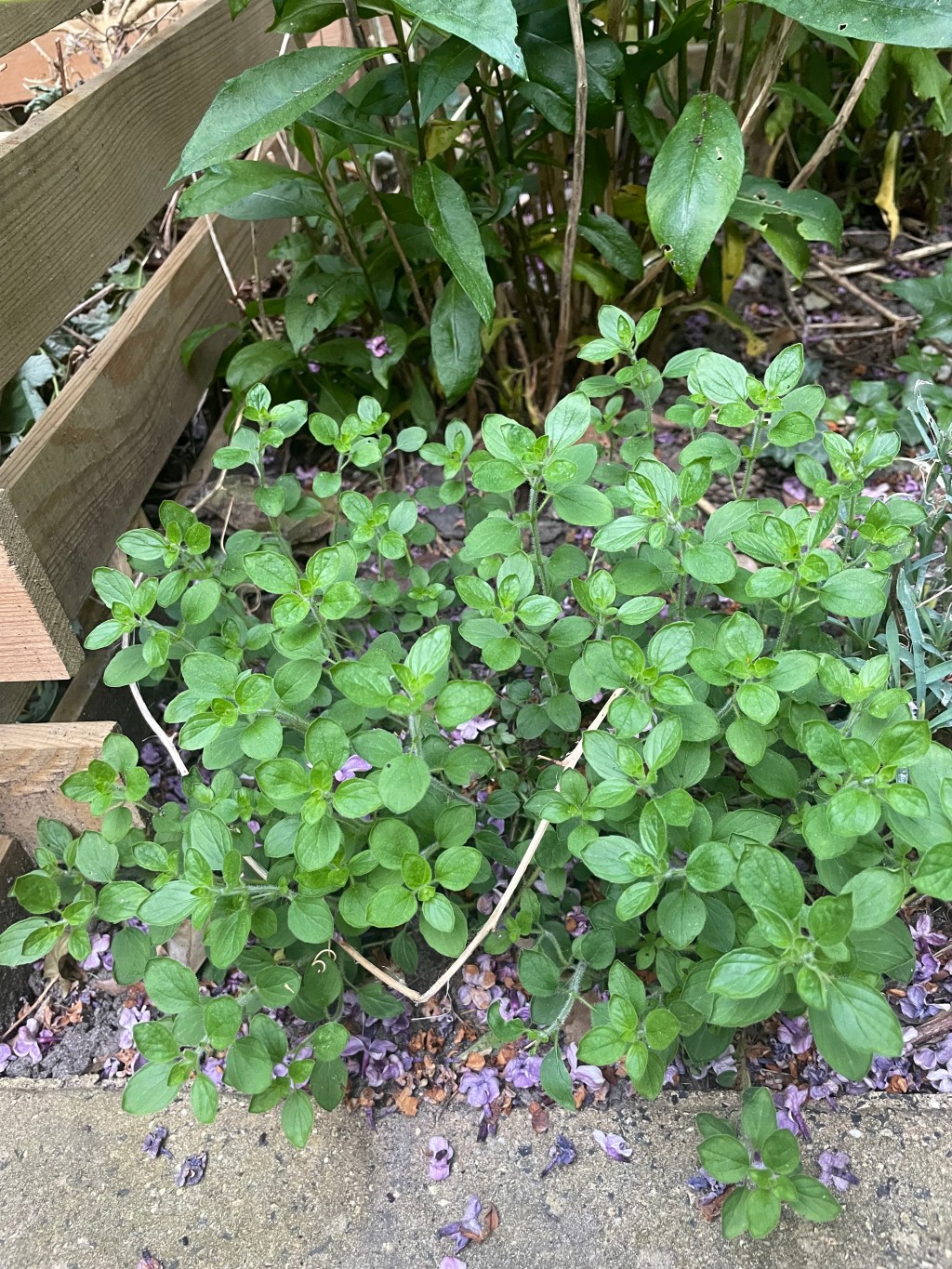
So you’ve finally got some outdoor space for growing plants. Now is the time to go to a garden centre and pick up the first plant members of your garden.
Deciding which plants to get can be overwhelming, but don’t fret; you are not alone. (Oh, how many times I’ve come home with more plants than I have the space for!)
When in doubt, remember this: Herbs work wonderfully, especially if space and time are scarce.
- There are many reasons why herbs are a strong contender in small gardening spaces.
- 10 Easy-To-Grow Herbs
- How to Choose Your Herbs
Herbs are the perfect choice for small garden spaces because they offer maximum flavour with minimal effort.
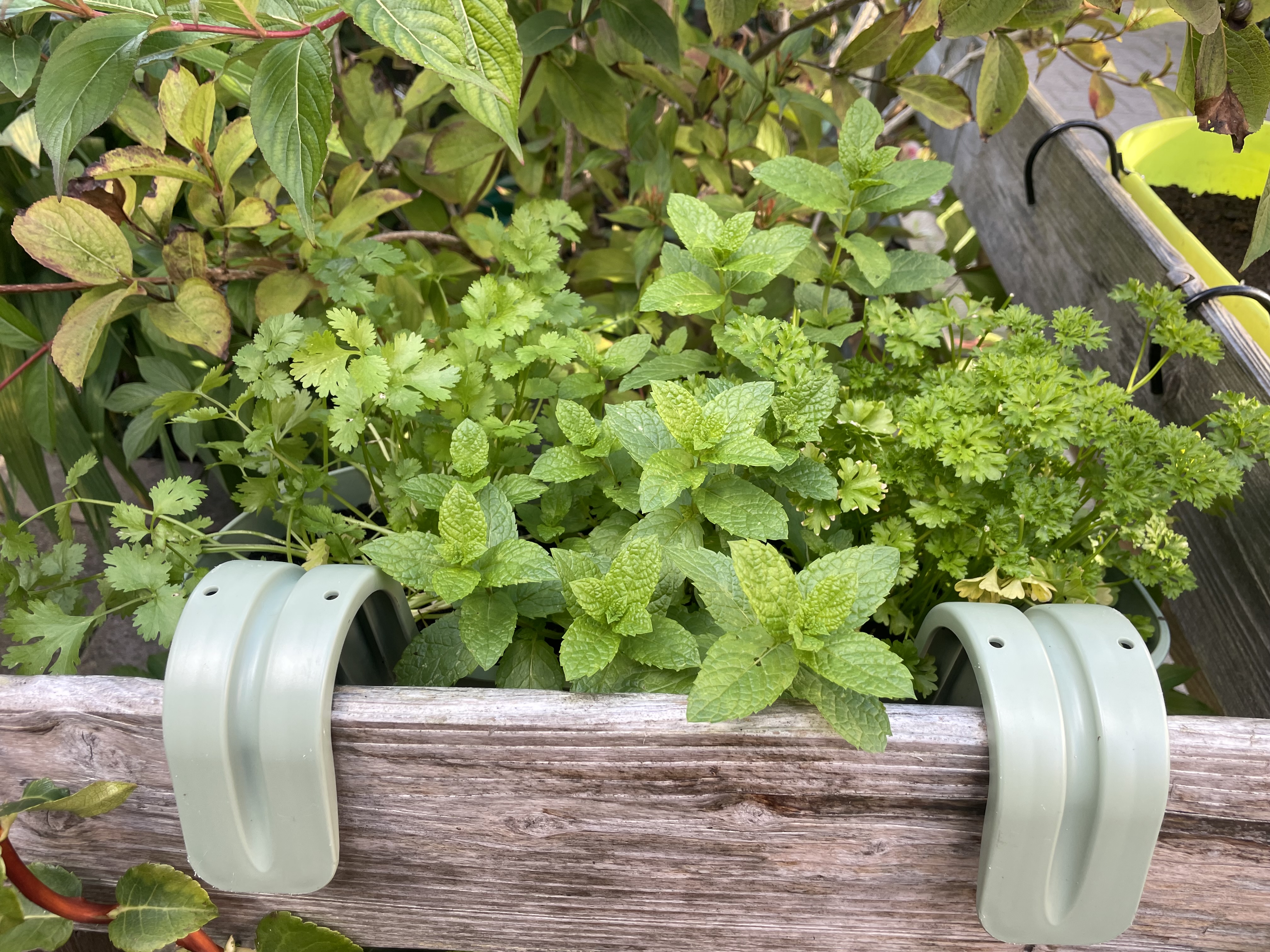
There are many reasons why herbs are a strong contender in small gardening spaces.
Compact Growth for Tight Spaces
Herbs generally have shallow root systems and can thrive in small, confined spaces. So no deep soil or extensive space needed.
Most herbs, like basil, chives, and thyme, can be grown in windowsill containers, hanging baskets, or small gaps in raised beds.
High Continuous Yield in Minimal Time
Herbs grow quickly, ensuring you can enjoy them without having to wait too long.
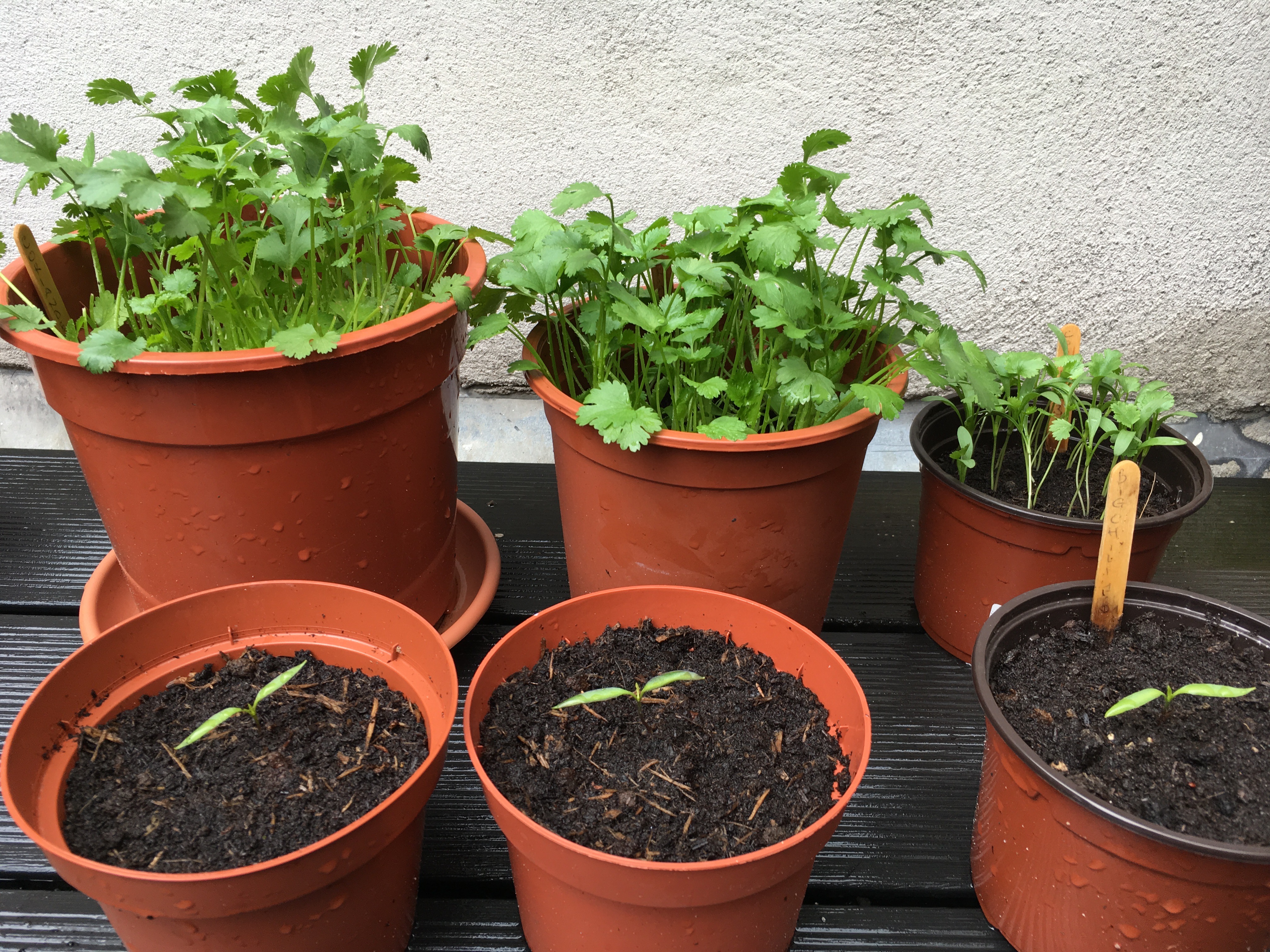
For example, under the right conditions, coriander seeds typically sprout within a week and, after a couple more, the coriander seedlings would provide the first leaves to garnish a dish.
You can shorten your wait by starting with a seedling from a nursery or a cutting from your neighbour’s plant.
Regular trimming encourages new growth. That means if you cut strategically, you can keep your herbs thriving while prolonging your harvest for months or years, depending on the herbs.
Low Maintenance, Big Rewards
Herbs require little care, making them perfect for gardeners with limited time or experience.
Most herbs will thrive with sunlight, water, and occasional pruning.
Many, like rosemary or sage, are even drought-tolerant and can handle poor soil conditions, making them dead easy to care for. And they reward you with such flavour and fragrance.
Versatility Indoors and Outdoors
Herbs can grow well both inside and outside, offering flexibility for small-space gardeners.
Many herbs, such as oregano, thyme, and mint, can flourish on a balcony, in a small patio garden, or even indoors by a sunny window.
Moreover, they can be moved from a garden bed to a pot and vice versa and be fine, providing that you take the proper hardening steps.
This adaptability makes them perfect for people with limited outdoor garden space and who might have to rely on the indoors during certain months of the year.
In short
Herbs take up little space in your garden. Many herbs are hardy perennials that come back year after year without much work from you. Yet, such unassuming fresh herbs from your garden could truly transform a dish or a drink (Yep, I am dreaming of mojito).

So now is the fun part. Here’s a list of 10 easy-to-grow herbs that you will likely enjoy their presence in both your garden and your kitchen.
10 Easy-To-Grow Herbs
These herbs are simple to grow, yet they bring a lot of flavour and versatility to the kitchen.
Basil
Basil is a versatile herb that thrives in pots or garden beds.
You can even plant basil in poor soil. As long as the soil is well-drained and in a spot with about 6 hours of sunlight a day, your basil will grow quickly, providing leaves for frequent harvest.
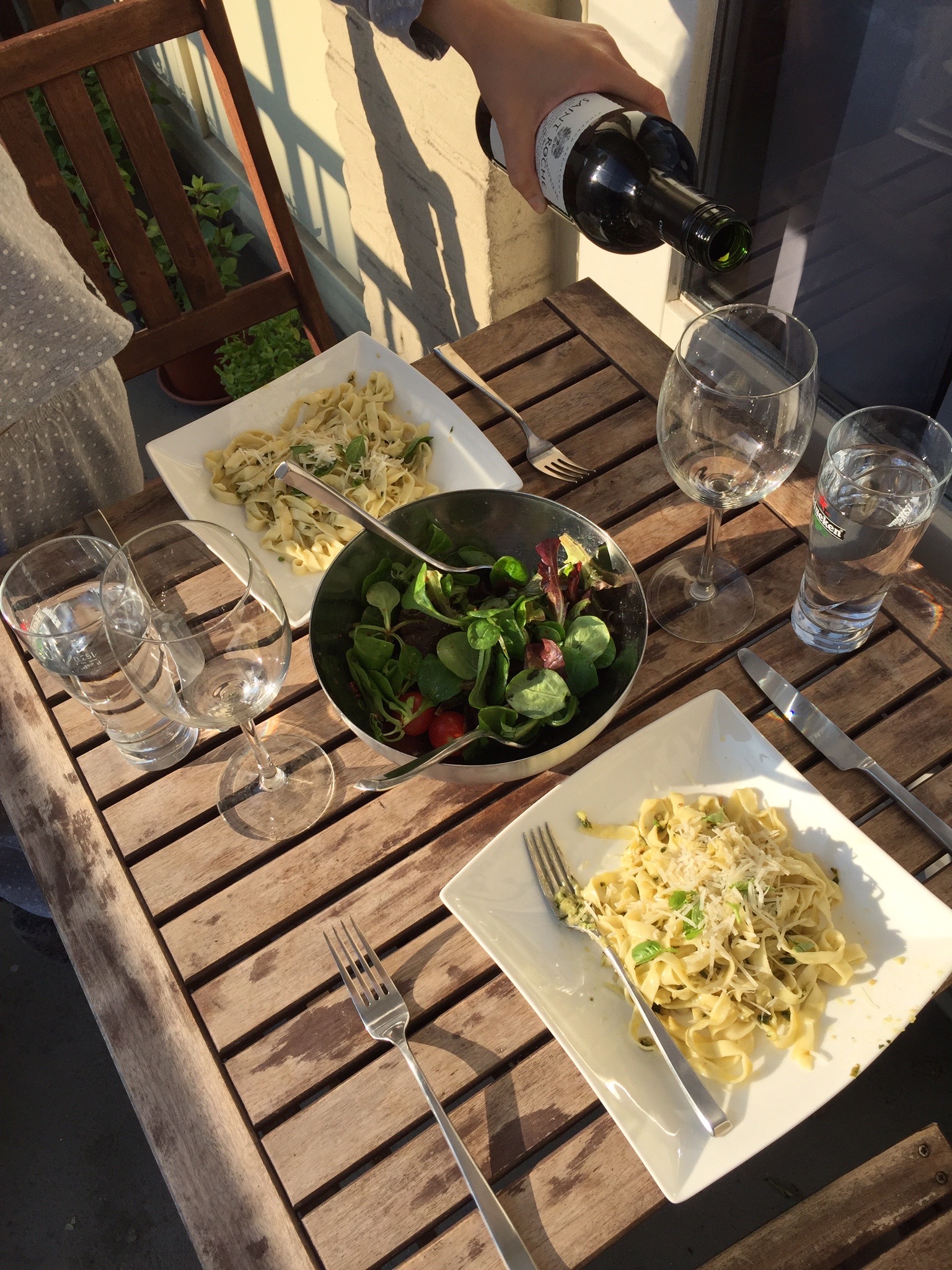
Basil leaves can be used as a salad ingredient, a pizza topping, or the base of a tasty pesto.
Parsley
Parsley is a low-maintenance herb that can tolerate different growing conditions. In places with a mild winter, it is possible to overwinter parsley outdoors and have them come back strong and early in spring.
Parsley prefers full sun but can grow in partial shade.
You can use parsley to add fresh, vibrant flavour to many dishes, from soups to sauces to salads. My favourite is mushroom risotto with a touch of chopped parsley fresh from my garden.
Rosemary
Rosemary is a hardy perennial that requires little attention once established.
Rosemary grows best in sunny spots with well-drained soil and is drought-tolerant, making it perfect for busy gardeners.
Rosemary pairs well with roasted vegetables, meats, and bread.

Mint
Mint is a perennial that grows fast and spreads easily, making it a great choice for beginners. However, mint can take over a garden, so it’s best to plant this herb in containers.
Mint thrives in partial shade and well-watered soil.
Fresh mint leaves are perfect for teas, desserts, or as a garnish in savory dishes. And, of course, mojito.
Thyme
Thyme is another hardy perennial that requires hardly any care.
It does well in full sun and dry soil, but would tolerate some shade and wetness.
Thyme can be used fresh or dried, and it enhances soups, meats, and roasted vegetables.
Chives
Chives are simple to grow years in and years out. Also, you can easily multiply your chive stock by dividing the roots and putting them into different spots/containers.
Chives grow well in pots or directly in the ground, needing minimal water and sunlight.
The herb’s versatility makes it a must-have in a kitchen garden. You can use it in many things, from an omelette to a pot of beans. Want some extra flavour in a veggie soup? Sprinkle in some chopped chives.
Coriander
Coriander is a quick-growing herb that adds a beautiful fragrance to many dishes.
Coriander prefers cooler weather, so plant it early in spring or autumn for the best results.
You can make use of fresh coriander in a variety of dishes, including curries, salsas, and salads.
Sage
Sage is a sturdy perennial that’s easy to grow and propagate by layering.
Sage likes the sun but would still thrive under the shade of bigger trees. It is drought-tolerant once established.
Sage pairs well with poultry, stuffing, and roasted vegetables, adding an earthy, savoury note.
Dill
Dill is an annual herb that grows best in cooler weather.
It likes full sun and well-drained soil but can tolerate partial shade. Regularly snip the fronds for a continuous supply throughout the season.
Dill is a great addition to salads, fish, and pickling.
Oregano
Oregano is a robust herb that grows well and returns every year.
It’s drought-tolerant and thrives in poor soil, making it easy to care for.
Oregano is essential in many Mediterranean dishes.
So here you are. These 10 herbs are easy to grow, even for the newest of gardeners, and will bring fresh, flavorful ingredients to your kitchen.

How to Choose Your Herbs
In the ideal world, you and I can grow them all, whichever herbs we fancy.
But most of us don’t live in an ideal world.
So, if you need help deciding what to pick from the list above, stop thinking like a gardener. Instead,
Think like a chef.
Grow what you like to cook with.
In addition to their flavour, chives can put on a real display of beautiful flowers. Yet, as someone who grew up eating spring onion with almost everything, I started with its bigger, less hardy cousin first, and chives only followed years later.
Think like a food packer.
Some herbs are hardier than others, able to withstand the journey from field to shop to your house. If you have to scale from the most hardy to medium hardy to not-at-all hardy herbs, where would you slot mint, basil, and coriander?
So the smart move is to prioritize growing herbs that don’t transport well (hint: coriander is one) so that you can enjoy the ultimate flavours from the windowsill to the kitchen instead of ending up with some soggy brown leaves that taste of nothingness from a package that has travelled too far and too long.
Think like a financier.
Some herbs are more expensive than others. Grow the former.


 Grow More With Less
Leave a comment