So your new garden is not exactly massive. You don’t have much ground, like between the side wall of your shed and the fence dividing your space and a neighbour’s.
But wait. Those walls and fences can be much more than rigid boundaries. They can be the extension of the ground, with which the lush greenery reaches the next level (figuratively and literally).
You just need to plant some climbers.

I still remember moving into my house with a small yet very own garden in November to see how bare and brown it was. Then, months later, in April, I found deep purple clematis blooms dangling over the fence, bringing spring back into my space.
I had a lightbulb moment and started to dig deeper (and reach higher) into the domain of climbers, with their tendrils, twining stems, and sticky pads.
After a few years, I am super proud to see lush green layers and vibrant bloomers covering new parts of my vertical space.
And here are the lessons I’ve learnt along the way.
- Choose the Right Climbing Plants for Your Space
- Provide the Right Support
- Prune to Maintain Shape and Health
- Feed and Water Consistently
- Patience is Key
Climbers, big or small, are great additions to small gardening spaces because they can create stunning visuals, edible bounties, and even an extra layer of insulation while taking up little of the precious ground.
For new gardeners, though, growing climbers might be more daunting than, for example, flowers in a pot. Though I enjoyed the learning process, I wish someone had told me some of these drops before I reached into the world of climbers, and that is why I am sharing them here.
Choose the Right Climbing Plants for Your Space
Not every climbing plant is suited for every space. Some need more sun, while others thrive in partial shade.
When that light bulb went out, I had such an adrenaline rush that I cycled straight to the nearest garden centre and picked up a bunch of climbers that caught my eye.
I didn’t want to slow down for the research.
Later, I had to put quite a few of them in the compost heap because they weren’t where they were meant to be.
So make sure you study the light conditions of the area where a climber would spread its tender stems, whether a wall, a fence, or an arch.
If you’re unsure about the light movement in your garden yet want to start anyway, pick a versatile climber that tolerates a range of conditions. English ivy, for example, is a solid choice of climber that provides attractive, year-round evergreen foliage.
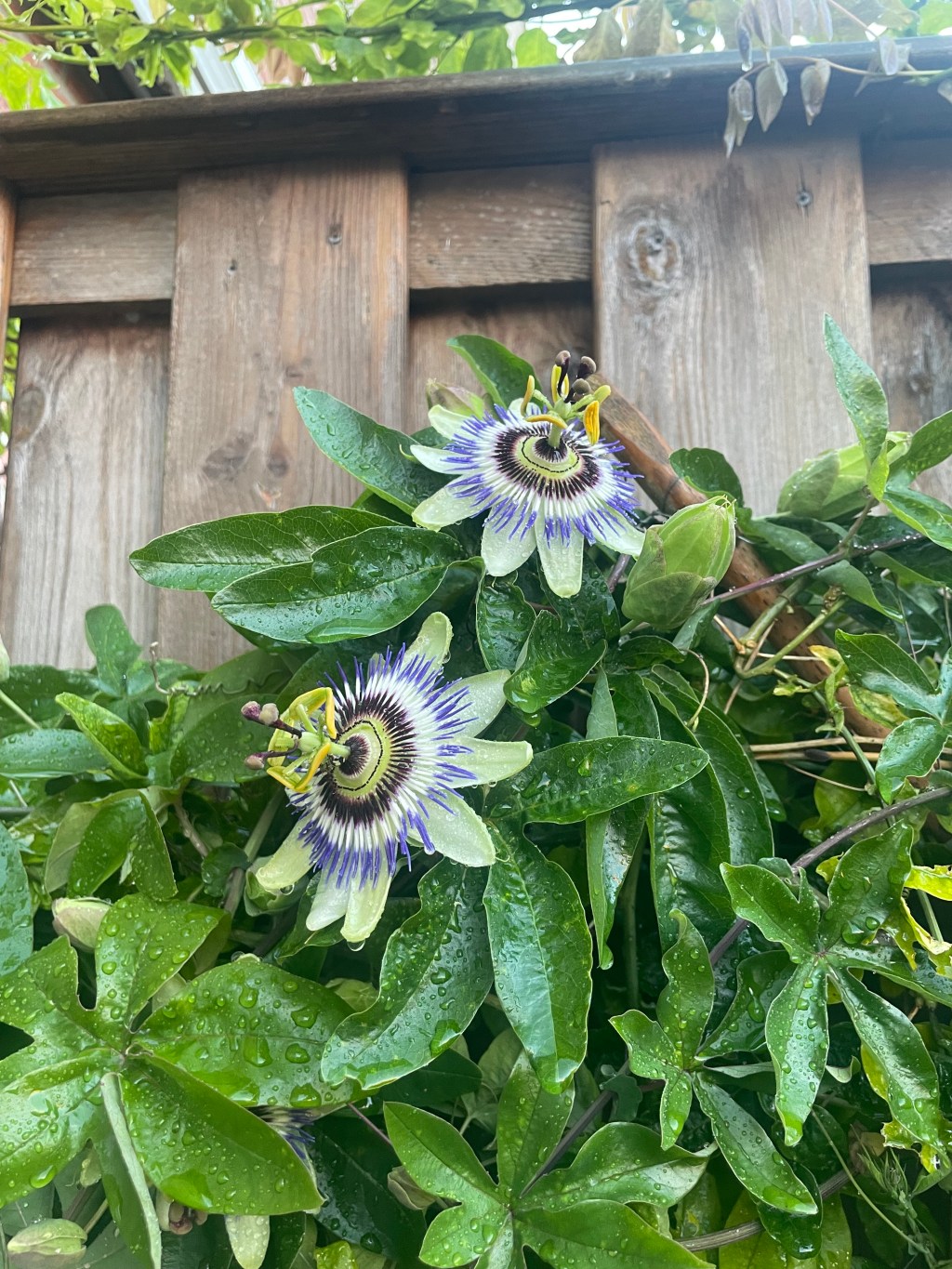
In my garden, I have vines of blue passion flower (Passiflora caerulea) that thrive in various locations and produce the most extravagant display from summer through mid-autumn.
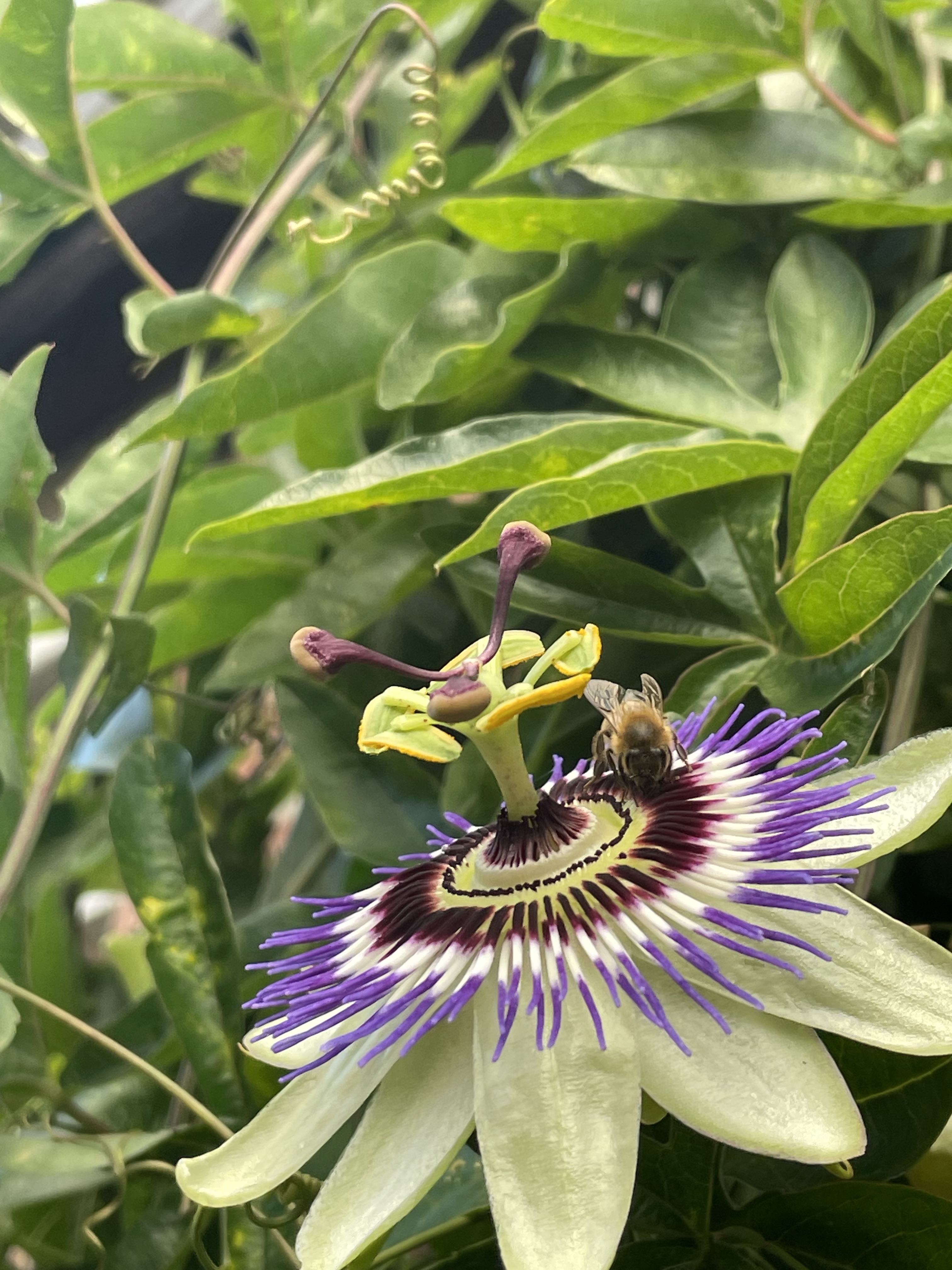
Lesson 1: Pick the climbers that fit your garden’s unique lighting, and you’ll be halfway to a thriving green wall.
Bonus: A list of climbers (and shrubs) for different settings that you might have in your garden
North-facing (shade-tolerant plants)
- Climbers:
1 Hedera helix (English Ivy)
2 Clematis montana (Anemone Clematis)
3 Hydrangea anomala subsp. petiolaris (Climbing Hydrangea)
4 Lonicera japonica (Japanese Honeysuckle, shade-tolerant varieties)
5 Parthenocissus quinquefolia (Virginia Creeper) - Small Shrubs:
1 Mahonia aquifolium (Oregon Grape)
2 Sarcococca confusa (Sweet Box)
3 Camellia japonica (Shade-tolerant varieties)
4 Pieris japonica (Lily-of-the-Valley Shrub)
5 Euonymus fortunei (Wintercreeper)
South-facing (sun-loving plants)
- Climbers:
1 Bougainvillea glabra (Paperflower)
2 Trachelospermum jasminoides (Star Jasmine)
3 Rosa ‘Pierre de Ronsard’ (Climbing Rose)
4 Passiflora caerulea (Blue Passionflower)
5 Solanum jasminoides (Potato Vine) - Small Shrubs:
1 Lavandula angustifolia (English Lavender)
2 Salvia officinalis (Common Sage)
3 Cistus spp. (Rock Rose)
4 Helianthemum nummularium (Sun Rose)
5 Hebe rakaiensis
West-facing (tolerates afternoon sun and wind)
- Climbers:
1 Clematis viticella (Italian Clematis)
2 Lonicera periclymenum (Common Honeysuckle)
3 Rosa ‘Compassion’ (Climbing Rose)
4 Jasminum officinale (Common Jasmine)
5 Wisteria sinensis - Small Shrubs:
1 Spiraea japonica
2 Potentilla fruticosa (Shrubby Cinquefoil)
3 Philadelphus coronarius (Mock Orange)
4 Ceanothus thyrsiflorus (California Lilac)
5 Choisya ternata (Mexican Orange Blossom)
East-facing (tolerates morning sun and cool shade)
- Climbers:
1 Akebia quinata (Chocolate Vine)
2 Clematis alpina (Alpine Clematis)
3 Hedera colchica (Persian Ivy)
4 Schizophragma hydrangeoides (Japanese Hydrangea Vine)
5 Lonicera x brownii (Scarlet Trumpet Honeysuckle) - Small Shrubs:
1 Daphne odora
2 Hydrangea macrophylla
3 Viburnum davidii
4 Ribes sanguineum (Flowering Currant)
5 Skimmia japonica
Sheltered spots (protected from wind)
- Climbers:
1 Bougainvillea spectabilis
2 Stephanotis floribunda (Madagascar Jasmine)
3 Passiflora edulis (Passionfruit)
4 Pandorea jasminoides (Bower Vine)
5 Campsis radicans (Trumpet Vine) - Small Shrubs:
1 Myrtus communis (Common Myrtle)
2 Abutilon ‘Kentish Belle’
3 Gardenia jasminoides
4 Rosmarinus officinalis ‘Prostratus’ (Trailing Rosemary)
5 Escallonia macrantha
Element-exposed spots (wind and harsh conditions)
- Climbers:
1 Parthenocissus tricuspidata (Boston Ivy)
2 Vitis vinifera (Grape Vine, hardy varieties)
3 Rosa rugosa (Climbing Rugosa Rose)
4 Lonicera japonica (Winter Honeysuckle)
5 Hedera helix (English Ivy, resilient) - Small Shrubs:
1 Elaeagnus x ebbingei
2 Cotoneaster dammeri (Bearberry Cotoneaster)
3 Buddleja davidii (Butterfly Bush, hardy varieties)
4 Berberis thunbergii (Japanese Barberry)
5 Rhamnus alaternus (Italian Buckthorn)
Provide the Right Support
Climbing plants need a structure to hold on to, and picking the right support can determine their growth success.
I initially underestimated this, thinking I could improvise as a climber starts to spread its tendrils. This approach does work with some climbing beauties.
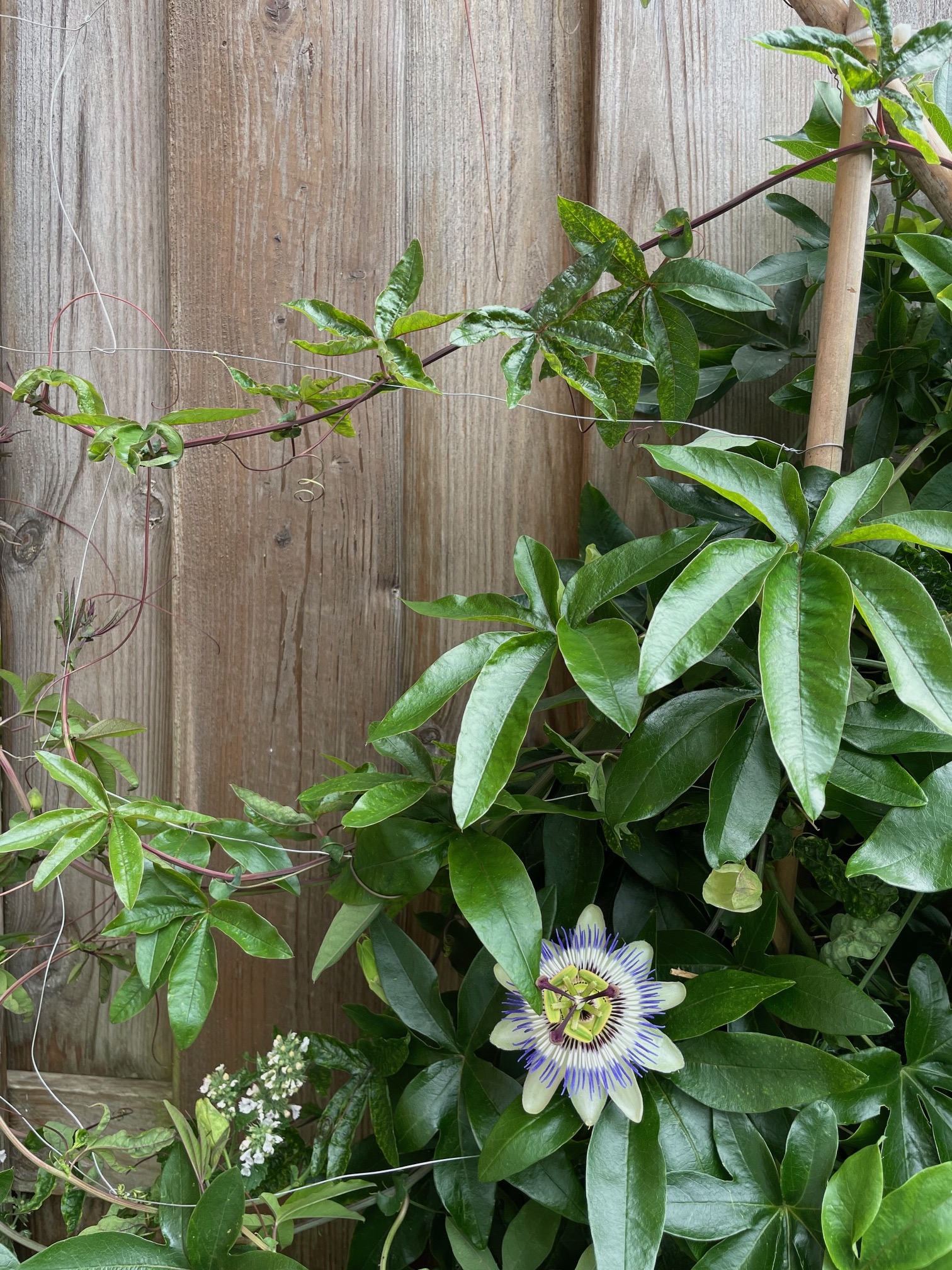
Also, some climbers like hydrangea petiolatis produce sticky pads that keep their stems fixed to a vertical surface, just like magic. No help is needed from me!
Yet, without the right trellis or support, many climbing plants would sag, sprawl, or even break. Some climbers, like clematis, need wire grids or lattices that they can easily cling to, while others, like wisteria, require strong, permanent structures due to their weight.
Lesson 2: Do your homework and prepare the appropriate supports before planting a climber.
Prune to Maintain Shape and Health
Pruning isn’t just for looks—it’s essential for keeping climbing plants healthy and manageable.
Before having my first garden with established trees, shrubs, and climbers, I was accustomed to small herbaceous plants on balcony- or terrace-sized containers. Pruning was not something I was used to.
So, at first, I was constantly afraid of over-pruning plants in my new garden. I left them to grow wild instead.
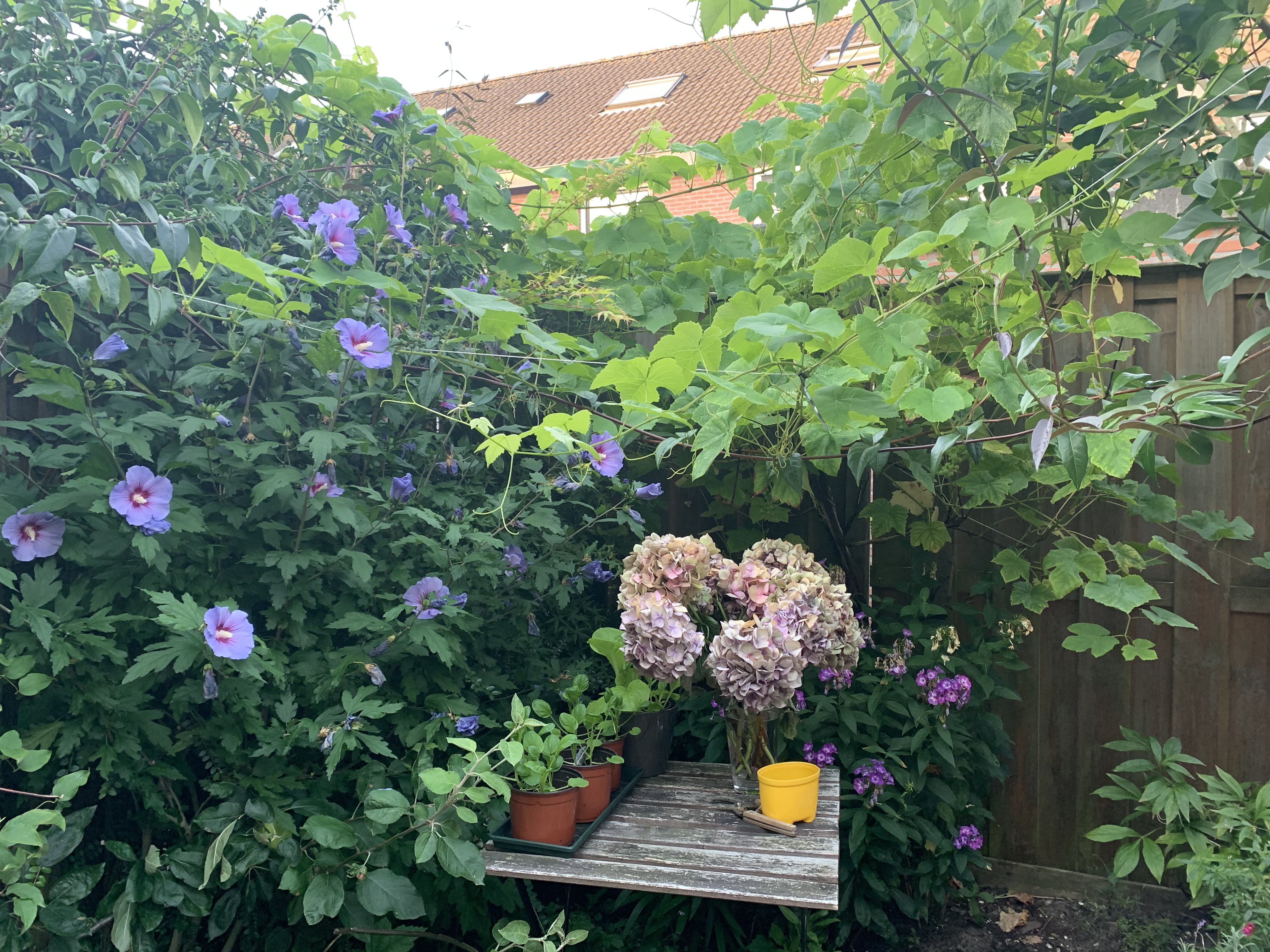
This corner of the garden has an apple tree but I didn’t see it because I let the vines be. Needless to say in the first year, there was no apple on that tree.
When I finally accepted the inevitability of pruning, I did kill one clematis because the mess was so much that I didn’t the main stem until I cut through it.
So don’t let that be you!
Regular pruning encourages growth, directs energy to new blooms, and keeps the plants from overwhelming other parts of your garden. With frequent trimming, you remove any dead or damaged vines and shape the plant as it grows. This not only maintains a climber’s appearance but also keeps it healthy.
Also, annual pruning is needed for many climbers. You should look up the best method and time to prune the varieties in your garden before picking up the secateurs for the major makeover.
Lesson 3: Prune regularly with a purpose and a plan
If you are enjoying this post, you might also appreciate our FREE cheat sheet with 12 Tested Gardening Ideas for Small Spaces.
Provide your info for a link to the downloadable resource and be opted into our email list for the (very) occasional product promotion.


Feed and Water Consistently
Climbing plants are resilient but need proper nourishment, especially when growing fast.
In my excitement, I sometimes over-watered and under-fertilized, leading to weak vines and sparse foliage. In general, climbing plants need consistent, moderate watering, allowing the soil to dry slightly between sessions. Use a balanced fertilizer monthly during the growing season to encourage lush growth. When you water and feed carefully, you will see the difference.
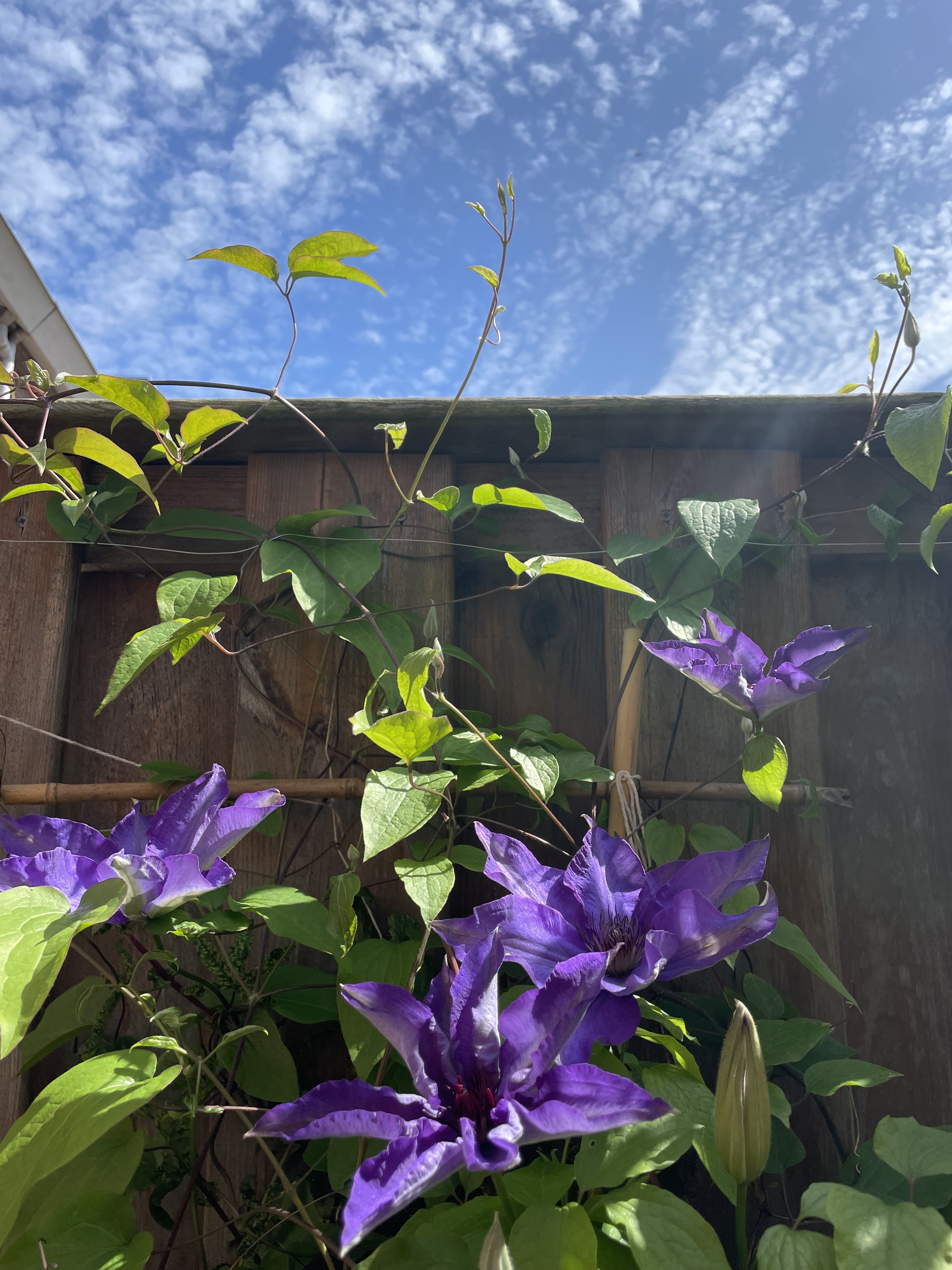
Lesson 4: A steady care routine will keep your climbers flourishing throughout the seasons.
Patience is Key
A climbing plant or two doesn’t transform a space overnight—it’s a journey that requires patience and observation.
Compared to the annual vegetables and flowers I was accustomed to, climbers seem to grow too slowly.
After my heart was stolen by a blue passion flower in my neighbour’s garden, I was thrilled to find some young ones starting on my side of the fence. But they took incredibly long to establish that I wanted to give up several times.
Oh boy, I am glad I didn’t.
After three years, I am awarded the most beautiful view outside my kitchen window, dangling yellow fruit bells against Autumn blue sky. And it was all worth it.

Lesson 5: Patience, Patience, Patience. Embrace the journey, celebrate each tiny leaf unfurling, and enjoy the process of nurturing these climbing beauties from humble beginnings to verdant marvels.
Growing climbing plants may seem daunting as a beginner, but with the right choices and care, you’ll enjoy lush green walls that transform your space. So start with one climber, nurture it, and let it teach you as it grows. In time, you’ll have a garden filled with life, colour, and the beauty of nature’s gradual work.

 Grow More With Less
Leave a comment