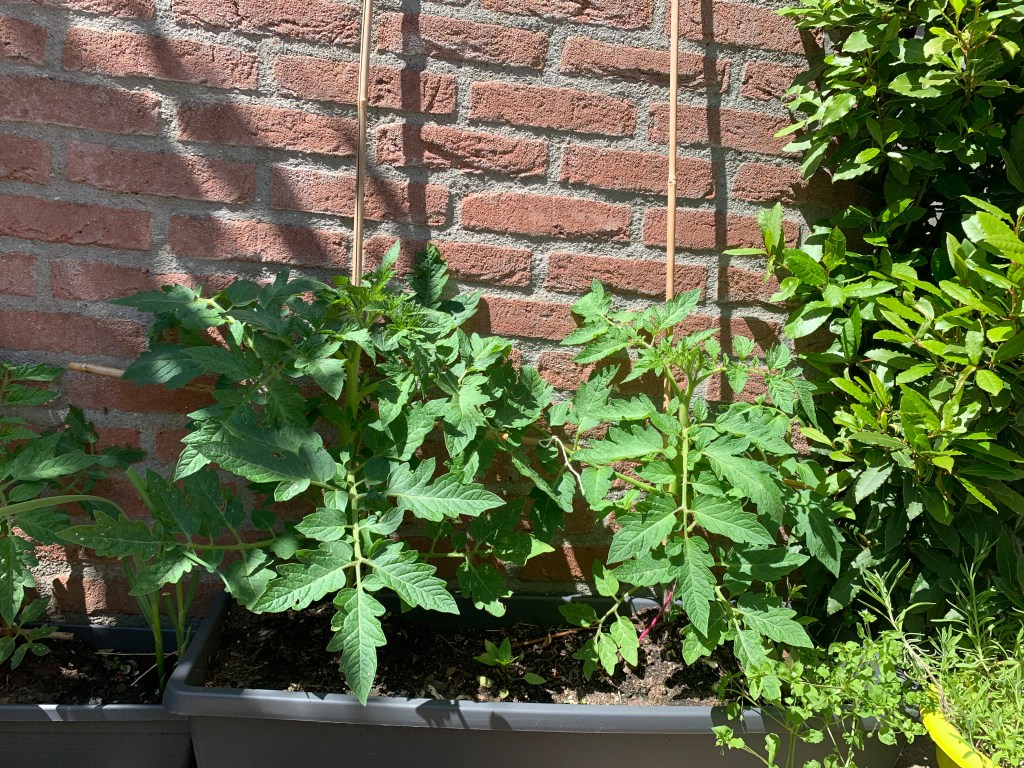
Two years ago, a good friend built a raised bed in her tiled back garden and started growing vegetables. It’s a modest square of 4 ft by 4 ft (~120cmx120cm). Yet, it has been so prolific.
Though the harvest reduced slightly in the second year, I still received steady flows of leafy greens, peppers, and chillies (because her family couldn’t eat them all). Such extra has prompted me to consider having a raised bed in our own garden. (Which gardener doesn’t like to be able to share their abundance?)
But unlike my friend’s back garden, which was empty of plants before the raised bed, mine is filled to the brim with trees, shrubs, ground covers and whichever I could squeeze into containers.
So I need to know if the benefits of a raised bed are worth the hassle and the space currently housing other plants. I have to do my own research.
On my quest, I asked myself the standard questions a sensible someone would want to know before starting a raised bed. And here are the answers I’ve found.
Why should I make the space (and spare the budget) for raised beds in my small garden?
Raised beds take up permanent space, which could be a sizable chunk of your small-ish garden. Also, they could be expensive to build (though they don’t have to).
But here are the trade-offs:
- You have full control of the soil, meaning that you could have a growing medium better than the compacted, poor, or impossible soil in the ground. For example, the raised bed soil can be enriched with a generous amount of compost for maximum growth of annuals. You also have the freedom to select special soil, such as acidic or alkaline, ideal for the type of plants you want to grow (but you can’t in your garden’s soil).
- The improved drainage in raised beds reduces the risk of waterlogging and root rot.
- A taller raised bed can offer deeper root growth than standard containers, leading to stronger plants and higher yields.
- Having a sitting-level raised bed means you can tend to the plants more comfortably (and have snails and slugs more prominently within your field of vision).
- A new raised bed built on hardscaping (rather than soil) tends to be relatively free of pests and weeds (for a good while).
- Last but not least, creating an eye-pleasing layout for your garden is generally easier with the inclusion of a big structure like a raised bed rather than the accumulation of many small containers.
In which location should I put the raised bed?
It depends on your space and what you want to grow on the raised bed.
Generally, if an annual vegetable crop is what you aim for, the raised bed should be placed in a spot with plenty of sun (6 to 8 hours). Some types of vegetables, however, do tolerate more shade and could be grown in partly shaded raised beds.
Arguably more importantly (for small gardens), these are places that you should avoid putting a raised bed:
- A spot near large trees, as the trees’ roots can compete with the raised bed’s plants for nutrients and water or compromise the structure of the raised bed.
- A spot exposed to strong wind as young annuals often found on raised beds are easily damaged by the wind.
- A spot without a water source nearby because a raised bed does need more frequent watering than the ground.
What are the ideal shapes and sizes for raised beds?
You can build raised beds of any shape and size as long as they fit your space.
But here are a few notable things:
- Raised beds are often rectangular (or square) because such shapes are straightforward to build and can be easily divided into rows of plants. But you can make your raised bed in, for example, a diamond shape if it fits your space better.
- It’s recommended not to build a raised bed too wide. The maximum width should be one that allows you to reach every spot on the bed from one of the sides. No stepping or leaning onto the surface as it could damage the young plants and compact the soil.
- While the depth of a raised bed should be determined based on the plants you grow on it, there is an ideal level you can raise it to. Somewhere between 12″ and 18″ (30-45cm) is often considered the ideal height, as it will accommodate the deeper-rooted vegetables while being more or less at the seating level. (You will find that raised beds on legs that reach standing height are nice to work with as well, but those are often much smaller in size.)
What are the best materials for making a raised bed?
The best material depends on your budget and your preferred look.
Suppose you are growing food in a raised bed. In that case, the possible presence of toxic chemicals in the chosen materials is another thing to consider.
On a raised vegetable bed, natural woods are generally the safetest option. Untreated wood with rot-resistant properties, such as black walnut, cedar and redwood, is the best if you want durability. However, those types of wood can be difficult to get hold of and are expensive to buy.
Treated and composite woods generally last longer outside than, for example, pine —an affordable option of untreated wood. However, there is a risk of chemicals used in such materials and the proximity to edibles (if edibles are the plan for the raised bed). In these cases, you can use a food-grade polyethene liner to separate the outer material and the soil.
Using a liner might also give you peace of mind if you use budget-friendly options like reclaimed bricks or galvanized metal.
(A premade kit can be a good option for someone new to a raised bed or not keen on DIY. Yet, some premade kits are rather on the pricey side. Also, you still need to check the safety of the materials unless you source food-grade raised beds from reputable suppliers. )
How much work is involved in setting up a raised bed?
It could be a lot of work, depending on the location you pick and the kit (or lack of a kit) you use to build the bed.
Generally, here are the steps involved in setting up a raised bed:
- Prepare the ground
- If placing the bed on soil, you need to remove any grass or weeds, then loosen the ground with a garden fork for better drainage. You might also want to prepare some cardboard or newspaper to lay at the base to suppress weeds.
- If placing the bed on hardscaping, ensure proper drainage by preparing a gravel or grit base layer.
- Assemble the frame
- Prepare and assemble the sides of the bed from your chosen materials (or put together a premade kit).
- If using reclaimed treated wood or other materials that might contain chemicals, line the inside with food-safe plastic or landscape fabric to prevent chemical leaching.
- Prepare the soil and fill up the raised bed
- Prepare the soil that is recommended for the plants you want to grow.
- If you are growing annual vegetables, you generally should enrich the soil with (somewhat) decomposed organic matter to increase nutrition and help other living organisms (besides plants) thrive.
- Sifting your soil is also recommended to create a fine and pleasant environment for the delicate roots of young seedlings when they start growing.
- Avoid using native soil from your garden, as it may be too compacted or lack essential nutrients.
- Don’t fill the raised bed to the top but leave room for overflow when watering.
In brief, setting up a raised bed, when done properly, can be rather involved. So, the final question is whether raised beds are worth the work, the money, and, most importantly, the precious space they take up permanently in a small garden. 👇
A Raised Bed for a Small Garden: Yes or No?
It’s probably be Yes and No.
On the one hand, if you are redesigning your space to create a kitchen garden, then YES, you should definitely consider having a suitable-sized raised bed (or even two).
On the other hand, if you try to incorporate a raised bed into an existing garden, consider your sacrifices carefully.
For me, in this growing season, it would be a NO. I think raised beds are valuable if you want to grow many types of vegetables. The number of vegetables that suit my family’s taste buds and my garden layout is relatively modest, and I can accommodate them in the containers I own. When I find more as I experiment this year and in the years to come, I might reconsider building a raised bed using all the research I have done.
If you are enjoying this post, you might also appreciate our FREE cheat sheet with 12 Tested Gardening Ideas for Small Spaces.
Provide your info for a link to the downloadable resource and be opted into our email list for the (very) occasional product promotion.


 Grow More With Less
Leave a comment