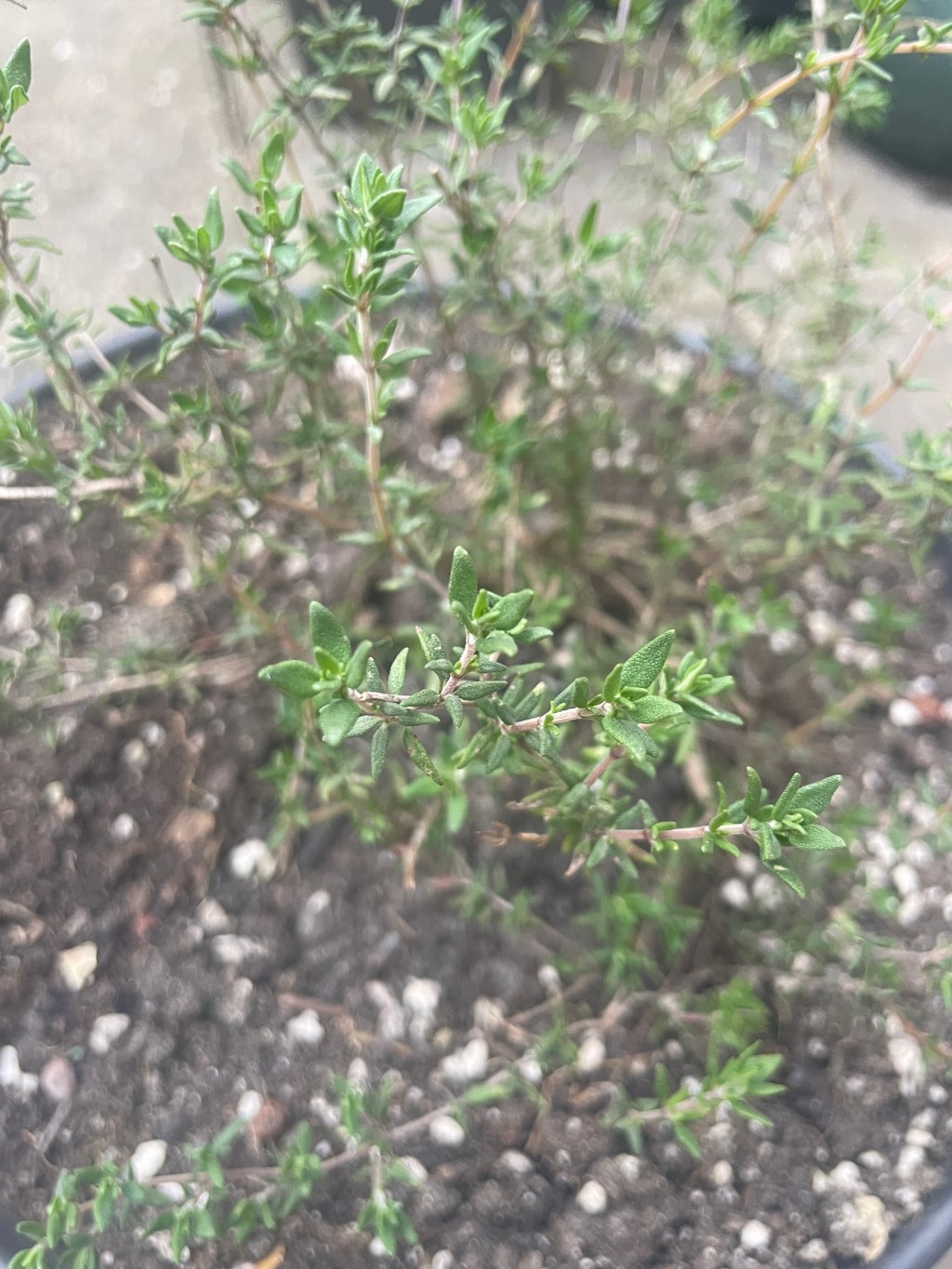
Thyme is one of the easiest and most useful herbs to grow in your kitchen garden. It’s a hardy, low-maintenance perennial that comes back year after year. You can use thyme to flavour delicious dishes—from roasted vegetables to stews and marinades. Thyme is also a great herb for brewing tea.
If you’re working with limited garden space, thyme is a great choice as it thrives in pots that won’t demand constant watering (and more like the opposite).

Read on for the dos and don’ts of growing and caring for thyme in pots (dotting around your garden or dangling over your balcony rails).
Grow Thyme: Sow Seeds or Buy Seedlings?
You can grow thyme by sowing seeds (indoors, in spring). But buying a small plant from a nursery is also a good option. The right choice for you (and there are more than two) depends on your patience and preference.
Growing thyme from seed requires skill, attention, and patience.
- Thyme seeds are tiny, making sowing them quite challenging for gardeners new to growing plants from seed.
- Thyme seeds are relatively slow to germinate. It generally takes two to three weeks before you see a sprout, providing stable moisture and temperature.
- Young seedlings need consistent warmth and moisture.
- A young thyme plant establishes fairly slowly, so you might have to wait a year before you can sustainably harvest the leaves.
Buying seedlings or young plants is a fast and reliable choice to add thyme to your kitchen garden.
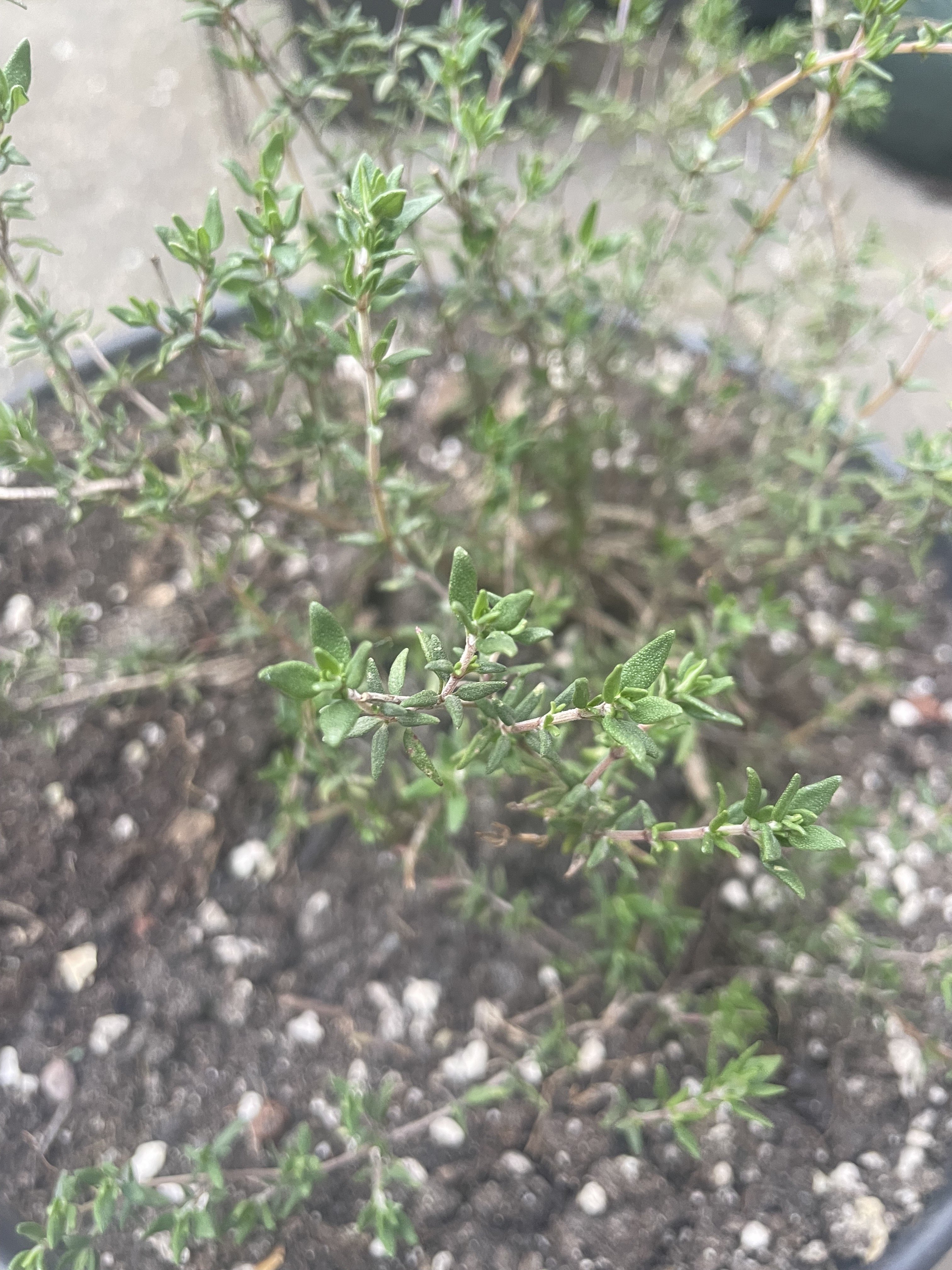
Here are a few rules to help you pick healthily potted seedlings:
- Get your thyme seedlings or young plants from a reputable nursery or garden centre.
- Pick a young thyme plant with a healthy colour (green, not yellowish leaves) and showing evidence of recent new growth (brighter green tips or leaf clusters around nodes).
- Avoid any plant that shows a lot of roots out of the drainage holes, as this is a sign the plant has stayed in a small pot for too long. In such cases, the roots are bound up and less likely to spread out when you move the plant to a new pot at home.
💡 If this is your first time with thyme, I would start by buying a seedling. Use the tips above👆to ensure a healthy pick that will thrive in your space. Once that plant is established, you can harvest seeds for sowing experiments or make new thyme plants by layering (see the instructions below).
Prepare the Pot and the Soil for Growing Thyme
Thyme thrives in well-drained soil in a sunny spot. So that’s where we start 👇
- Choose a pot with good drainage holes. A terracotta pot works well because it allows excess moisture to evaporate.
- Use a gritty potting mix: Get a mix specific for Mediterranean herbs, or mix your own using one part compost and one part grits (roughly).
- Layer gravel at the bottom of the pot to prevent soggy roots.
- Lift the pot up off the ground for extra drainage, especially with extended rain and during a cold, wet winter.
📐Pot size: Thyme is shallow-rooted, so you don’t need to use a very tall pot. It is more important to pick a pot with a larger surface as thyme naturally spreads its branches wide and low. (The extra space on the surface could be used later for layering new thyme plants.)
Condition and Care for Thyme in a Pot
Thyme loves the sun and, once established, thrives on a bit of neglect.
- Place your pot in full sun, ideally 6+ hours of direct sunlight per day. A south-facing windowsill or a sunny spot in your garden would be ideal.
- Water sparingly and let the soil dry out between waterings.
- Prune regularly to encourage bushy growth. Cut back any woody or leggy stems, and use the fresh trimmings in your cooking or a cup of herbal tea.
- Thyme doesn’t need much feeding. However, potted thyme can benefit from a light dose of organic liquid feed once a month during the summer. (If your thyme is on the ground, you might not need feeding at all.)
Possible Herb Companions for Thyme in a Big Container
If you love the idea (and the smell) of a mixed herb container (I know I do), you can try pairing thyme with other Mediterranean herbs such as sage, rosemary, or summer savoury. These plants thrive in the same conditions, and together, they create a more attractive container.
(Grouping several herbal plants in one big container saves water and maximise your space.)
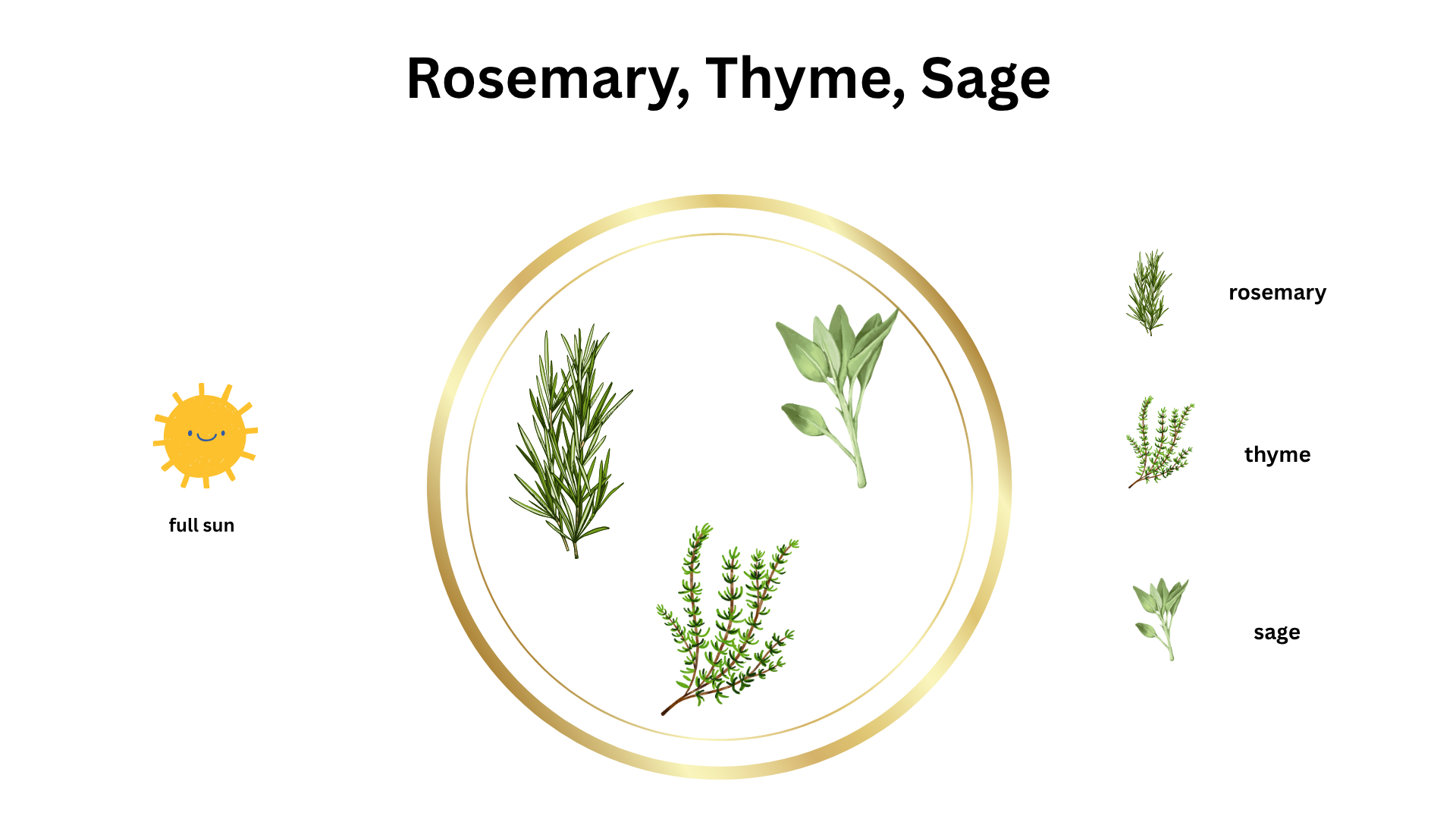
On the other hand, avoid planting thyme with moisture-loving herbs like parsley or lovage—they’ll need more water than thyme can tolerate.
Layering Thyme to Make New Plants for Free
Thyme is super easy to propagate through layering, a method in which a low stem is pinned to the soil and forms roots while still attached to the parent plant.
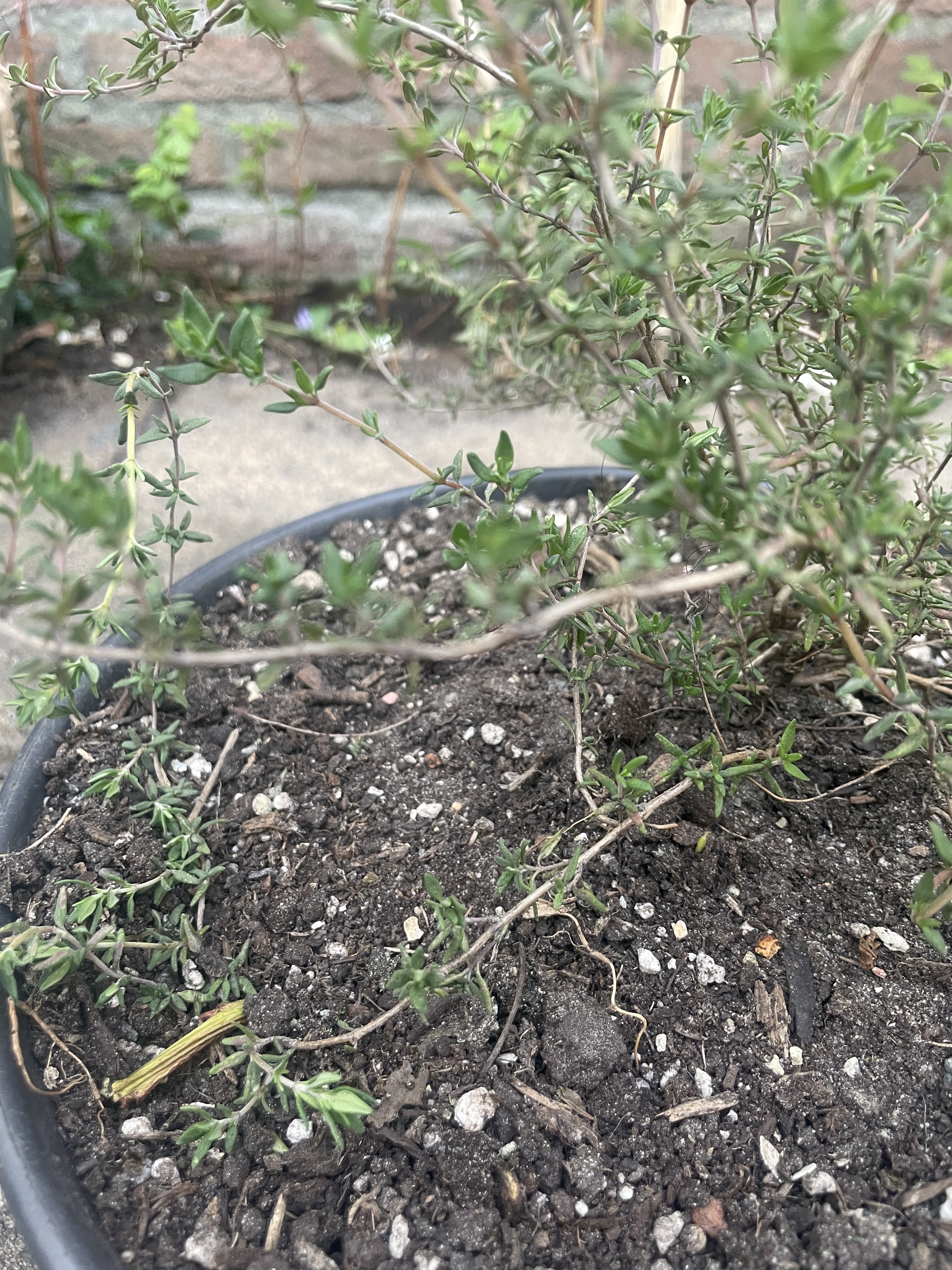
Here’s how to do it:
- Choose a long, healthy stem that’s near the soil surface.
- Gently bend it down and pin it to the soil in the same pot or a nearby one using a paperclip, bent wire, or small rock.
- Cover the pinned section with some soil, but keep the growing tip exposed.
- Water lightly and wait. Depending on the timing and the plant, new roots could come as quickly as a month. I often leave everything in place until the following spring when I would cut the “umbilical cord” 😁, dig up the new plant, and move it into its own pot.
- Enjoy the new thyme plant (at no extra cost)!
🌱 Layering works best when the plant is actively growing in spring or early summer.
Growing thyme in a pot is simple, satisfying, and perfect for gardeners working with small spaces. With just a bit of care and a sunny spot, you’ll have fresh thyme at your fingertips—and maybe even a few new plants to share with friends.
If you are enjoying this post, you might also appreciate our FREE cheat sheet with 12 Tested Gardening Ideas for Small Spaces.
Provide your info for a link to the downloadable resource and be opted into our email list for the (very) occasional product promotion.


 Grow More With Less
Leave a comment