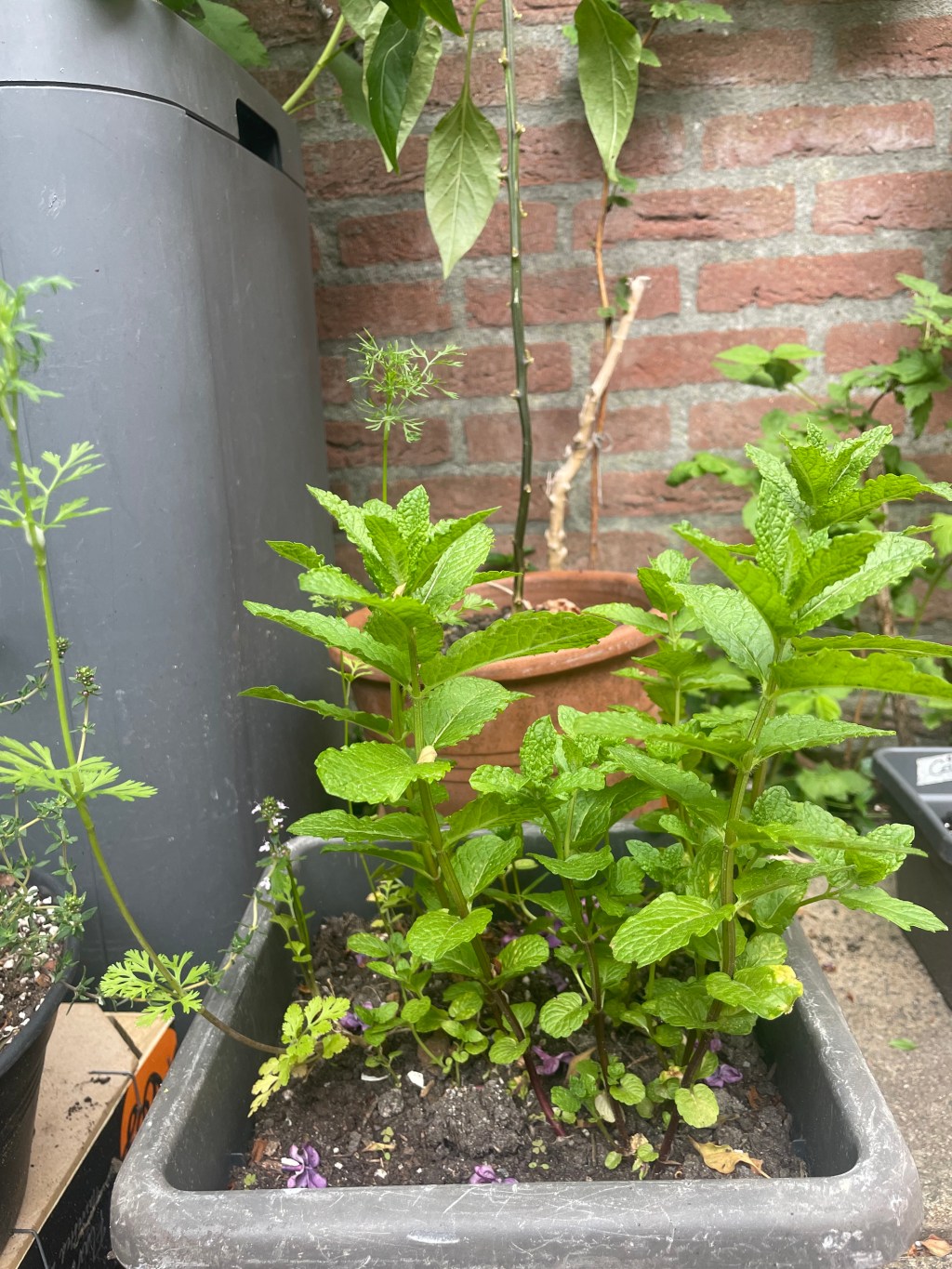
An established herb stock can make a big difference to your cooking (like how a few thyme sprigs make or break a casserole).
But growing more herbs in a small space is no small feat. Especially if you want it fast. It is achievable, though.
You can grow more herbs in a small space if you plan smartly, choose the right techniques, and use the right supplies.
Start With a Practical Plan
You have little space but want to establish a herb garden within a season. It’s doable with smart planning ahead of time.
In other words, don’t rush out to the garden centre and grab whichever herb seedlings and seeds you see. Instead, make a plan.
Start by writing down the herbs you often use (think parsley, basil, mint, coriander, rosemary, thyme, or chives). If you cook (and brew tea) with many herbs but are still new to growing them, let’s limit the list to 7 (or maybe 10 😜). It’s important to avoid overdoing it, regarding the space and the capacity. I would prioritize
- herbs that don’t travel well.
- herbs that often waste away in your fridge because supermarket packs have much more than you need for garnishing a dish or enhancing the flavour of a soup.
- herbs that are a bit exotic for your local shops, and, thus, not available locally.
- herbs that are shade-tolerant (to fill the awkward corners of your garden).
Here is my top 7 herbs if I were to start again:
- coriander (a herb that doesn’t travel well)
- spring onion (a herb that I can grow very quickly from kitchen scraps)
- parsley (a herb that I often only need a tiny amount for garnish)
- chives (a shade-tolerant perennial)
- thyme (a perennial herb that I often need a few sprigs instead of the whole supermarket package)
- sage (a perennial that produces enough leaves for our family usage even in the shade of big trees)
- Thai basil (a herb that is not available in my local supermarket)
Once you have your list, split the herbs into two groups: fast-growing herbs, like coriander or dill vs. slow(er)-growing herbs like rosemary, thyme, and sage.
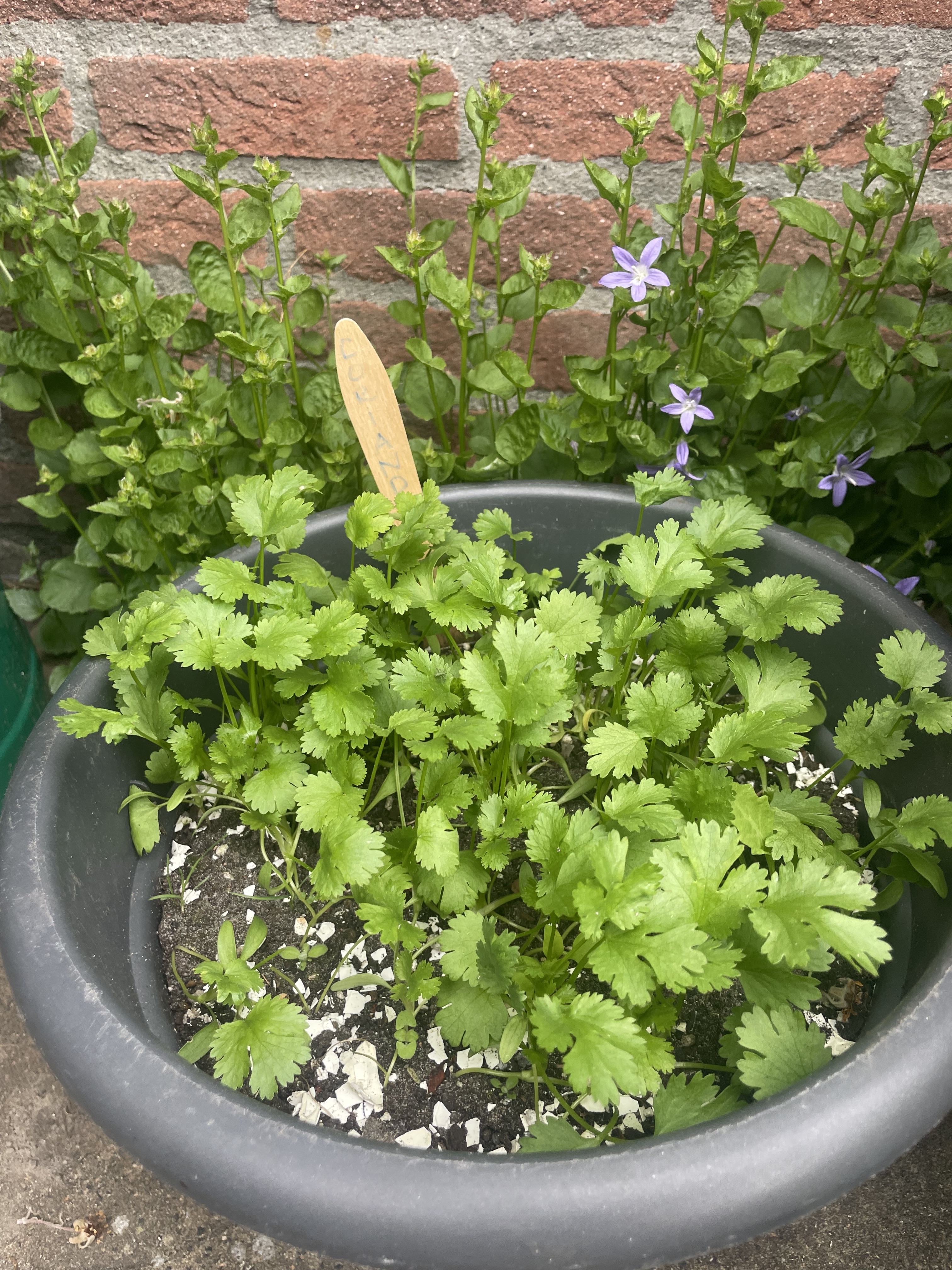
You can start fast-growing herbs from seeds because, with the wait not too long, you will likely see the rewards before your patience runs out. And you can sow again and again from one seed pack, in most cases, at the same cost as buying a small seedling.
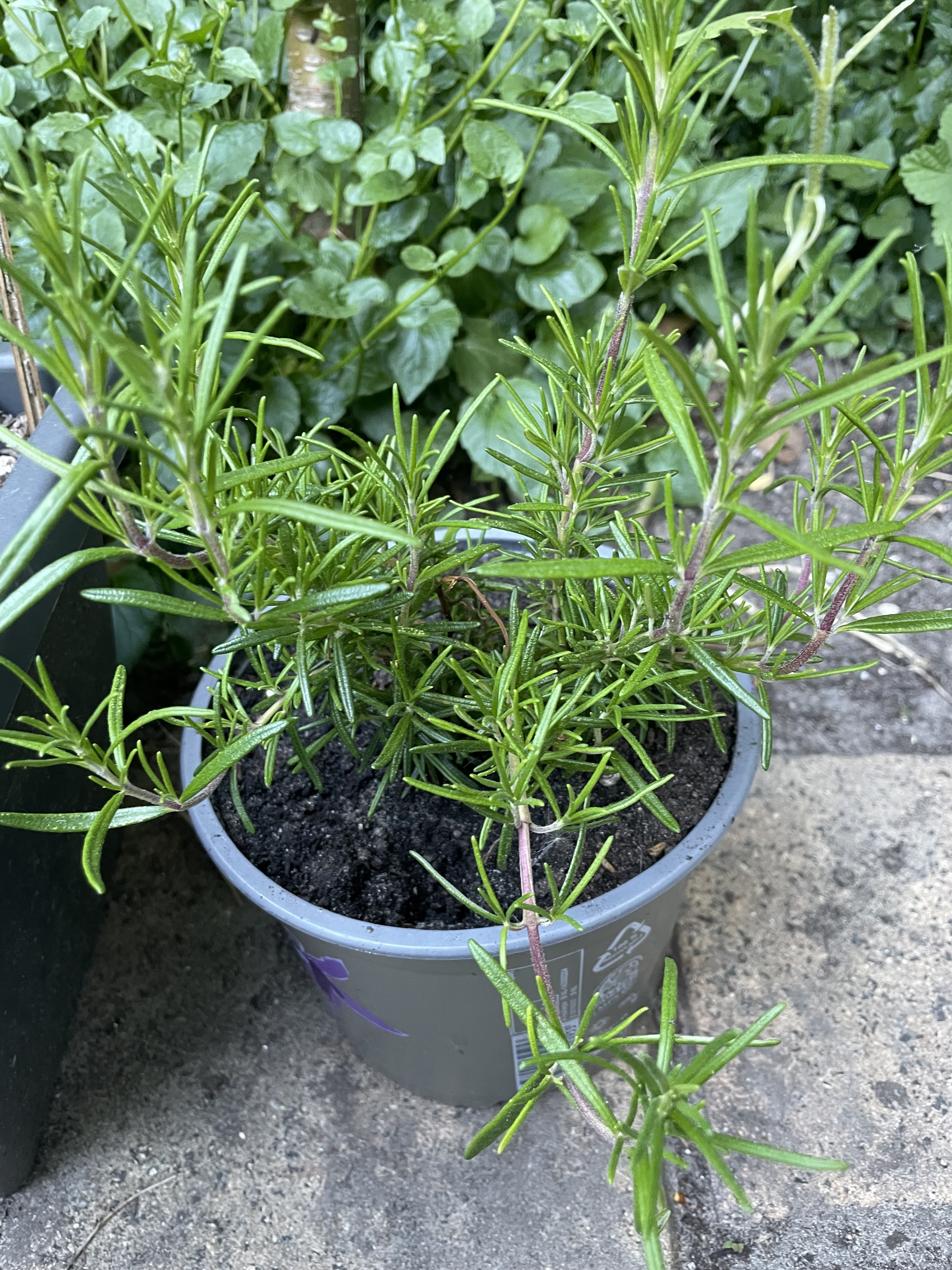
In contrast, it’s generally more realistic to jump-start your slow-growing herb collection with young plants from a nursery or cuttings from a friend’s established plants (propagation). The wait could be a year for herbs like thyme if you start from seeds. And sometimes, you can’t even get a plant to establish, as many things could happen in a year that a new gardener lacks the experience to deal with.
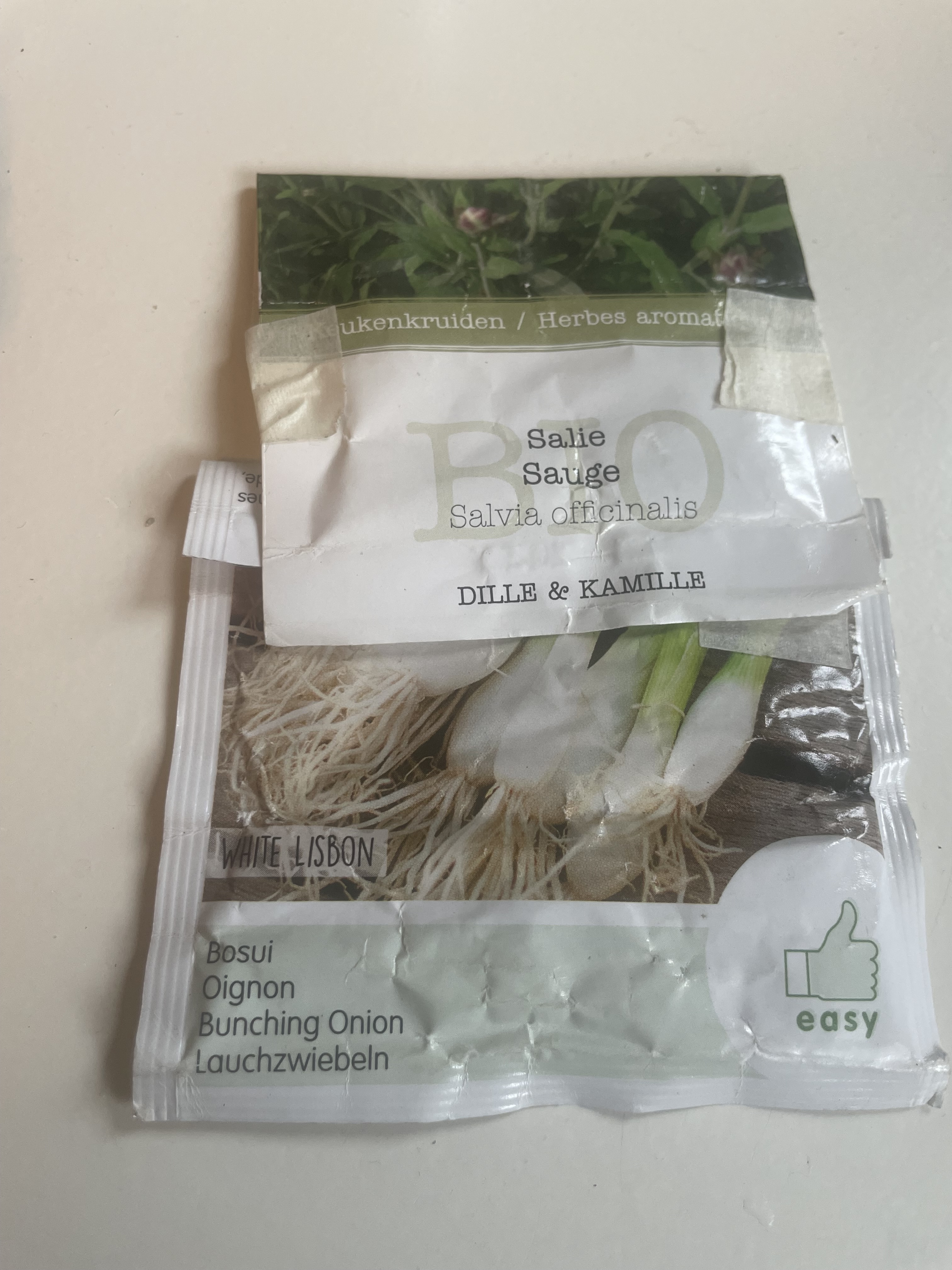
I have had these barely-used seeds 👆 in storage for almost three years because I found out the hard way that growing sage and spring onion from seed is much harder (and fruitless) than propagating by layering (sage) and cutting (spring onion).
So, pick your herbs and group them so that you can decide on the smartest ways to start with the planting. It will save you weeks, even months, of frustration.
Master the Three Ways to Start Herbs
The quickest path to a thriving herb garden is learning to sow seeds, propagate with cuttings, and select the healthiest young plants from a garden centre.
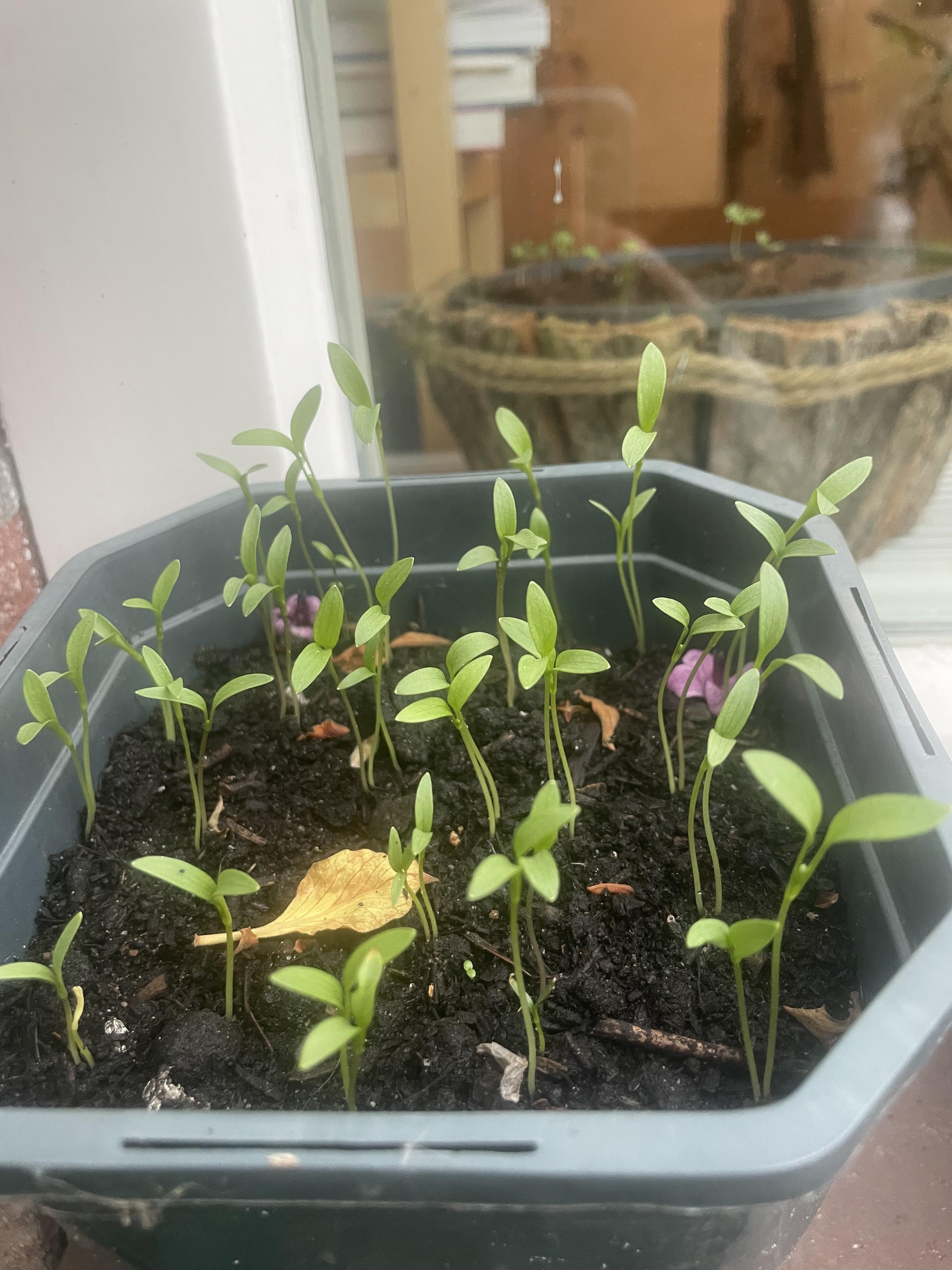
Sowing Seeds: A Fast and Inexpensive Start for Many Herbs
Fast-growing herbs like coriander (or cilantro), dill, or basil (during hotter months) do very well when started from seed. To sow them successfully:
- Use shallow seed trays or (small) pots filled with light, fine-textured seed-starting mix.
- Plant seeds no deeper than twice their diameter. Tiny seeds like basil only need a light dusting of soil on top. (Recently, I attended a gardening lesson with my son and learned to mix tiny seeds with sand and scatter the mix instead. It’s a life-changing moment 😜.)
- Keep the soil consistently moist by misting daily with a spray bottle rather than heavy watering. Alternatively, you can place the seed tray or pot in a dish filled with water.
- Place the seed trays/pots somewhere warm (around 18–22°C) and ensure they get enough sunlight.
Depending on the conditions (temperature and light) and the type of herbs, you might have to wait a week (or four). But for fast-growing herbs like coriander, providing suitable conditions, I have seen first sprouts as early as day 5th.
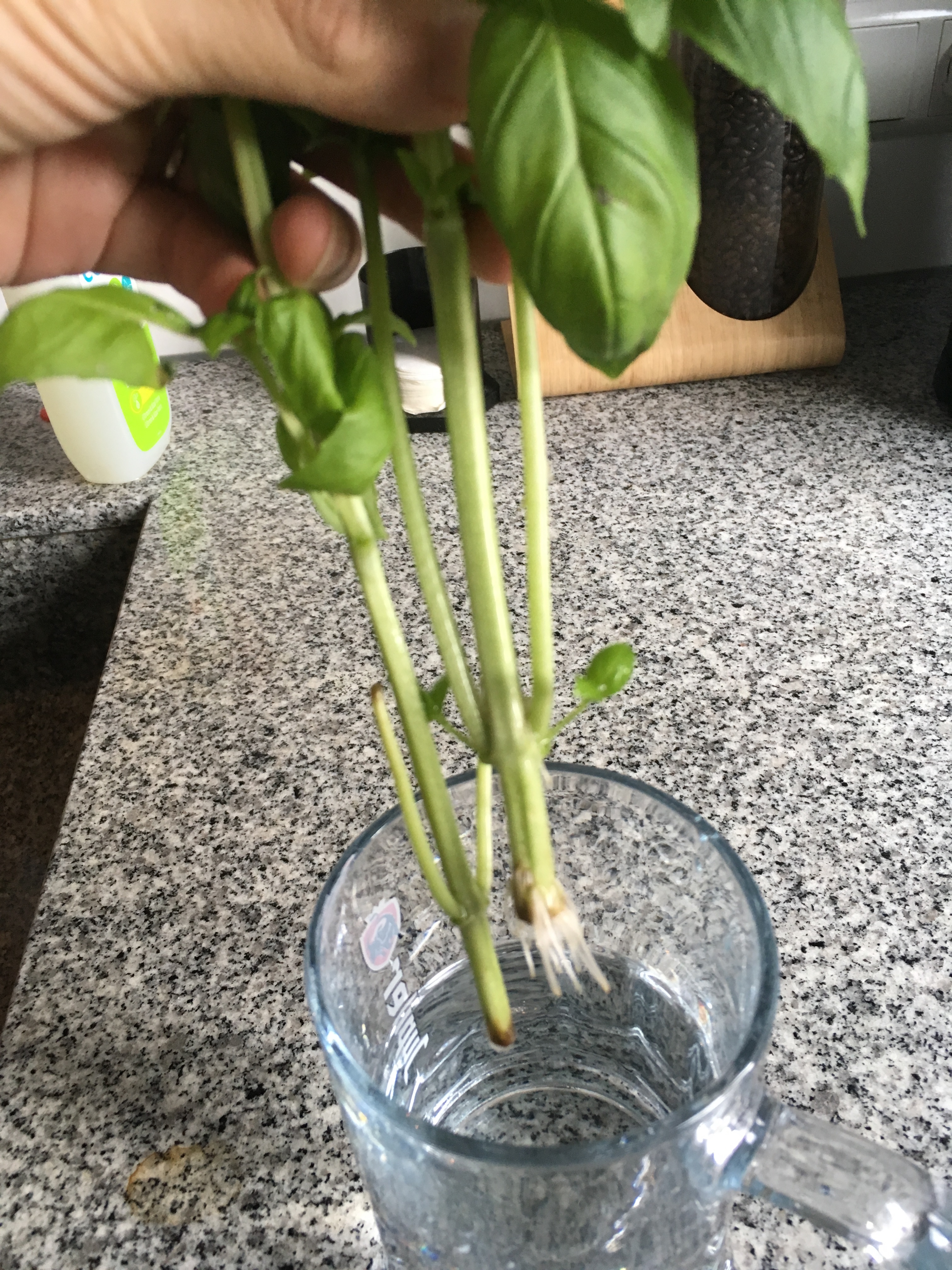
Propagating with Cuttings: The Fastest Way to Multiply Woody Herbs
Some herbs, especially woody types like rosemary, thyme, and sage, are much faster to grow from cuttings than from seed. To propagate successfully:
- Cut 4–6 inch stems from a healthy, non-flowering part of the plant. Alternatively, save some stems from store-bought herb packs.
- Strip the bottom half of the stem’s leaves to expose nodes where roots will grow.
- Place the cuttings in a small pot of moist potting mix or in a glass of water.
- Keep the pot or glass in a warm spot with bright, indirect light.
The wait from cutting to rooting varies depending on the herb, the time of the year, and the medium used. For example, mint usually roots in water in summertime within 7–10 days, while rosemary cuttings take around 3–4 weeks in moist soil.
While using water as a medium might be more fun because you can see the roots as they appear, I prefer leaving the cuttings in pots around the garden, watering them together with other pots and forgetting about them until I can spot new growth from the top. The wait seems easier that way.
Choosing the right young plants at the nursery saves you months of effort.
Buying young plants can fast-track your harvest when growing slow-starters like sage, thyme, and mint.
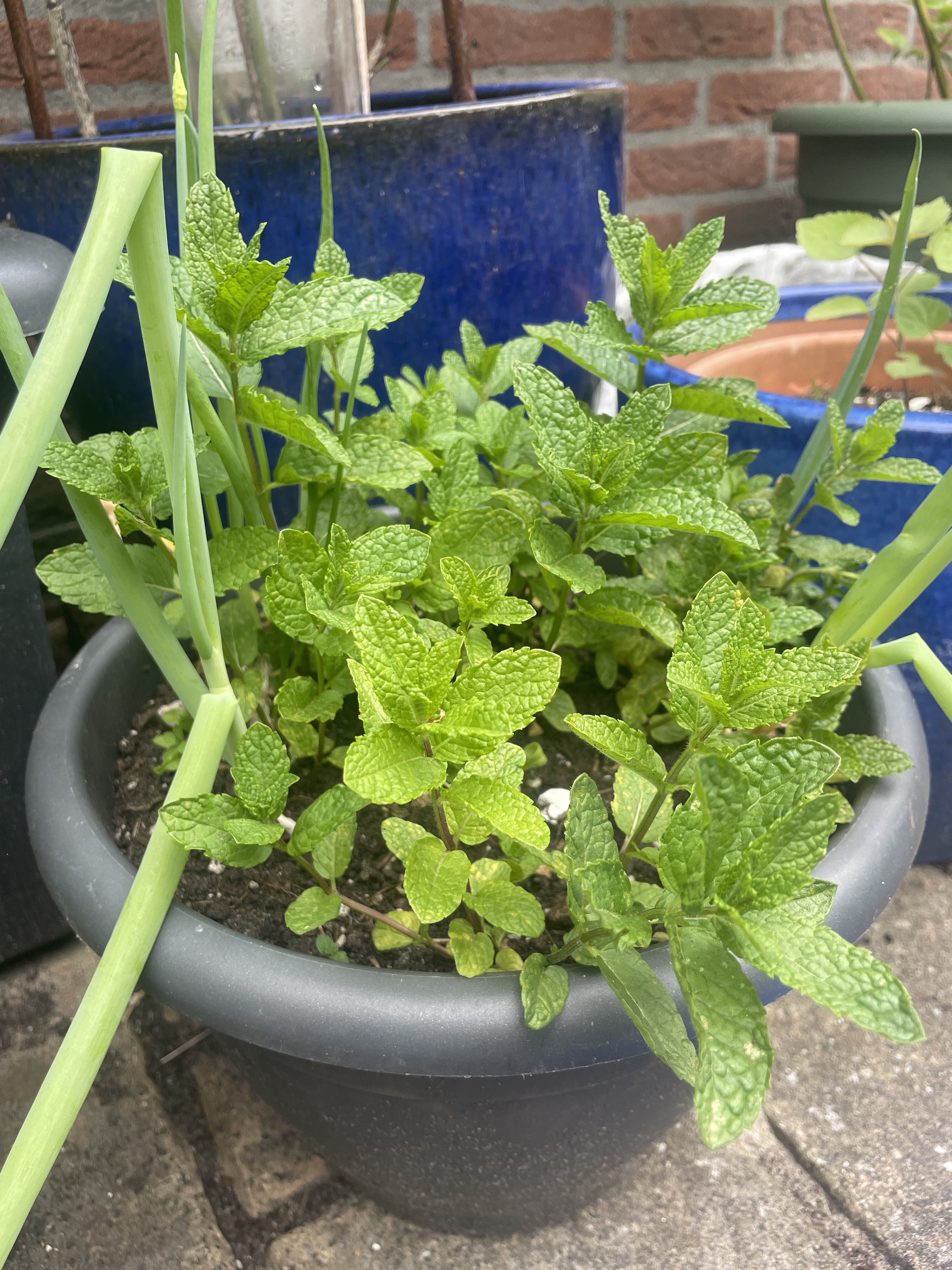
To pick the healthiest ones in the shop:
- Look for plants with firm, upright stems and vibrant green leaves.
- Avoid any plants with yellowing, wilting, or spotted foliage.
- Inspect the undersides of leaves for aphids, spider mites, or whiteflies.
- Gently check that the plant is not rootbound (roots circling tightly at the bottom of the pot).
If you are enjoying this post, you might also appreciate our FREE cheat sheet with 12 Tested Gardening Ideas for Small Spaces.
Provide your info for a link to the downloadable resource and be opted into our email list for the (very) occasional product promotion.


Get the Right Supply
Success in small-space herb gardening depends on the right tools and materials.
You will need:
- good-quality organic potting soil mixed with compost for nutrient density
- grits to add drainage if growing in containers, especially for Mediterranean herbs like rosemary and thyme that hate wet feet.
- containers suitable to the rooting habits of your chosen herbs (shallow-rooted vs. deep-rooted) and with sufficient drainage holes at the bottom
You might also want to use:
- some sharp snippers or small scissors to regularly harvest your herbs without damaging the plants.
- hanging baskets for herbs vulnerable to attacks from slugs and snails. (I hang my coriander up high whenever I can.)
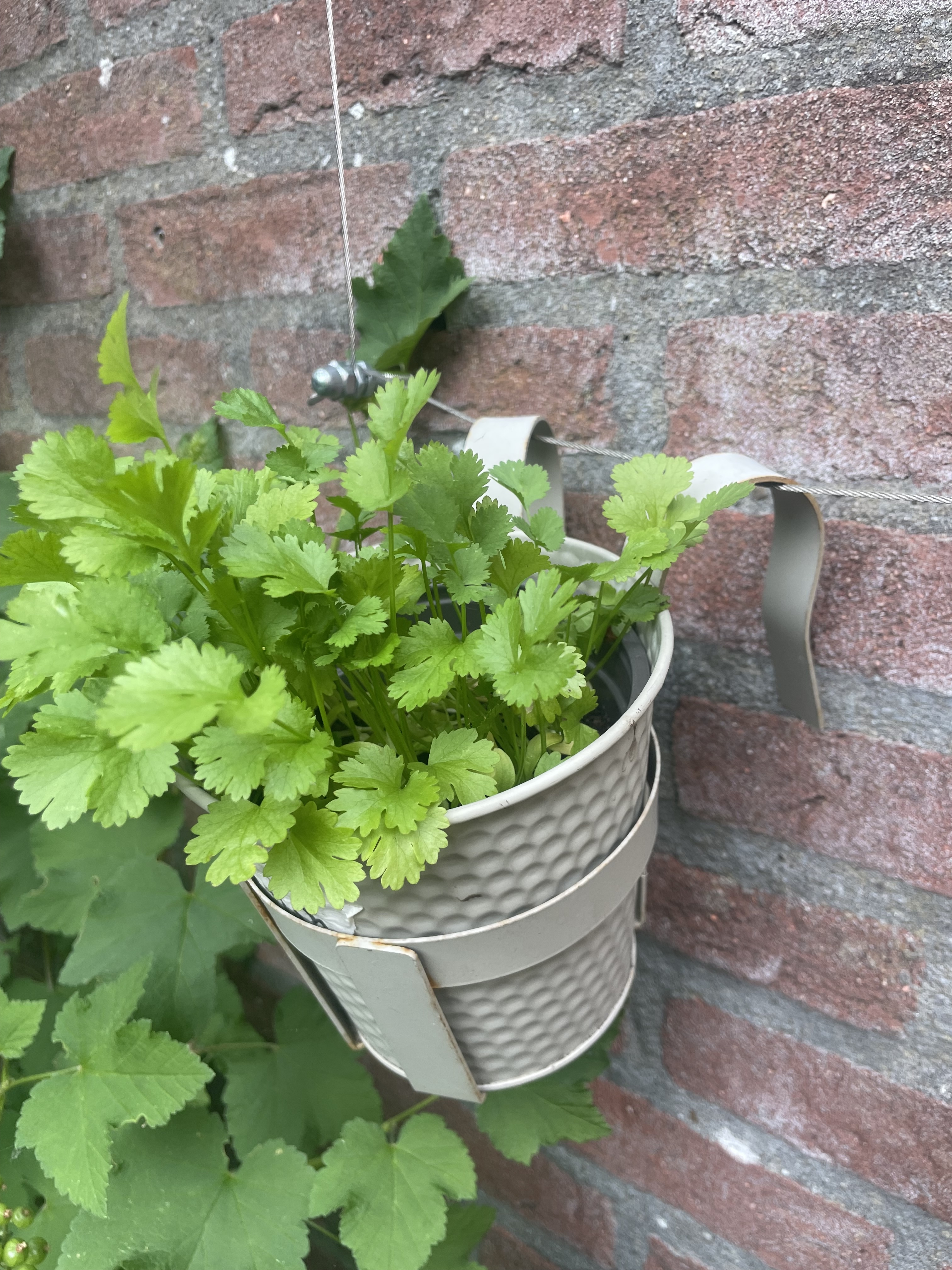
Investing in proper supplies from the beginning will save your herbs—and your time—in the long run.
Harvest Early and Often
Frequent harvesting is the secret weapon to keep your herb garden productive.
Most herbs love being trimmed, which encourages them to branch out and produce even more fresh leaves. Begin harvesting as soon as your plants have several sets of leaves, and always snip just above a pair of healthy leaves to stimulate bushier growth.
If your cooking doesn’t keep up with the growth of your herbs, you can always make fresh herbal tea. Check our blog post on brewing tea for more.
 Grow More With Less
Leave a comment