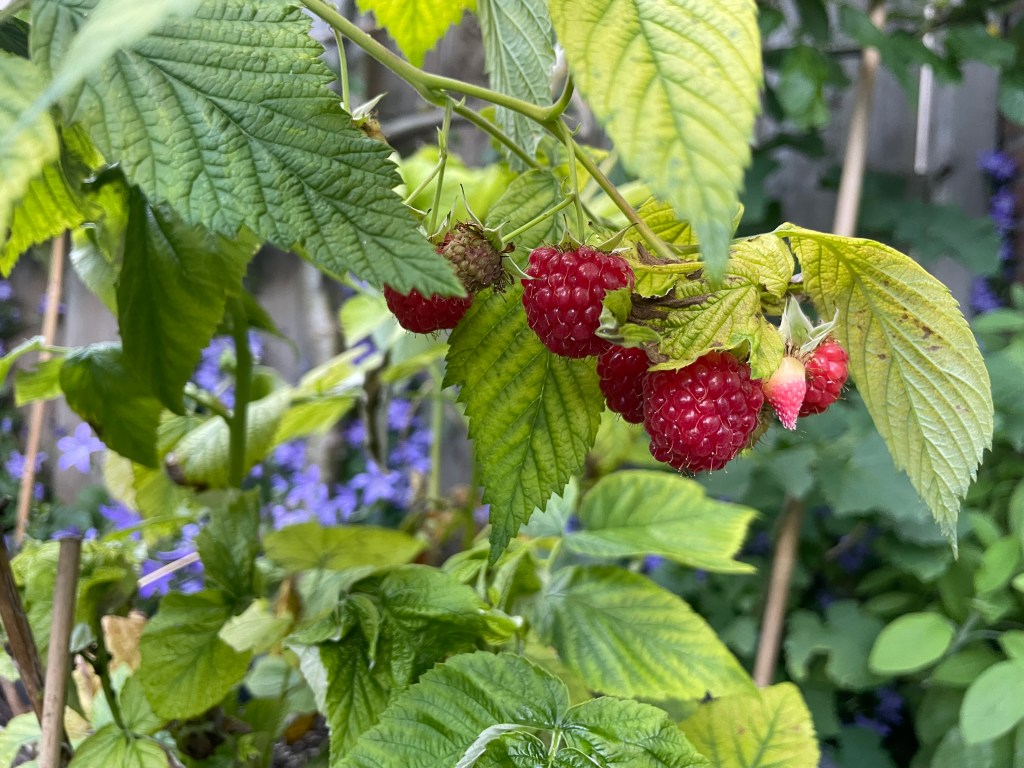
Five years ago, when we got the key to our home, we had no clue that we would spend a lot of time hanging just outside the house, picking sweet raspberries all summer long.
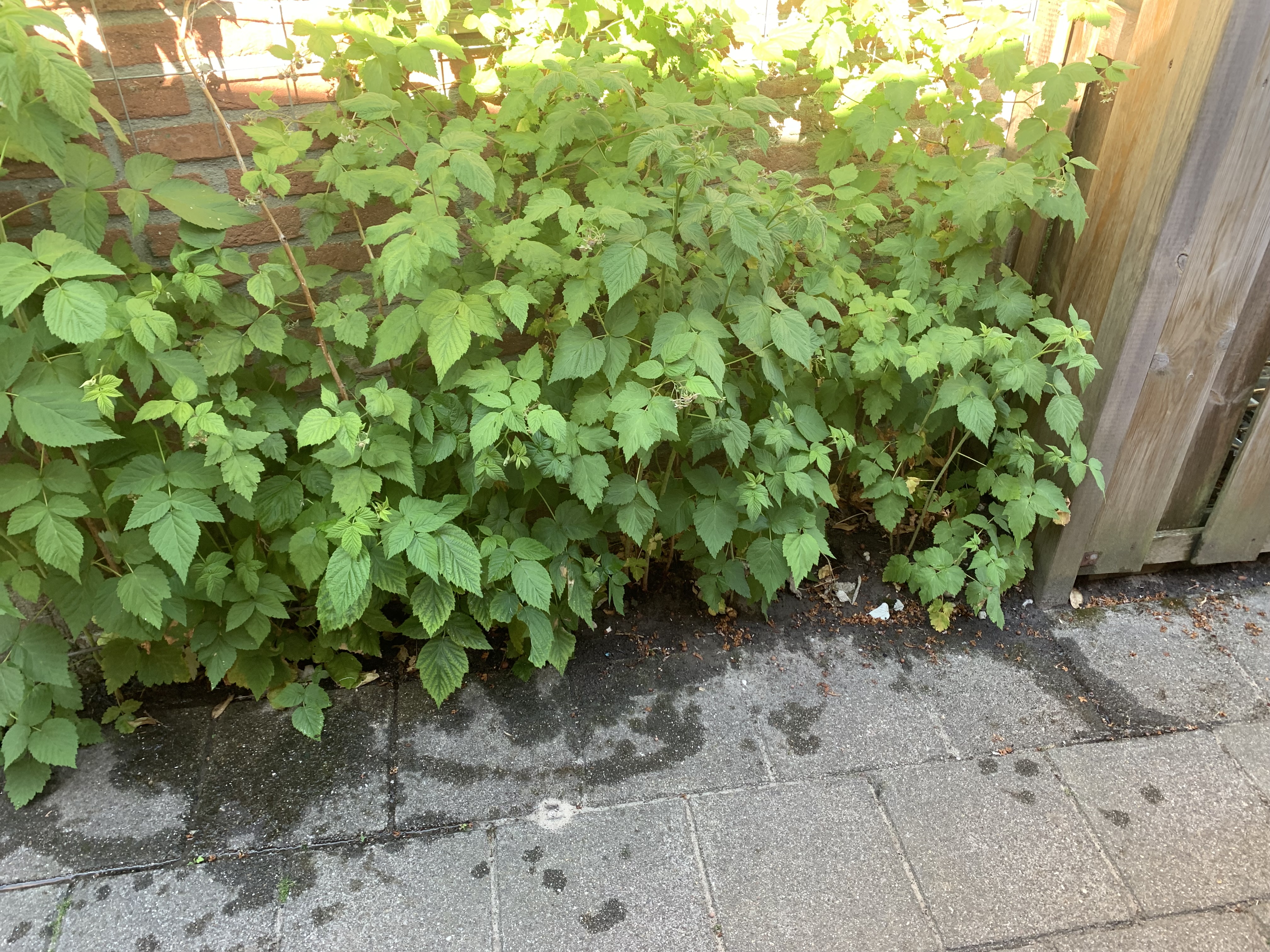
On the key exchange day that October, we were briefly shown some bare canes on a tiny patch of soil running along one outer wall of our shed. I gave it absolutely no thought whatsoever then. Little did I know that “the patch” would be one of our best-kept treasures, from which my son gleams so many juicy berries and so much joy.

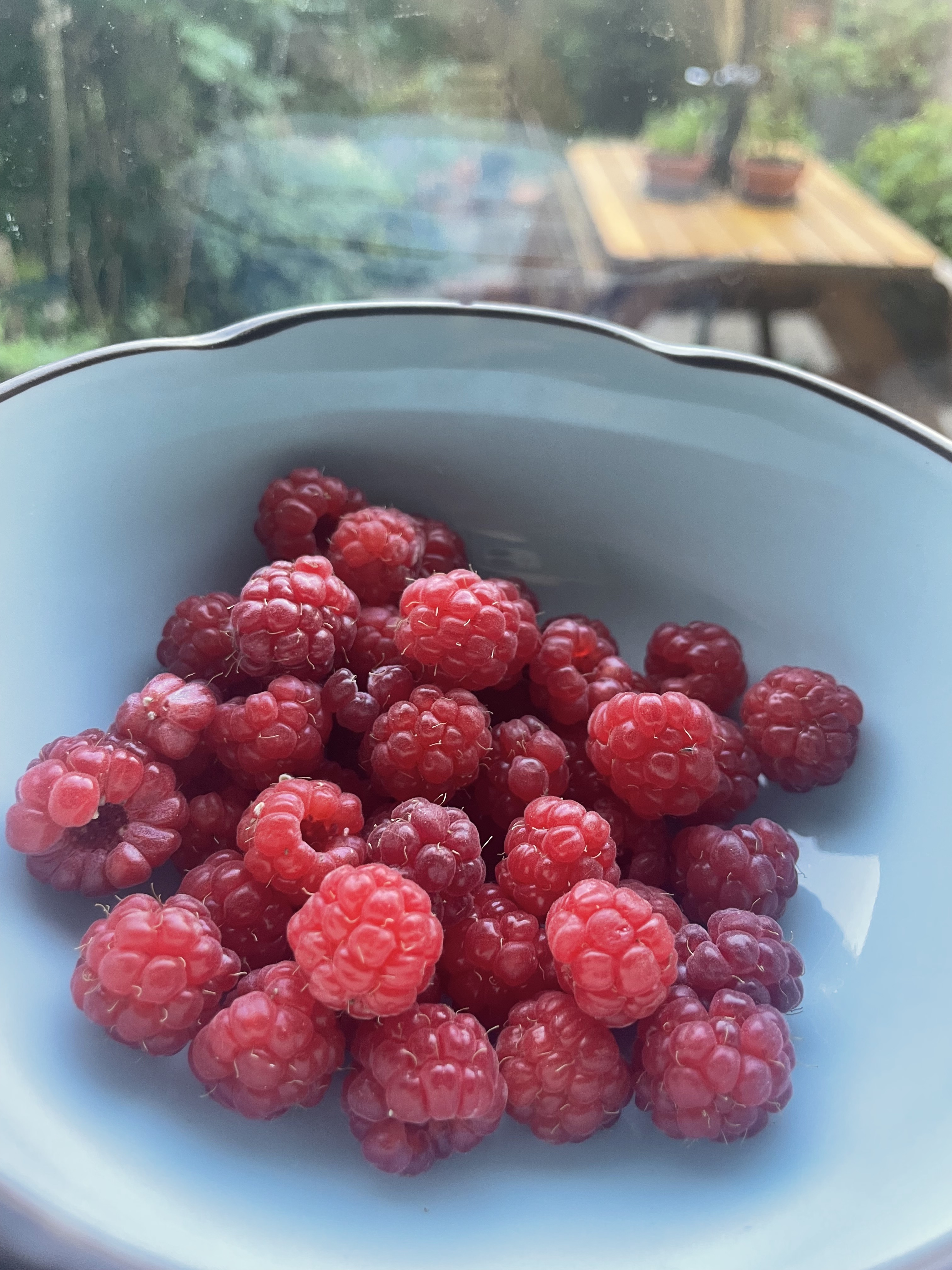
In the last five years, I have learned how rewarding yet low-maintenance raspberries are for home growers. Those canes demand only a little care and some support. Yet, even a small border of summer raspberry could yield enough to eat and share for three sunny months. If you add some autumn raspberry plants, which could thrive in a container, you can extend the fruit harvesting from June to October.
A quick glance (or tl;dr)
- Preferred soil: Moisture-retentive, well-draining, rich in organic matter
- Preferred place: Full sun; sheltered from strong wind; suitable for containers, raised beds, or borders
- Edibility: Yes (fruits, leaves)
- Harvesting notes: fruits of summer varieties, formed on last year’s canes, show up from June to August, while fruits of autumn varieties, formed on new growth, arrive from August to October
- Small Garden Candidate: Yes
Read on for our detailed guide to growing summer and autumn raspberries so that you can enjoy the sweet fruits (and even the fresh leaves in tea).
Set Up for Raspberry Planting
Where to start
With bare-root canes or potted raspberry plants from a reputable nursery. Raspberries can technically be grown from seed, but the process is time-consuming and unpredictable.
Soil
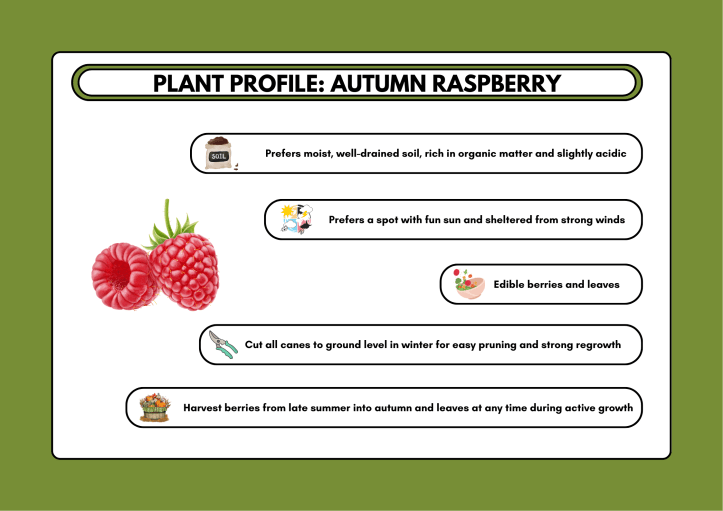
Raspberries like rich, moisture-retentive but well-draining soil.
A mix of loam-based compost enhanced with well-rotted manure is a great start, as it provides nutrients while allowing good drainage.
If you are growing (autumn) raspberries in a container, add layer of grits at the bottom.
Location
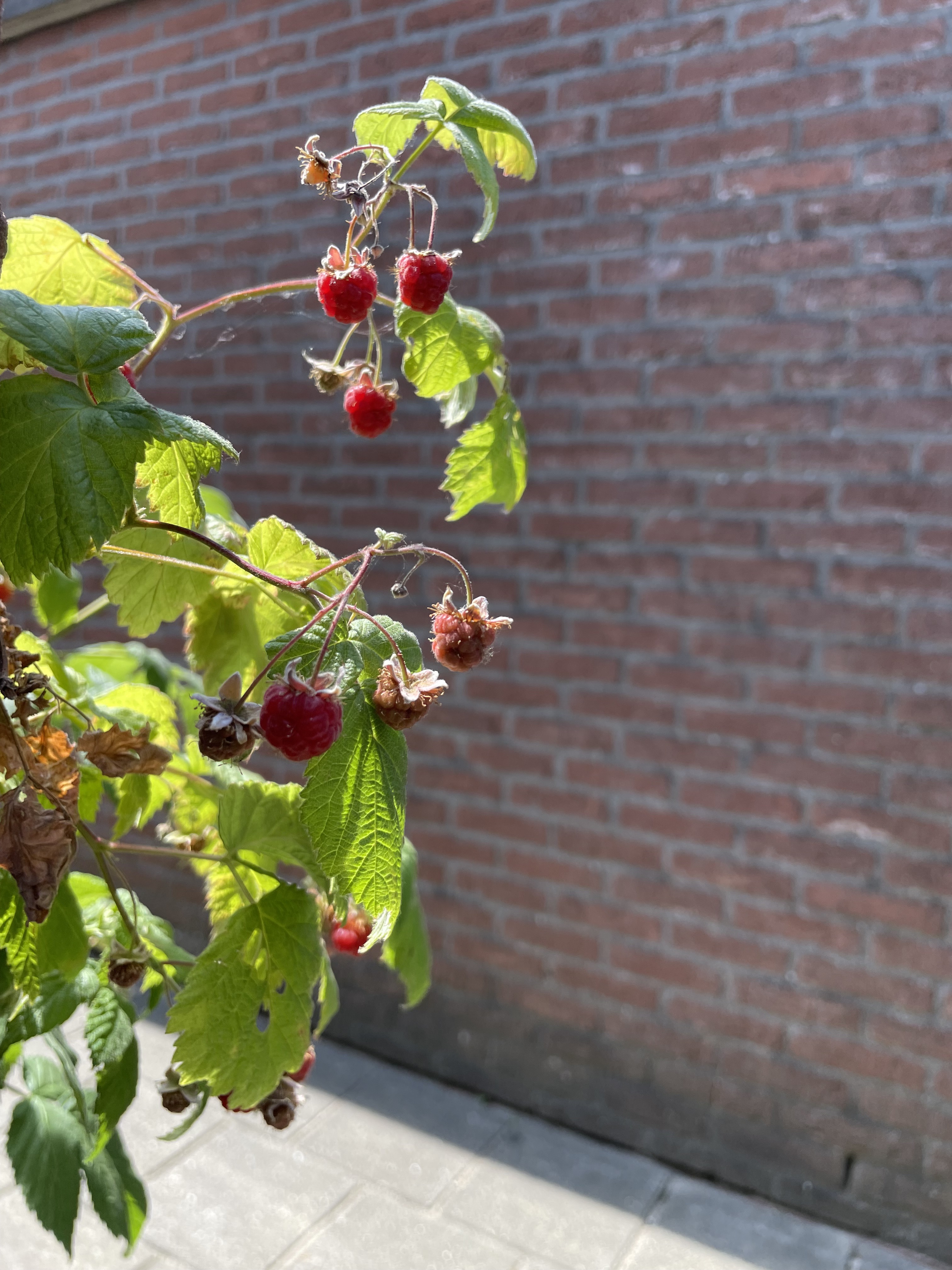
Choose a sunny and sheltered spot, if available, for your row of raspberries. The long, slender stems love the sun but are vulnerable to snapping due to strong winds.
Raspberries will tolerate partial shade and still produce juicy berries (even if in smaller quantities).
Ground, Container, or Raised Bed?
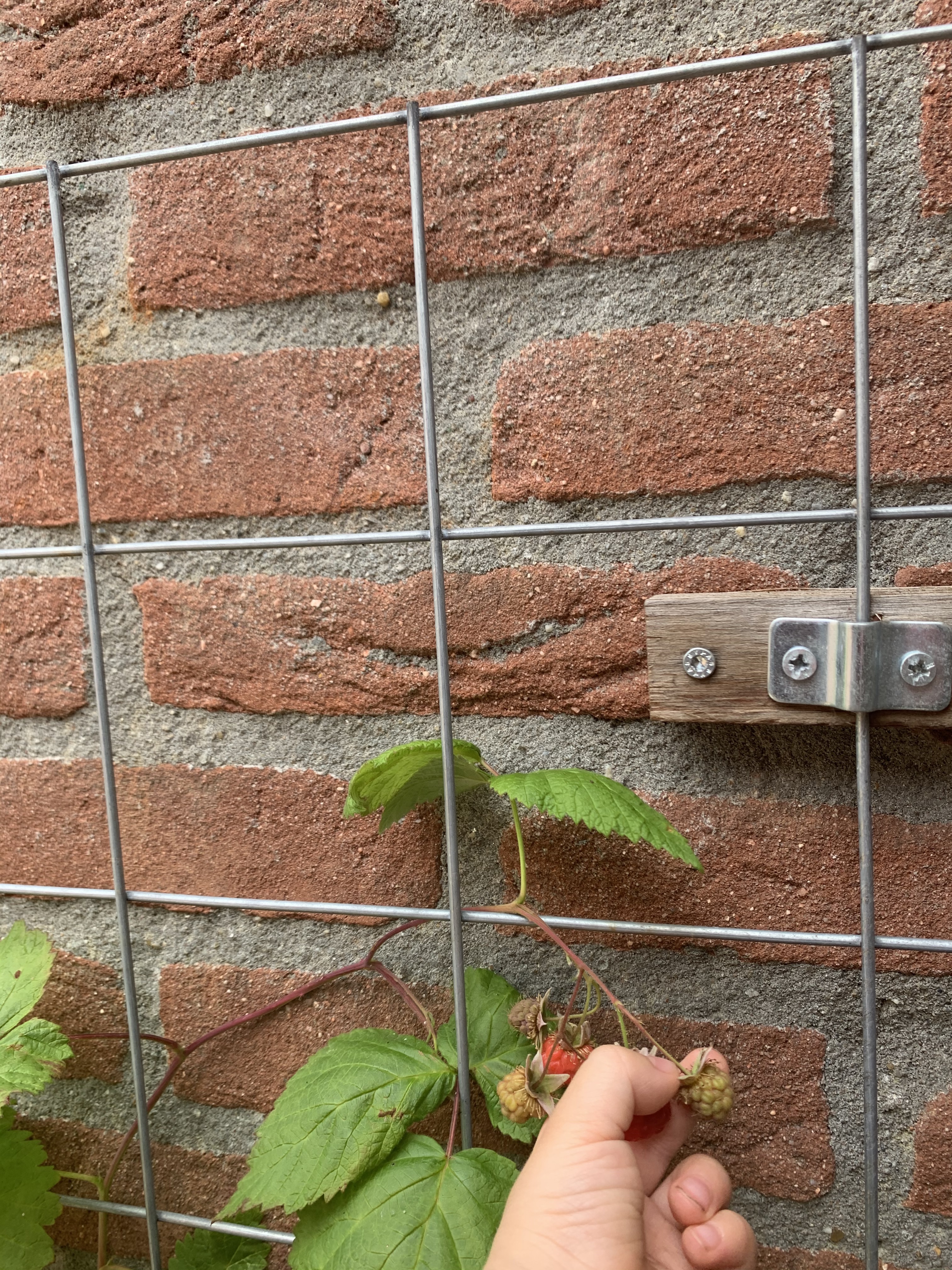
The tall summer raspberries are typically planted in a row on the ground in a way (such as along a wall) that allows setting up supporting posts and wires.
Autumn raspberries, on the other hand, can grow well in large containers.
Raised beds are also a good option, as they are typically constructed to have good drainage and rich soil. (We offer a small raised bed planting package with autumn raspberries as the main feature, if you want to try intensive planting for more fruits and vegetables.)
Plant Care
Caring for raspberry canes is straightforward. They need watering, feeding, and protecting but only occasionally.
Watering
Keep the soil consistently moist, especially during flowering and fruiting. In pots, check every 2–3 days in the summer and water if needed.
Feeding
Apply organic fertiliser in early spring and again after harvesting.
For containerised raspberries, you would typically need to feed the plants more regularly during the growing season (every month).
Protecting
- Use canes or a trellis to support summer varieties, which grow tall on slender stems.
- Add mulch around the base to suppress weeds and retain moisture.
- Use netting during fruiting to protect from birds. (I don’t do this myself, because I haven’t noticed birds taking the fruits. Maybe my son has just been much faster at picking 😁.)
- Watch for vine weevils in containers with raspberries.
Propagating
Raspberries produce suckers (new canes from the roots). When a gardener says the raspberries are invading their garden, it is because of this habit of sending suckers everywhere.
The good news is you don’t need to plant new canes. Instead, pick the strongest of the suckers and give them support to grow and fruit.
You can dig up the wandering suckers and replant them in a new location. From my experience, the newly moved plants might take a couple of years to establish. (So you might find yourself needing some patience. )
Prune and Train
Raspberries are generally low maintenance, but you want to do the pruning right, according to the varieties you grow.
- Summer-fruiting raspberries: Straight after fruit harvest, cut the fruited canes (brown, woody) to the ground, and leave the strongest canes among the new green ones for next year’s crop. Tie them to their post and wire for wind protection. Cut any green stems that are small, weak, or located too closely to the chosen canes to the ground.
- Autumn-fruiting raspberries: Cut all canes to the ground in late winter (February) as they fruit on new growth each year.
- Autumn-fruiting raspberries grown for double cropping: In February, cut not all, but half of the stems to the ground. Save some of the strongest stems and prune off only the fruited top. These half-pruned stems will (hopefully) fruit in the summer while the plant produces new stems that will bear the fruits in autumn.
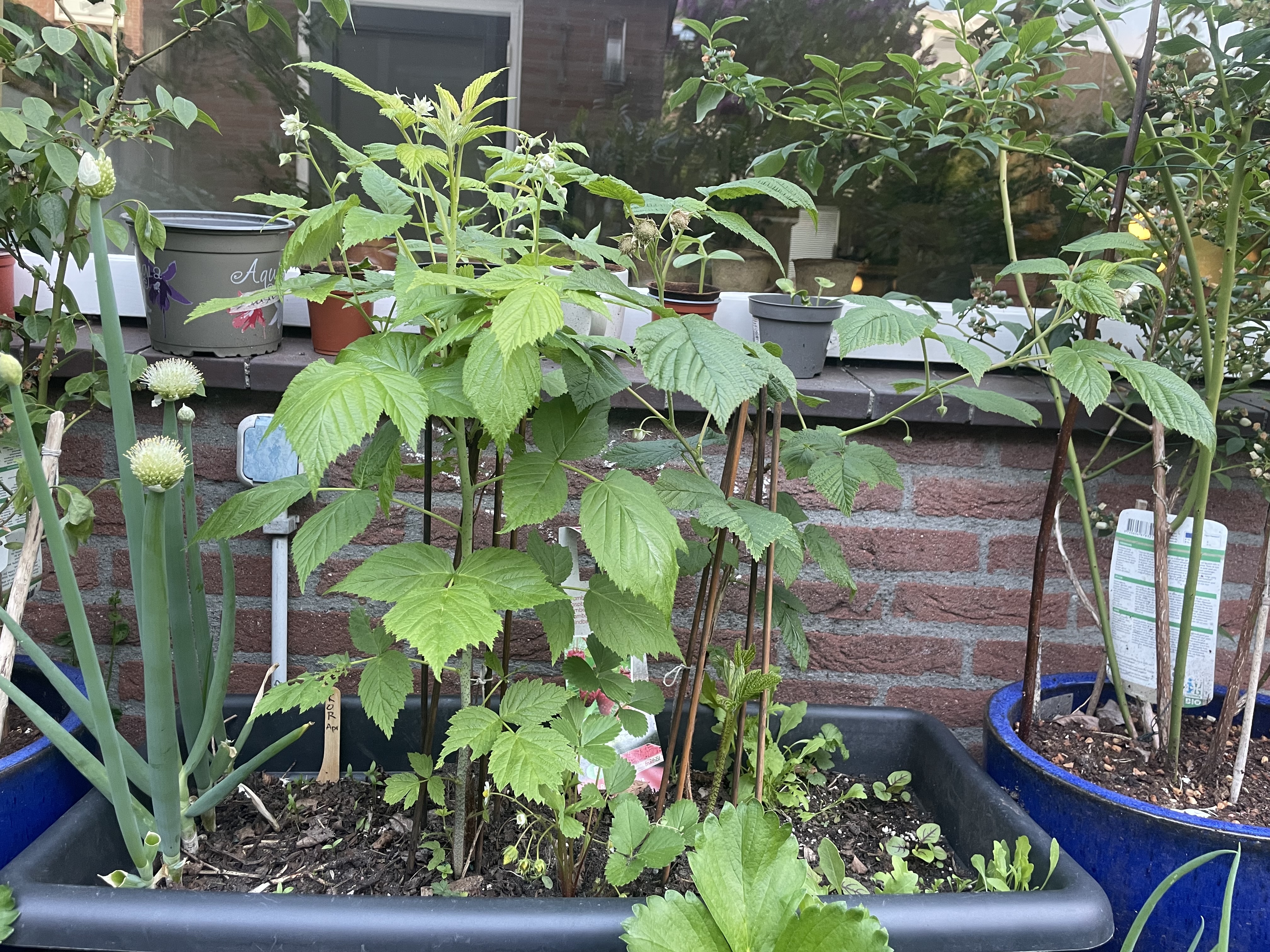
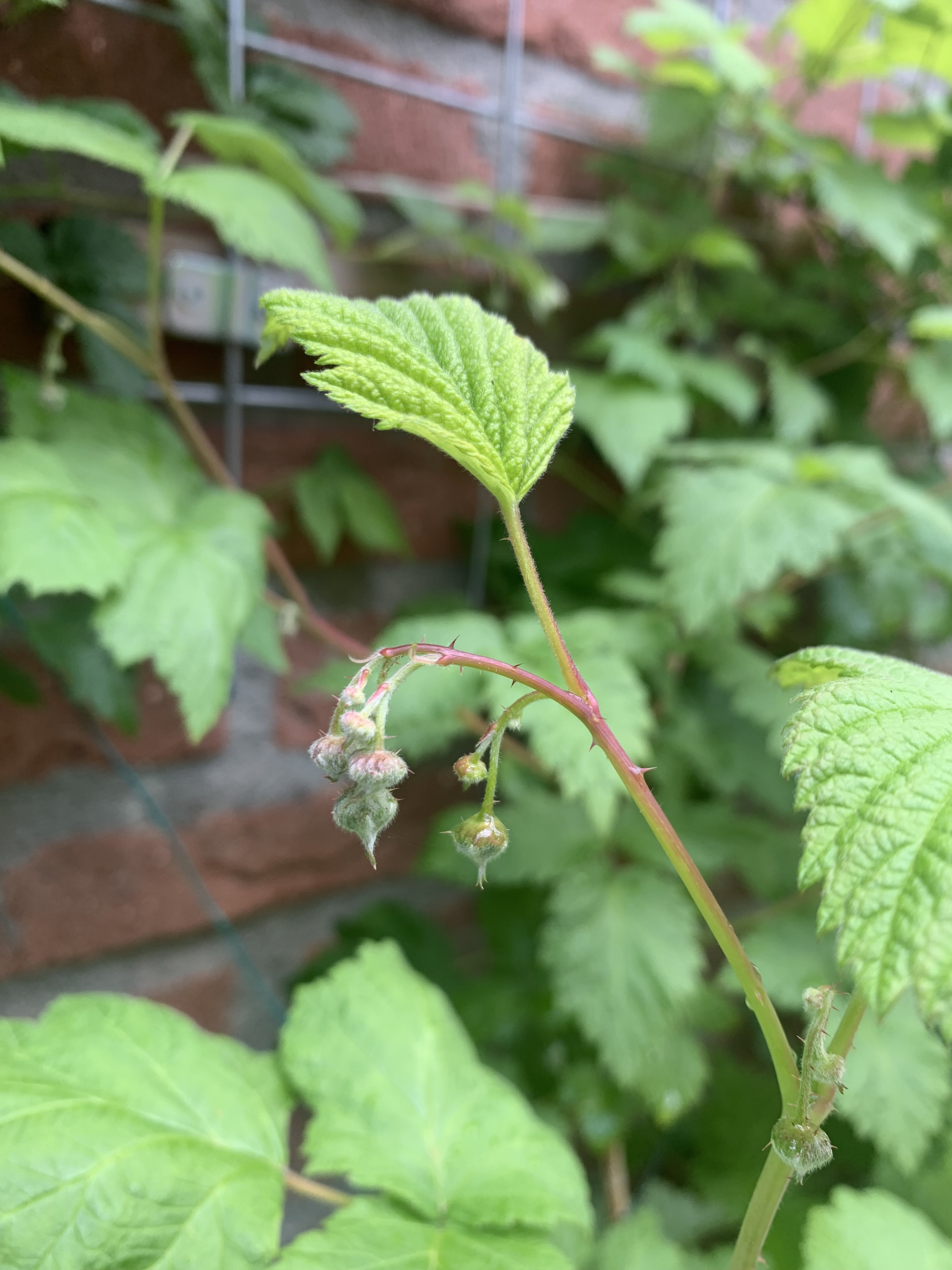
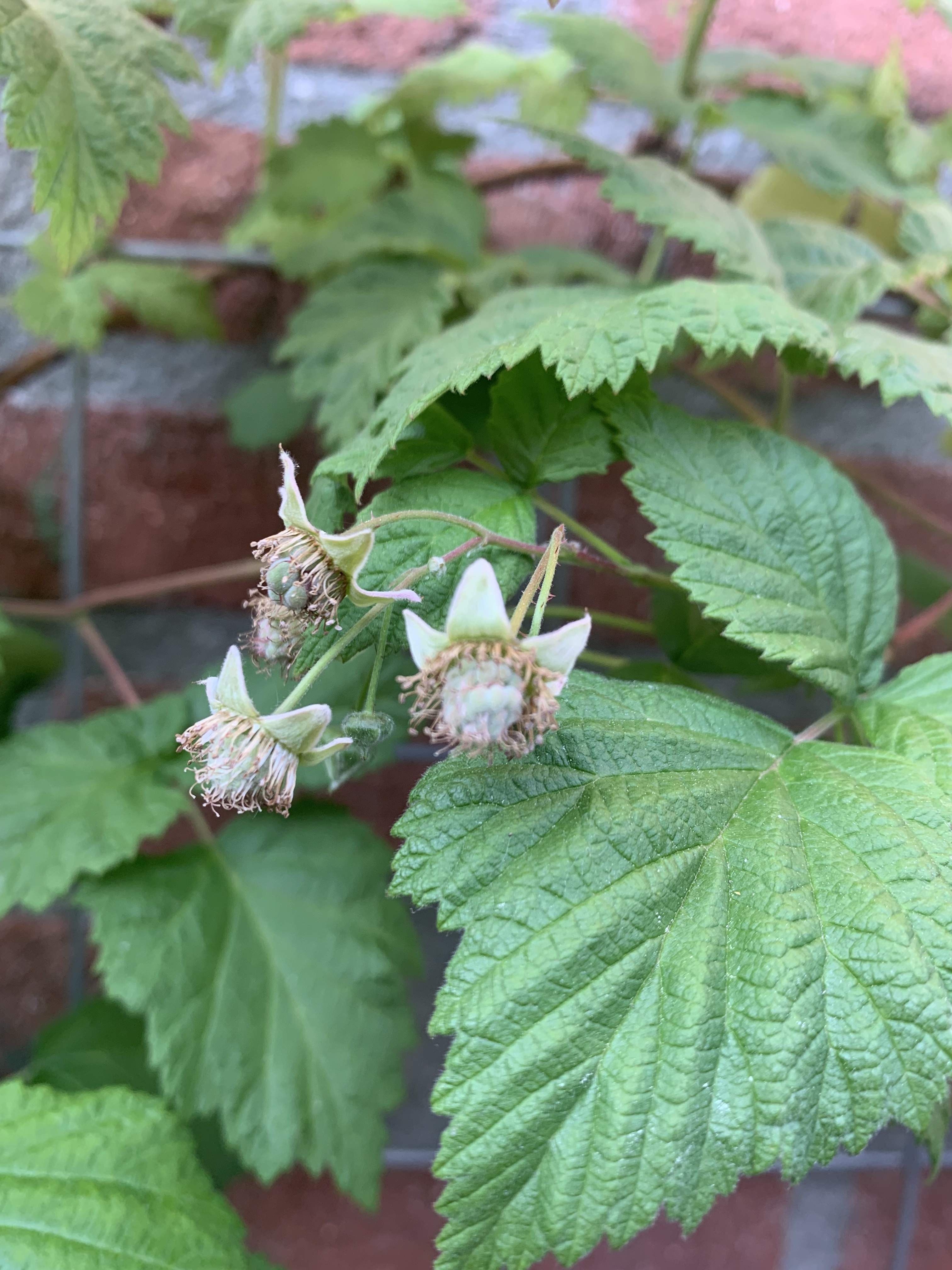
I am experimenting with pruning autumn raspberry for double cropping, so I have already seen some fruits formed as early as May 1st. And the green canes would (hopefully) bear fruit later on in the year.
If you are curious about other plants that I intercrop with raspberries in this big container👆, check out our small raised bed planting package. It includes a detailed planting diagram (with autumn raspberry at the centre), key planting notes, the profiles of all the plants (fruits, vegetables, and herbs), and plant alternatives.
Problems
Raspberries are generally tough, but can suffer from beetle larvae that affect fruit in summer varieties. Using a mesh netting before flowering would help.
Other common problems are yellowing leaves and root rot due to nutrient deficiency or poor drainage, especially in containers.⠀
Harvest
The berries, when ripe, can be harvested with a gentle tug. The more you pick, the more the plants will produce.
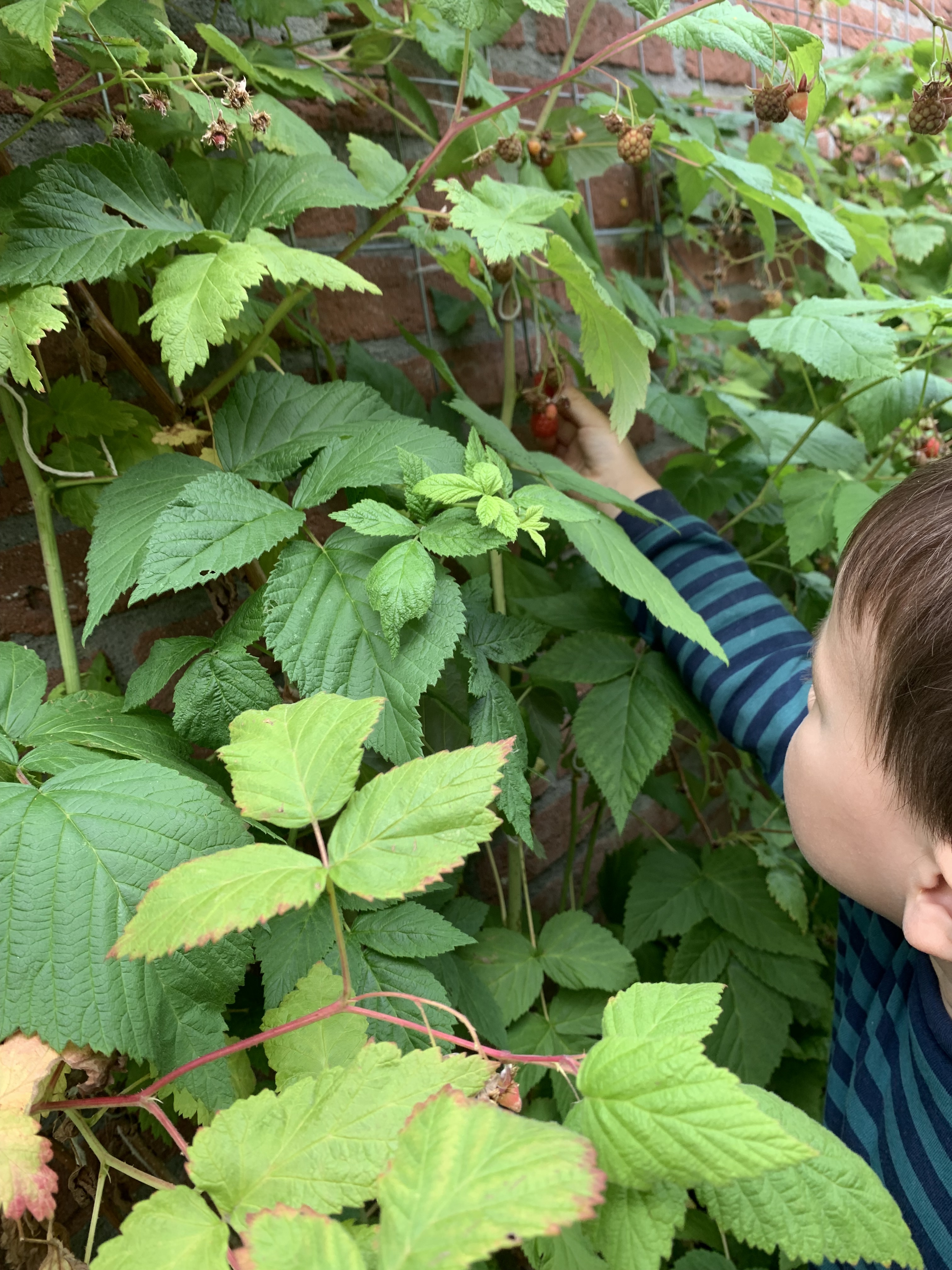
Raspberry leaves can be cut and used fresh to brew tea. There are many claims of the positive impact that raspberry leaf tea has on pregnancy and childbirth, including facilitating labour and birth. The evidence is weak, but the fame is there. (And I had some store-bought raspberry leaf tea throughout the week before my son’s supposedly early arrival 😜. Of course, it could totally be a happy coincidence.)
So, whether it’s a row along a sunny wall or in a patio container, raspberries offer huge returns for a relatively small investment of time and space. With just a bit of care, they’ll be a long-term, fruit-bearing feature of your small garden.
If you are enjoying this post, you might also appreciate our FREE cheat sheet with 12 Tested Gardening Ideas for Small Spaces.
Provide your info for a link to the downloadable resource and be opted into our email list for the (very) occasional product promotion.


 Grow More With Less
Leave a comment