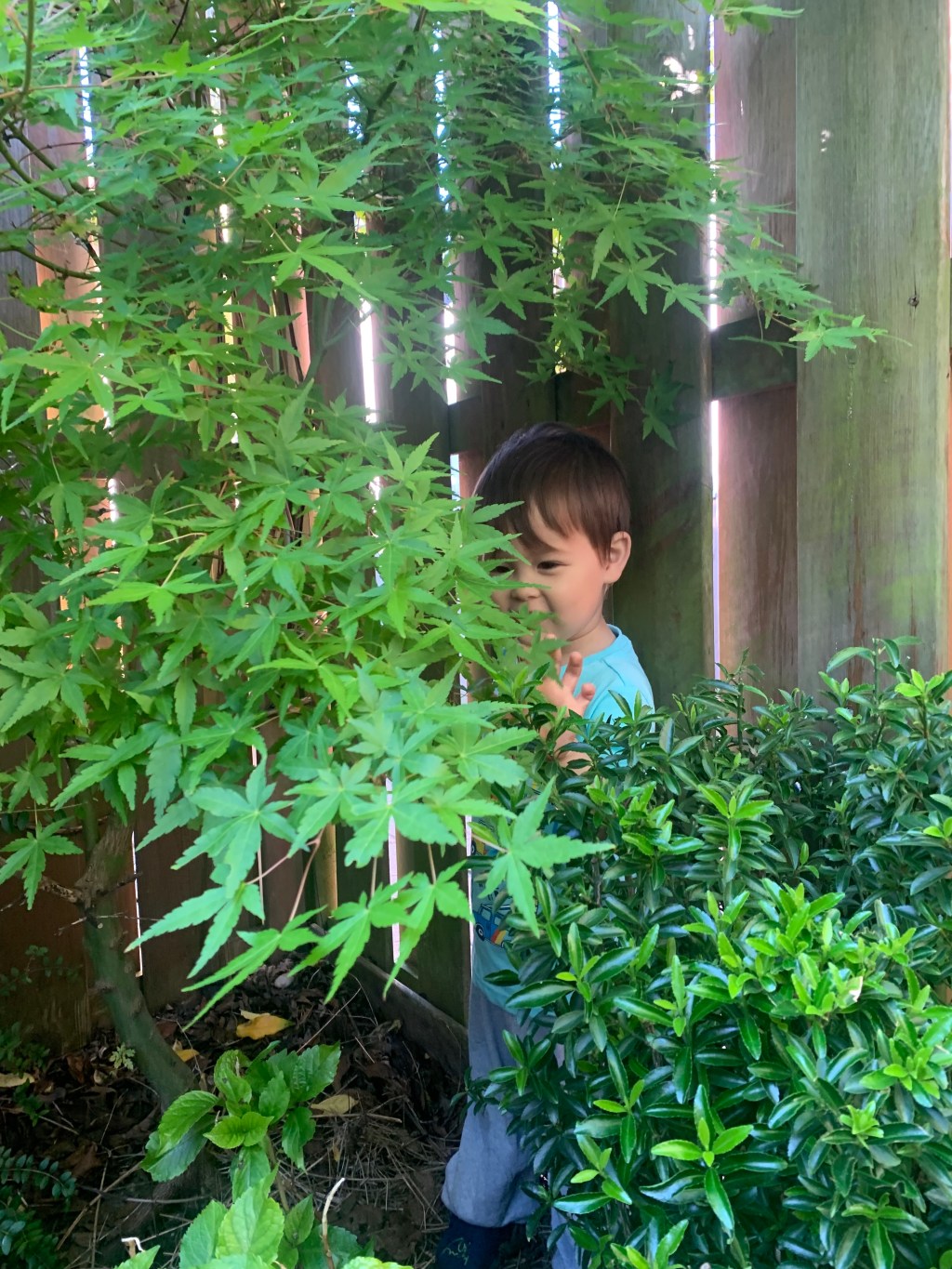
Wouldn’t you love to plant a tree that will grow with your family while giving you extra gardening joy, such as tasty fruits or fragrant flowers?
Yet, there is often doubt about finding enough space for a tree to thrive in a small garden.
Fitting a tree in a small gardening space is easier than it might sound, as long as you take the right steps. Then, you can enjoy fresh and incomparably delicious fruits grown at home, or simply the more permanent feature in your garden: a tree that grows to be the anchor for the time spent in your home, one generation to the next.
This complete guide contains everything you need to learn to fit a tree in a small garden. It will walk you through the action plan, step by step, to have a tree thriving in your own space.
Define Your Garden Goals: What Do You Want To Achieve With One or A Row of Trees?
Before you dig a hole or buy a pot, decide what you want with a tree (or a row of them).
Are you looking for:
- Privacy or screening from neighbours?
- Seasonal interest, like spring blossoms or autumn colours?
- Edible fruit or nuts?
- Shade for a sitting area?
- A decorative focal point (in a container)?
- A vertical emphasis that makes your small garden feel deeper and more expansive?

Here are some examples of trees that can be used for the common garden goals:
- Privacy screen: Japanese holly, Italian cypress, or hawthorn are great for increasing privacy in a small garden as they grow tall and thin.
- Colour and interest: Japanese maple and redbud add beautiful colours to a garden with a low risk of outgrowing the space.
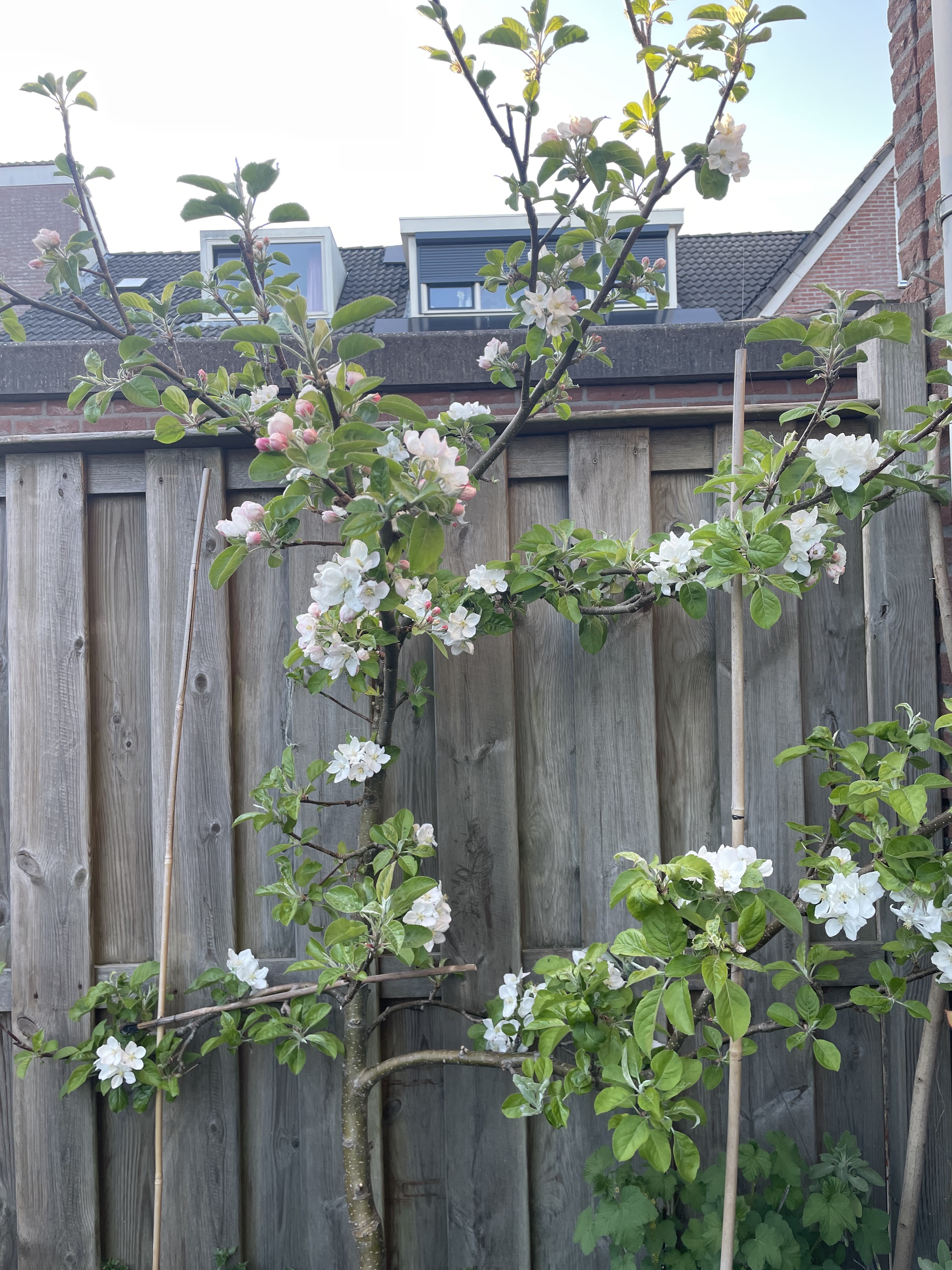
- Edible fruits: Dwarf or columnar apples can give plenty of delicious fruits in the autumn, but don’t take up too much space all year round.
- Container focal point: Olive or fig can grow and thrive in a container, providing year-round structure and colours.
Knowing your purpose helps to narrow your search for the right type of trees.
Pick The Cultivar Suitable for Your Space: Columnar, Dwarf, or Trained
When space is limited, you need to control trees’ height or width (or both) with frequent pruning and training. Make the gardening work less demanding for yourself by starting with the more compact tree varieties.
Dwarf, columnar, or trained trees are better suited for small spaces, as they tend to require fewer vigilant growth checks.
Dwarf trees have the look of full-sized trees (round canopy and branching limbs) but not the size.
- Dwarf trees are regular tree varieties grafted onto smaller rootstocks. This root system limits the tree’s overall height and spread (though you do need some pruning during the active growth months to keep things under control)
- Dwarf trees don’t tend to grow more than 2 to 3 meters in height and spread, making them perfect for a corner in your small garden or even a container.
- It’s often easy to find dwarf varieties of fruit trees (apple, peach, and fig) to fit into a modest space.
Columnar trees grow tall and narrow, with very limited lateral branches.
- Columnar trees are bred or trained to grow upright with a compact canopy. Most stay under 60 cm wide.
- Columnar trees are perfect for adding interest to tight borders or creating screening along fences.
- You can get columnar varieties of deciduous trees, like apple or evergreen trees, like photinia (red robin)

Trained trees like espaliers and cordons grow in compact, space-efficient forms.
- Trained fruit trees can double the yield in half the space, thanks to more sunlight reaching the fruits.
- Espalier-shaped trees have branches tied to horizontal wires or frames. This training technique is often used to grow apples and pears along a fence or a wall.
- Cordon-trained trees often have one stem and short side shoots (spurs). This training technique is great for spur-bearing apple and pear trees grown in a small garden.
- Espalier fruit trees can be planted with vines, medium-sized shrubs, and ground cover to make a beautiful and fruitful border, even if it is narrow. You can find an example of such borders in this expertly crafted PDF planting package.
If you are enjoying this post, you might also appreciate our FREE cheat sheet with 12 Tested Gardening Ideas for Small Spaces.
Provide your info for a link to the downloadable resource and be opted into our email list for the (very) occasional product promotion.


Prune Diligently is Key For Thriving Trees in Small Spaces
You don’t want a very big tree in a small garden. Because of the space constraints, the tree is likely to be planted near many smaller shrubs and plants. If left unchecked, the tree’s vigorous growing canopy will create too much shade for lower plants. Also, if planted near the house, a tree’s strong rooting system could affect the house’s structural integrity.
Regular pruning is highly recommended and often needed to keep your garden thriving at housing a tree.
Pruning goals:
- Limit the height and spread of the tree (and, consequently, its shade)
- Encourage airflow and fruiting
- Maintain a pleasing shape

Different trees thrive on different pruning regimes, but let’s start with mastering the basics.
Basic pruning rules for trees in a small garden:
- Small yet regular pruning jobs during the summer (active growing time) would help to control the spread while improving airflow.
- Cut just above an outward-facing bud with clean, sharp secateurs.
- Promptly remove broken branches as soon as you notice the damage.
- Thin the interior, inward-growing branches to open up the canopy for more air and sunlight to circulate around the tree and its neighbouring plants.
Plant More With Smart Spacing and Layering
With smart positioning and layering, you can add more plants to your small garden. That means more home-grown fruits and vegetables, more fragrance and colour interest, and more food and shelter for wildlife.
Intensive planting equals less bare ground. Weeds have little room to grow, and there’s less surface for water to evaporate. So, less weeding and watering are needed.
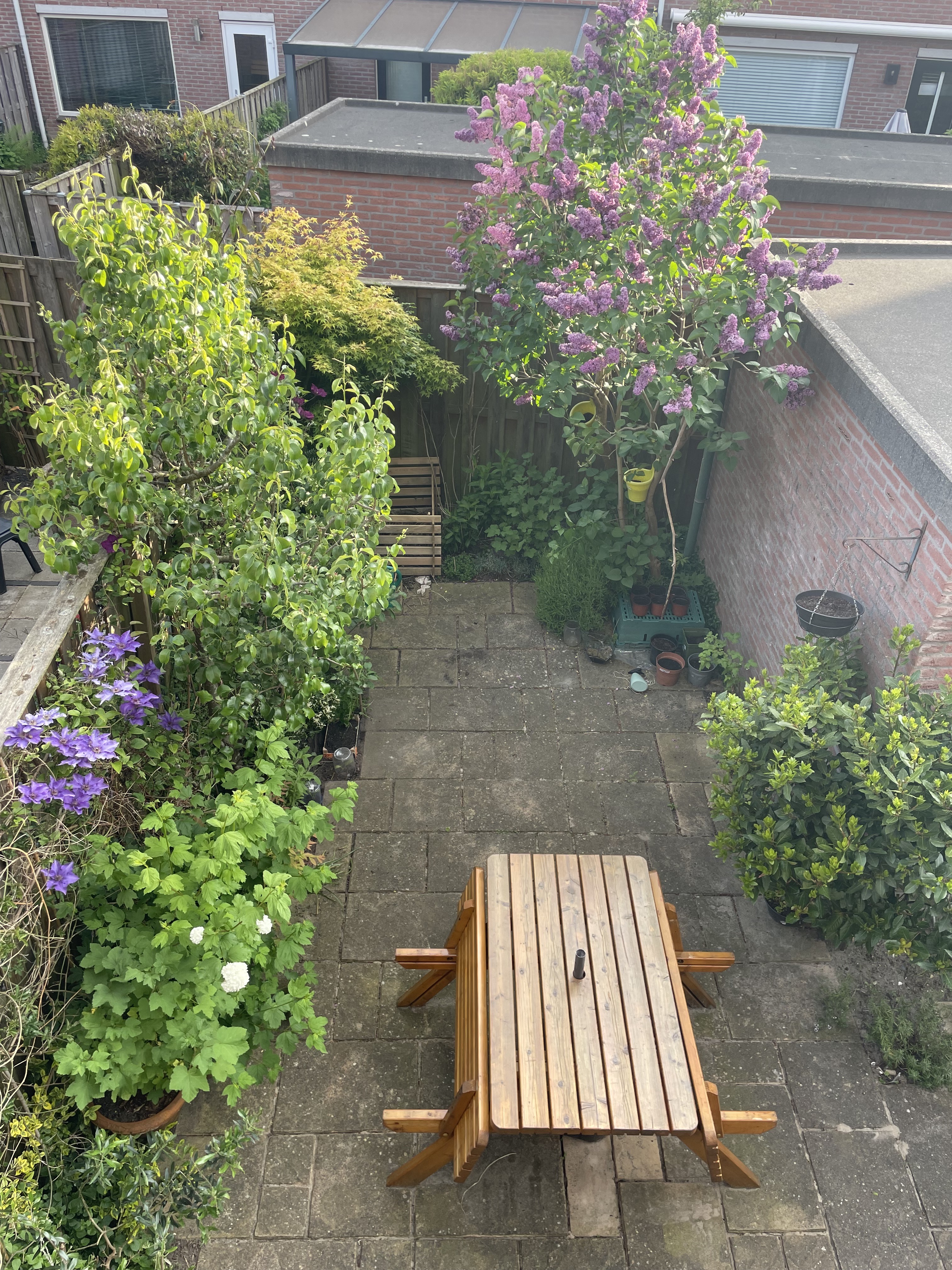
Here are some positioning and layering tips to grow more trees and shrubs in your small garden:
- Corner placement: Tuck a tree into a corner to anchor the space without blocking movement and shading half of the garden.
- Espalier row: Train multiple trees flat to create a green screening and/or increase fruit production.
- Layer heights: Combine one tall tree with medium-height shrubs and ground-level plants while letting vines weave in and out. You can find in this planting package the guide for layering heights in a narrow border to grow more in less space.

 Grow More With Less
Leave a comment