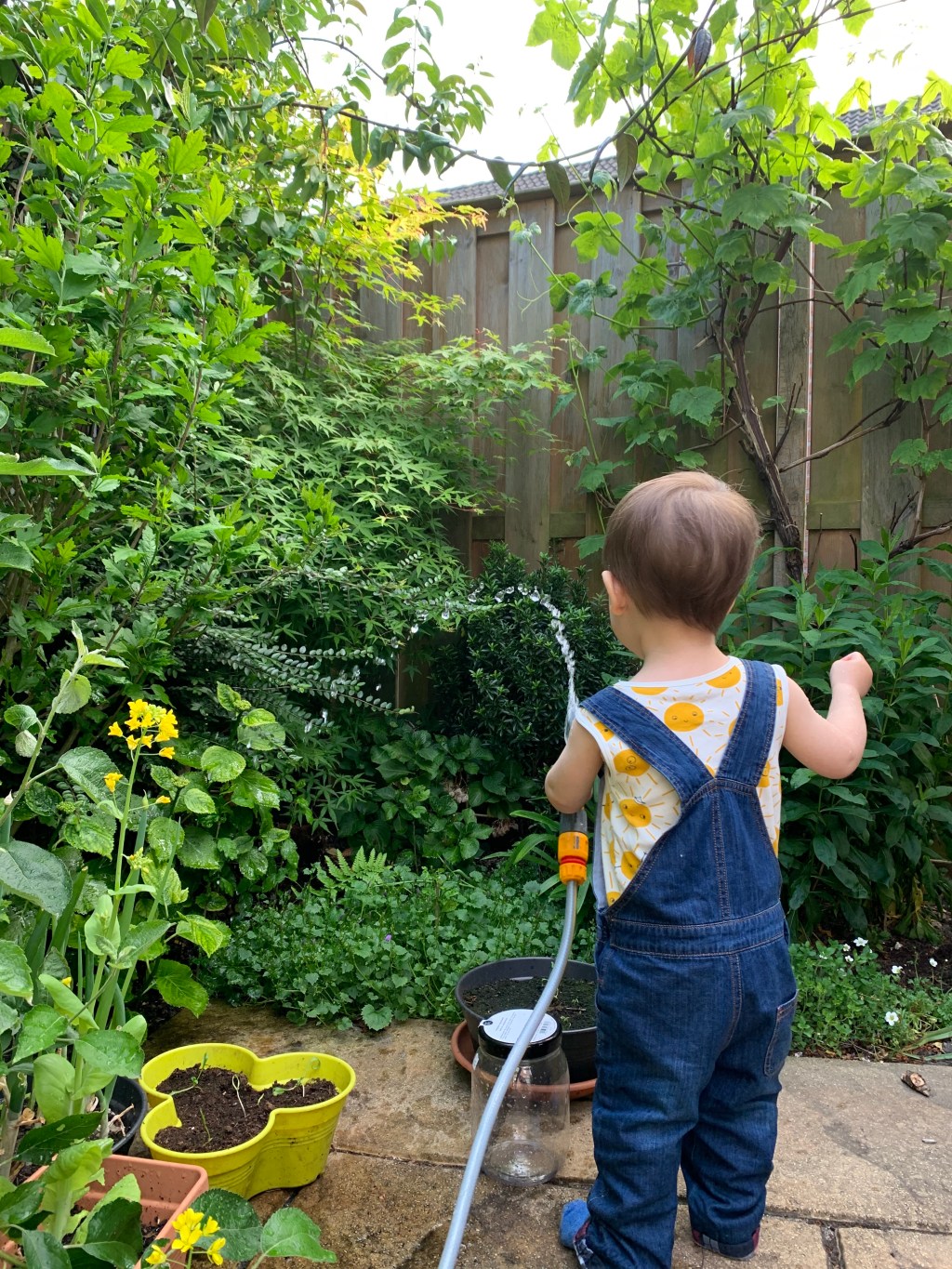
A small garden means less or no space for your kids to kick a ball or play badminton. I am often reminded of it when we get together with other parents and their kids.
“But there is no room to kick the ball out here,” is the comeback from the kids when the parents ask them to go and make noise outside.
Yet, other creative ways exist to get your kids out in the garden, even if you don’t have a spacious lawn (and a bouncy trampoline).
My son doesn’t always want to join me in the garden—at least not for as long and as often as I hope he will.
Some days, he is out there, spraying water everywhere and happy as a bee.

On other days, he either refuses to step outside altogether. Or he joins me in the garden, but he whines and moans, taking away my much-needed garden tranquillity.
Nevertheless, I am trying to increase his garden time because
- Pottering around plants and soil is good for his gut biome, or “the garden in his tummy” (we borrow the term from one of his favourite books).
- Hanging out in the garden has learning opportunities about wildlife and food origin.
- Being outside in the garden is a much better alternative to being inside in front of a screen, and it can potentially result in quality mother-and-son time.
So, I set out to collect ideas for garden fun for kids. I use them for the seasons, weeks, and days when I want to get my kid outside for fresh air and quality time (away from screens and hour-long sedentary play). They can be roughly grouped under five projects tailored to different age groups, moods, and personalities.
Care-for-Wildlife Projects
Suitable for: Ages 3–12
Personality: Nature-loving kids, gentle souls, little animal whisperers
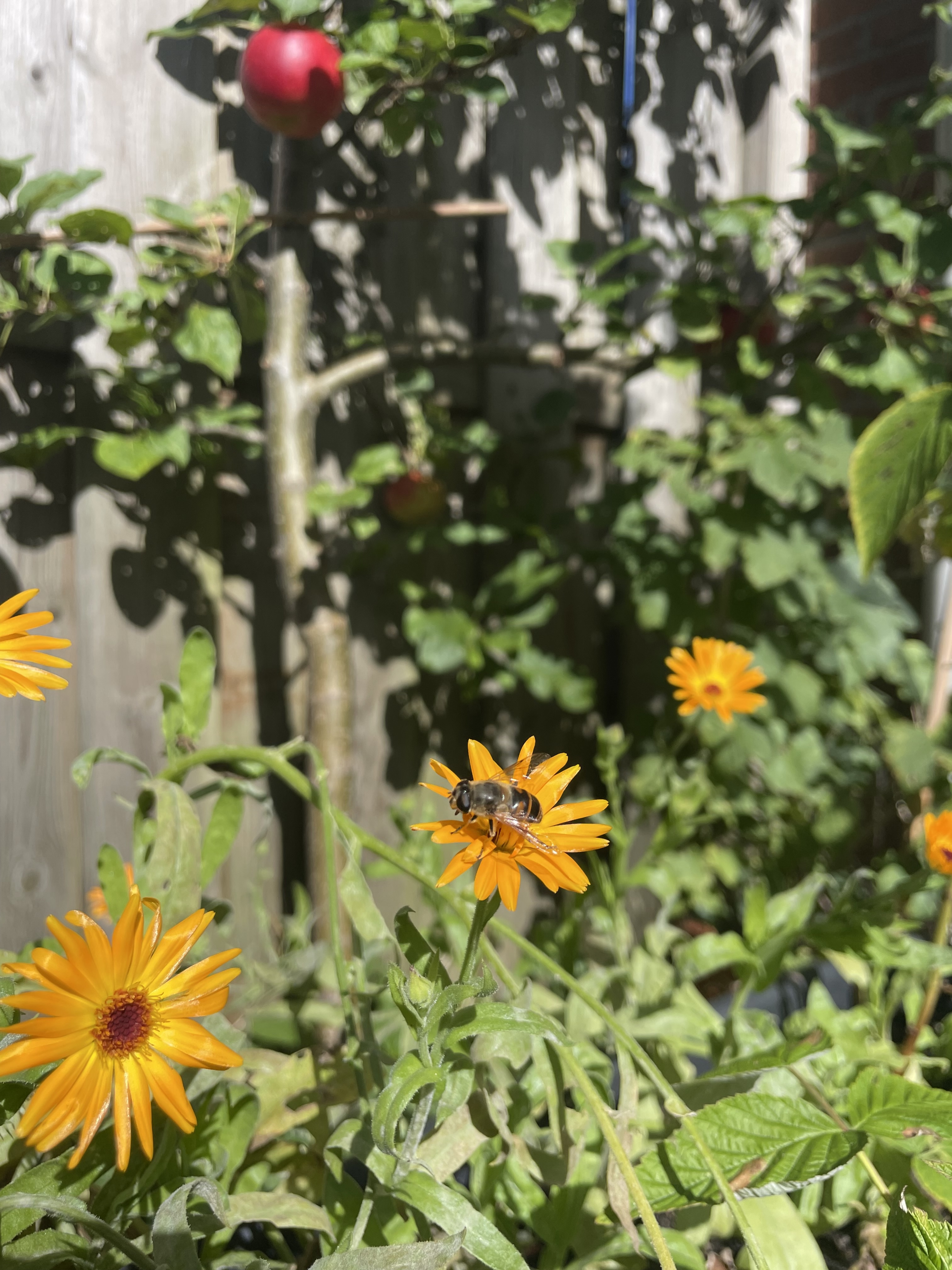
Care-for-wildlife projects are fun, meaningful, and memorable moments in the garden for kids naturally drawn to animals and the idea of helping tiny creatures thrive.
Ideas to try:
- Build a bug hotel: Stack twigs, bark, pinecones, and hollow stems in a quiet corner of the garden, an open wooden crate or an empty terracotta pot. Let kids arrange the materials like little architects.
- Make a bee bath: Fill a shallow dish with clean water and line it with pebbles so bees have a landing spot.
- Grow pollinator plants: Sunflowers, nasturtiums, and marigolds are easy for children to grow and attract bees, butterflies, and hoverflies (and even hummingbirds).
- Help the birds through a harsh winter: Fill a store-bought bird feeder with tiny seeds or smear collected pinecones with peanut butter and seeds to hang from trees to help the birds when food is hard to come by.
- Put up a birdhouse: Hang a birdhouse in a sheltered and shady place to provide a safe nest for little birds. For handy older kids (and resourceful parents), making a birdhouse from scratch could be a rewarding, fun project.
- Leave out nesting materials: Get your kid to collect and spread small plant materials and natural fibres around the garden, which birds can collect for their nests. (My son collects woollen yarn scraps from my knitting box and goat hair from the local petting zoo 🙈)
- Make shelters for amphibians: Create cool shady nooks and hiding places with pieces of terracotta pots, bricks, and paving slabs so that frogs and toads can shelter in your garden.
Tip: Use a simple wildlife journal — a small notebook where kids can draw or note who visited their garden today.

Grow-Your-Favourite-Food Projects
Suitable for: Ages 4–14
Personality: Foodies, fussy eaters, future chefs, hands-on learners
Growing and picking your own food is an excellent chance for young children to learn where their meals come from and what true food and real ingredients taste like. The sweetness of garden peas five minutes out of their pods and just boiled. The freshness of strawberries that ripe in the heat of early June. The smell of a tomato plant. Picky eaters might even be more willing to try new things because they grew them.
Ideas to try:
- Pizza toppings (tomato, basil, mushroom)
- Breakfast cereal goodies (berries, sunflower seeds)
- Summer fancy drinks, aka water infused with herbs and berries from the garden
- Fruit-based muffins, tarts, and cakes that use home-grown fruits like apples, pears, blueberries, and strawberries
- Ice cream, which often works very well with raspberries, blueberries, or strawberries in the ice cream mix or as toppings
- Home-made potato wedges
Tip: Although it is tempting to involve the kids in planting and harvesting as much as possible, you might get better results if you focus on the right activities for your child.
Sowing tiny basil seeds and waiting many weeks for the first few leaves is often not considered fun by a four-year-old. However, he or she might very much enjoy hunting inside a giant sunflower seed head for seeds.
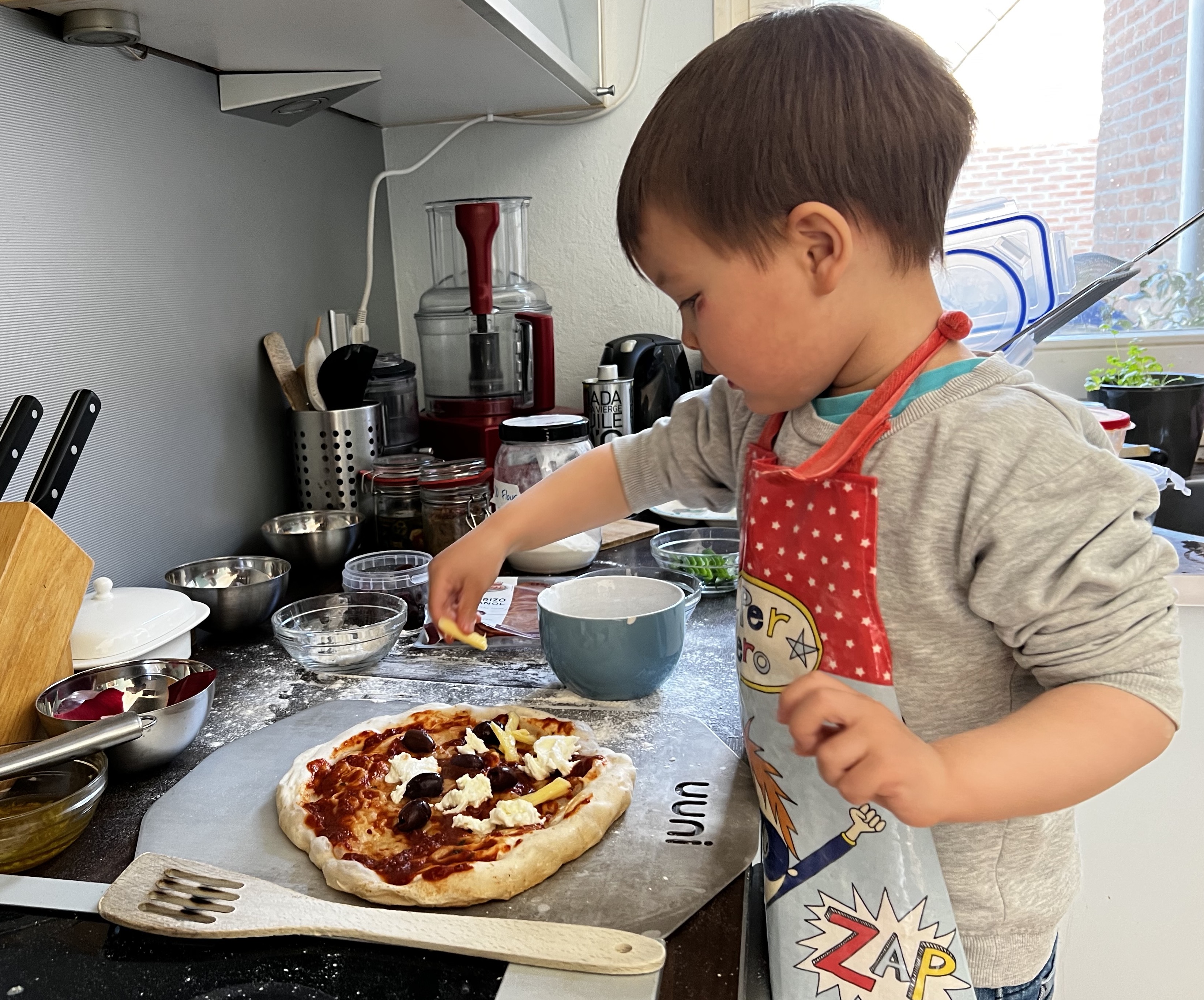
If I were to grow my son’s favourite pizza toppings, I wouldn’t start with tomato and basil seeds, but get seedlings from a trusted nursery. Once the seedlings settle into our garden, he can help with repotting and labelling them. I would also get one of those mushroom-growing kits and let him be “in charge” of caring for the mushrooms.
If you are enjoying this post, you might also appreciate our FREE cheat sheet with 12 Tested Gardening Ideas for Small Spaces.
Provide your info for a link to the downloadable resource and be opted into our email list for the (very) occasional product promotion.


Garden Signposting Projects
Best for: Ages 5–10
Personality: Artsy kids, design lovers, introverts who enjoy slow and focused work
For some children, the garden can be a creative canvas. Painting signs, labelling plants, and crafting little garden decor can help them feel like they’re building something lasting, a memento.
Ideas to try:
- Painted garden markers: Use wooden spoons, pebbles, or popsicle sticks to paint veggie names and symbols. Acrylic paint lasts longer outdoors.
- Decorative signs: “Butterfly Cafe” near pollinator beds or “Worm World” by the compost pile — let kids name their spaces.
- Chalkboards for garden updates: Mount a small chalkboard outside to log “Today’s harvest” or “Bees spotted: 3”.
- Fairy garden zones: If they love storytelling, let them design a corner of the garden for imaginary creatures. Twigs, shells, and old dollhouse furniture are great materials.
Garden As A Mini Playground
Best for: Ages 2–8
Perfect for: Active, hands-on, mud-and-sand kind of kiddos
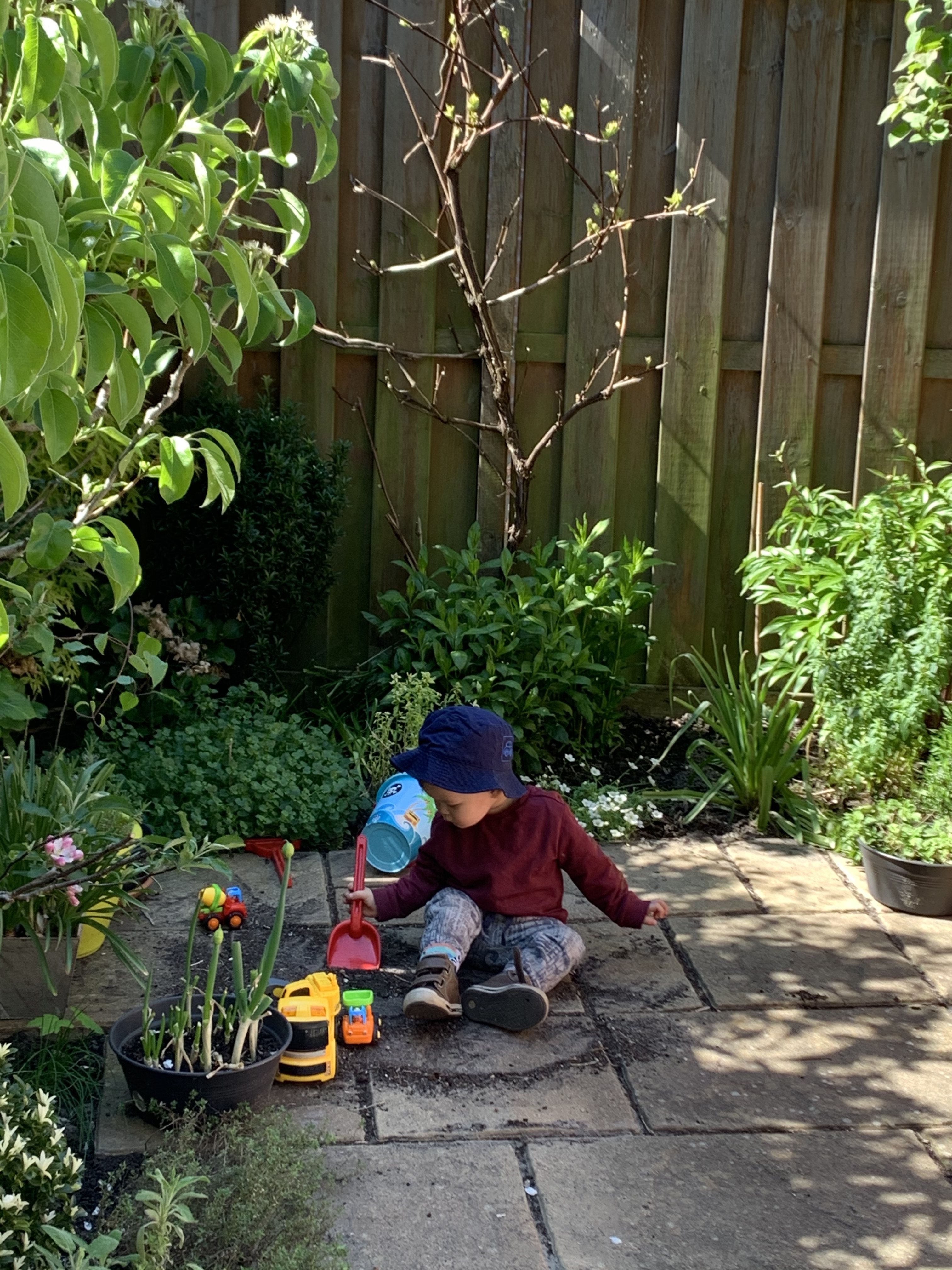
If you’ve got a little castle builder, or machinary fanatic, or a forager on your hands, turning the garden into a construction site with playsand (or loose soil) or a playground with hidden treasures will be a way to keep them busy.
Ideas to try:
- Sand play in the shade: Get some play sand or use new loose soil for dump truck play. My little boy played this game for 3 summers long (and during many dry, cold days).
- Berry hunts: Grow raspberries, blueberries, and the like because the little fruits hidden in the foliage are great treasures. Tell your kids when there are ripe berries, and they can go out there “foraging” for their snacks.
- Natural material scavenger hunts: Find “3 round leaves,” “1 bendy twig,” or “something that smells good” for arts and crafts
- Surprise treasure hunts: Hide small toys, chocolate eggs, or handwritten notes in weather-proof boxes and give them clue-based maps. (We once did a “garden present hunt” as a part of the boy’s birthday party. )
Tip: A densely planted garden makes a great background for these games. They provide plenty of shade for hour-long plays and have so many hidden nooks that add fun to treasure hunting.
Fun Experiments in the Garden
Best for: Ages 6–12
Perfect for: Science-loving kids, question-askers, future inventors
Some kids love to poke, test, observe, and ask why. The garden is a living lab, full of opportunities for small experiments.
Ideas to try:
- Regrow kitchen scraps: Green onions, celery, lettuce, or even pineapple tops can be grown in water or soil.
- Compare plant growth: What happens when one seedling gets more sun than the other? Let them chart the heights through the months to see the difference.
- Layering experiments to test cell transformation: Get them to help with layering projects as proof that some plant cells can transform from one type (in the branches) to another type (including root cells).
Final Thought
There’s no one-size-fits-all approach to getting children interested in gardening or hanging out in the garden. Some kids are drawn to the wildness of nature, others to its order or its magic. What matters most is creating space for them to explore (safely), feel capable, and make memories.
 Grow More With Less
Leave a comment