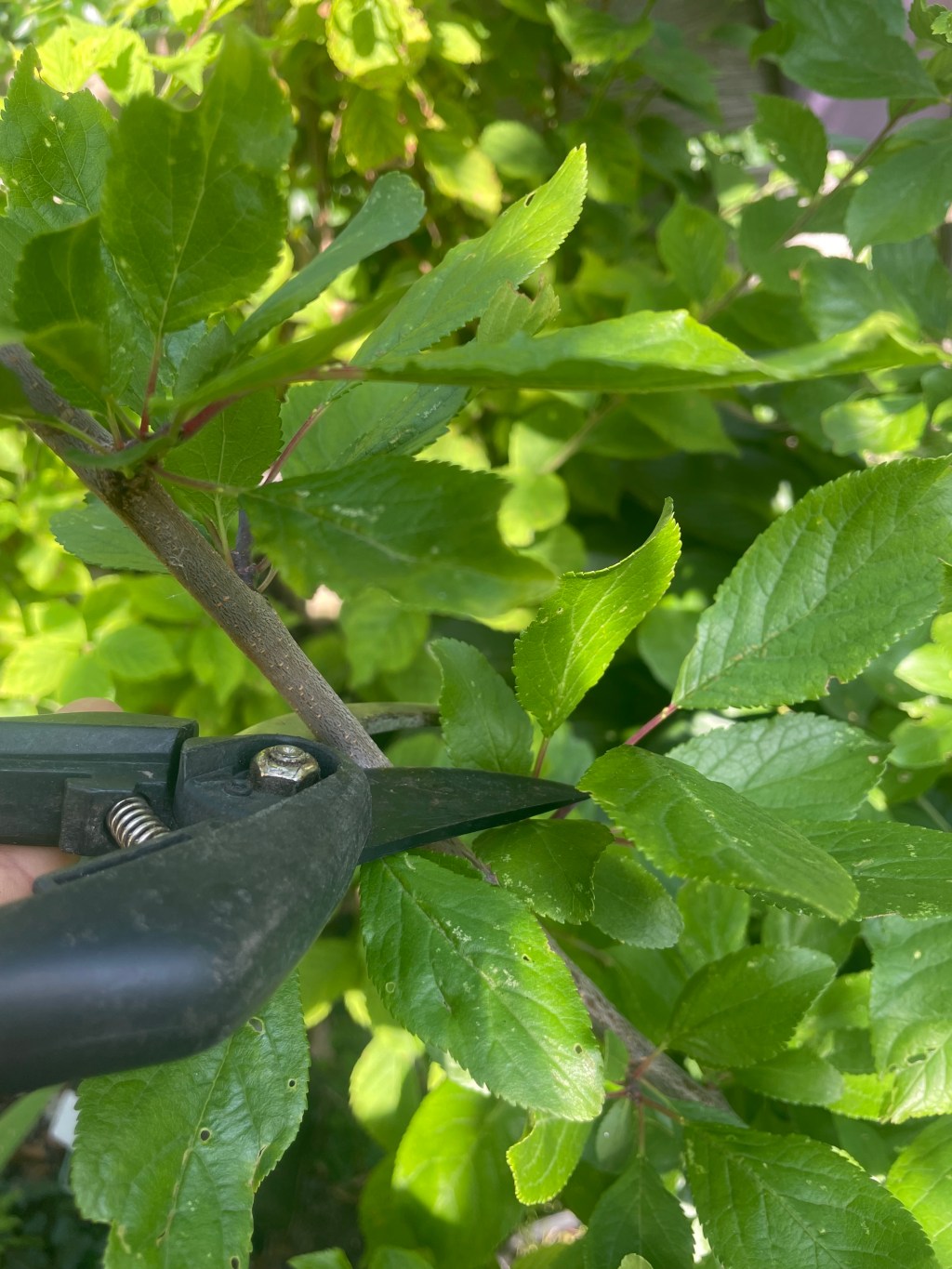
Winter pruning comes in the standard fruit tree growing book, but summer pruning is the task that makes a difference when you want more fruits in your small garden.
If you only prune your established apple and pear trees in the winter, they could double in size in a few years, casting shadows over most of your garden and producing fruits in corners you can’t reach. (We all know how tricky it can be to find a space for the step ladders in the modest yard we might have overplanted).
Enter: summer pruning – the secret to keeping fruit trees compact, manageable, and more productive.
Summer pruning is the key to managing size, encouraging fruit production, and keeping trees healthy and accessible in tight gardens or small urban plots. It slows down growth instead of stimulating it, clears space for light and airflow, and helps you shape the tree while you can still see what it’s doing.
If you’re growing fruit trees in a small space, summer pruning isn’t optional—it’s essential. Here’s how to do it right.
1. Prune After the First Growth Flush
Wait until your tree has finished its main spring growth, usually by mid- to late summer.
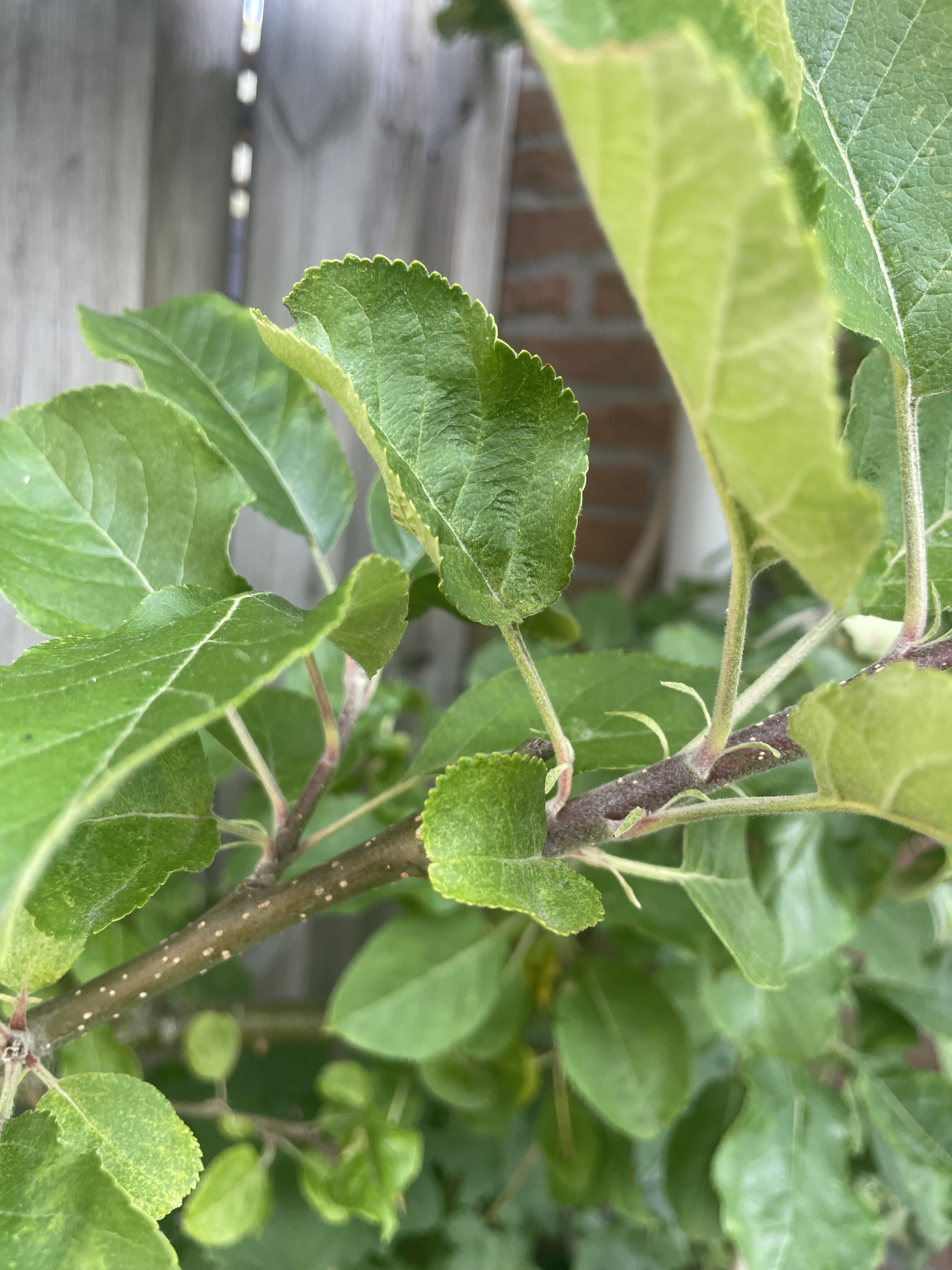
New shoots grow rapidly in spring and early summer. Once they’ve slowed down—typically between late June and August—you’ll notice the soft green growth hardening off. That’s your window for pruning. (Doing it too early might stimulate new growth of leaves, which you want to avoid.)
Pruning at the right time slows down leaf regrowth and shifts the tree’s focus to fruit development.
2. Remove Upright Water Sprouts and Crowded Growth
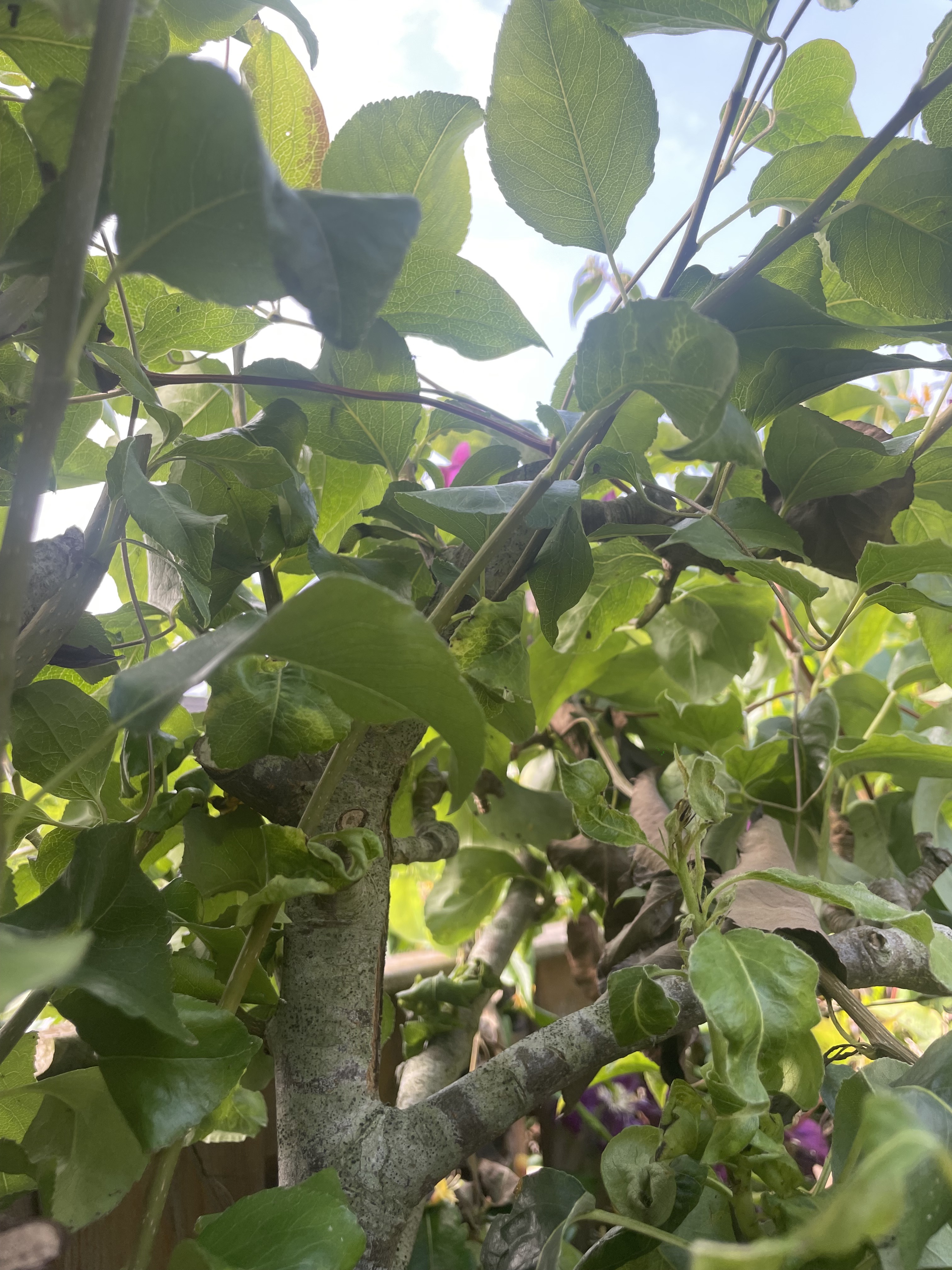
Cut out the strong, vertical shoots that often grow in the centre or upper canopy—these don’t bear fruit.
These water sprouts use up the tree’s energy without giving anything back. Removing them helps redirect energy to fruiting branches and lets in more light.
And, while you’re there, do some cuttings with lateral branches
- Remove ones that grow inwards, crowd the centre of the tree
- Shorten new shoots that have grown over 30cm long
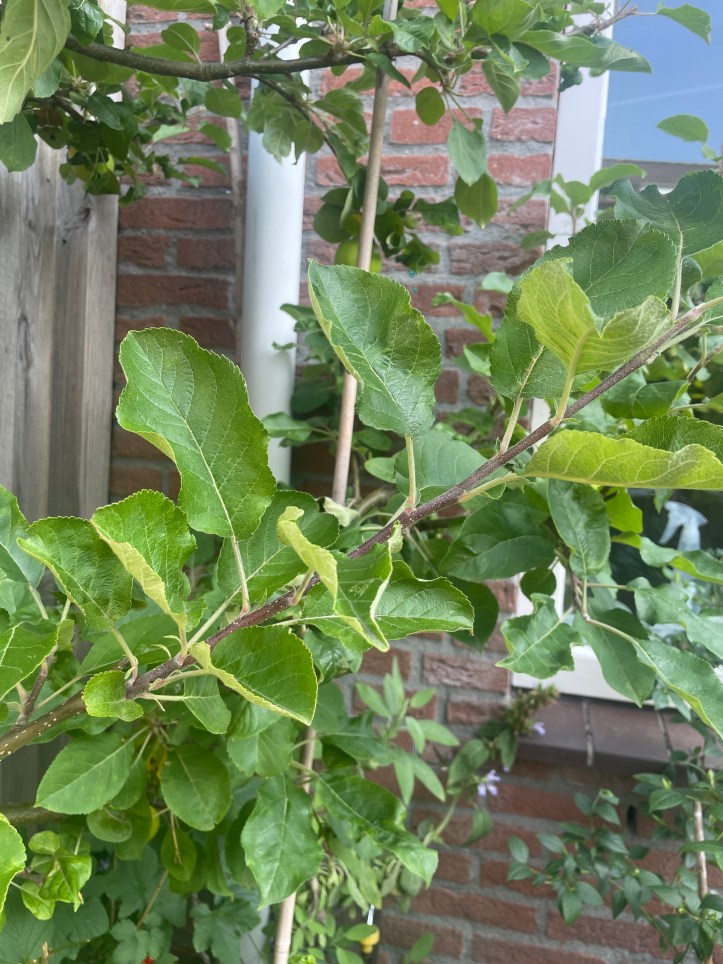
A long lateral shoot that should be shortened with summer pruning
3. Avoid Pruning Too Much
Don’t remove more than a quarter of the tree’s leaves in one go.
It’s tempting to go all in with the secateurs — done and dusted, especially if the tree feels overgrown. But too much pruning can stress the tree, reduce this year’s harvest, or trigger a burst of weak regrowth. Always step back and assess after every few cuts.
Conservative pruning helps the tree stay productive and balanced.
4. Prioritise Light and Airflow
Thinning the canopy allows sunlight to reach ripening fruit and helps prevent fungal diseases.
Summer pruning is perfect for shaping the tree to maximise airflow and reduce humidity, especially in dense canopies. Less shade inside the tree also improves the fruit’s colour and sweetness.
Good airflow reduces the risk of mildew, blight, and rot, especially in wet or humid summers.

5. Use Sharp, Clean Tools
Always prune with sharp, disinfected tools to avoid damaging branches or spreading disease.
Make clean, angled cuts just above a bud or side shoot. (Flat cuts allow water to sit on the open wound, causing rot.)
If you’re pruning multiple trees—or suspect disease—wipe blades between cuts with alcohol or a disinfectant.
Healthy cuts heal quickly and lower the risk of infections like canker or dieback.
6. Know Your Tree Type
Different fruit trees (and training systems) respond differently to summer pruning.
- Apples and pears respond well to summer pruning for spur development and size control.
- Plums and cherries should only be pruned in summer to prevent silver leaf disease.
- Trained fruit trees (espalier, fan, cordon) need precise pruning in summer to maintain shape and maximise productivity in small spaces.
⠀Tailor your technique to the tree species and structure for the best results.
7. Skip the Fertiliser—Mulch Instead
Don’t feed right after pruning or you’ll risk encouraging soft, vulnerable regrowth.
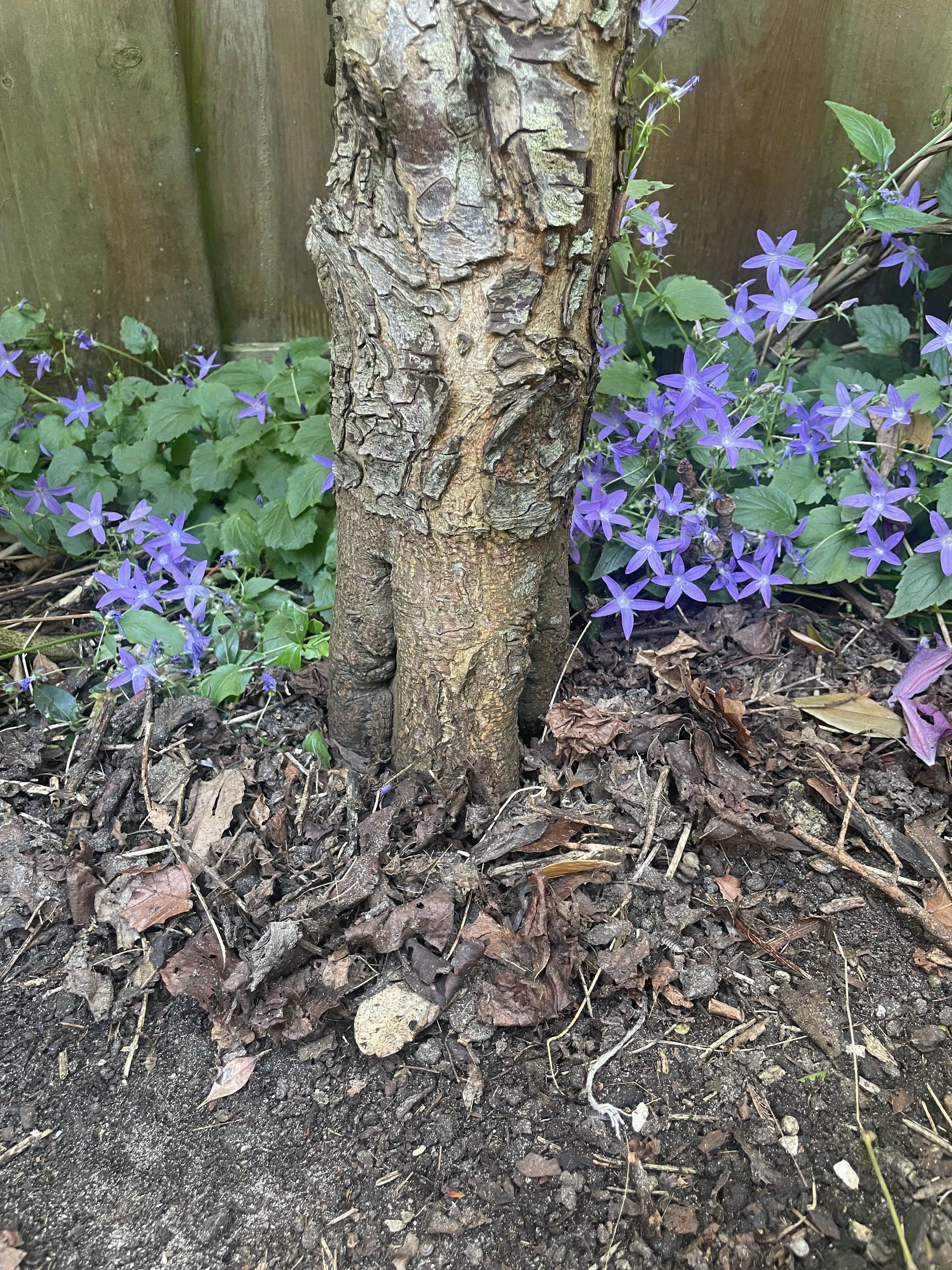
Instead, apply a layer of compost or organic mulch around the tree’s base. This improves soil structure, retains moisture, and supports the tree’s recovery without overstimulating new shoots.
Mulching supports steady health, not wild regrowth.
Summer Pruning of Fruit Trees Is Key For a Productive Small Garden
Summer pruning is one of the most useful tools for small-space gardeners. It helps you:
- Keep trees the right size for your garden
- Improve fruit access and sunlight
- Reduce disease and improve yields
With the right timing and a few clean cuts, you’ll have fruit trees that work with your space, not against it.
If you are enjoying this post, you might also appreciate our FREE cheat sheet with 12 Tested Gardening Ideas for Small Spaces.
Provide your info for a link to the downloadable resource and be opted into our email list for the (very) occasional product promotion.


 Grow More With Less
Leave a comment