
Containers make growing plants possible in courtyards, balconies, patios, and even the tiniest outdoor spaces. But plants in pots live a more precarious life than those in the ground — especially as autumn rolls in and winter looms.
Standing lonesome in a pot means that the plant is often less protected from the elements, from autumn gusty winds to winter cold rains and snows.
So if you are growing perennial plants in containers, make sure you take these steps to protect them so that they survive and thrive through the colder months.
1. Lift Up Plants Vulnerable to Wet Feet
If there’s one silent killer of container plants during the rainy, cold months, it’s soggy soil. Cool temperatures, frequent rainfalls, and plants’ slower growth can lead to more water pooling near the roots than some plants would like.
While you can’t turn the tide as autumn weather sets in, you can help a container plant out with the drainage. It’s simple: Raise the pot off the ground with pot feet, bricks, or even small pieces of wood.
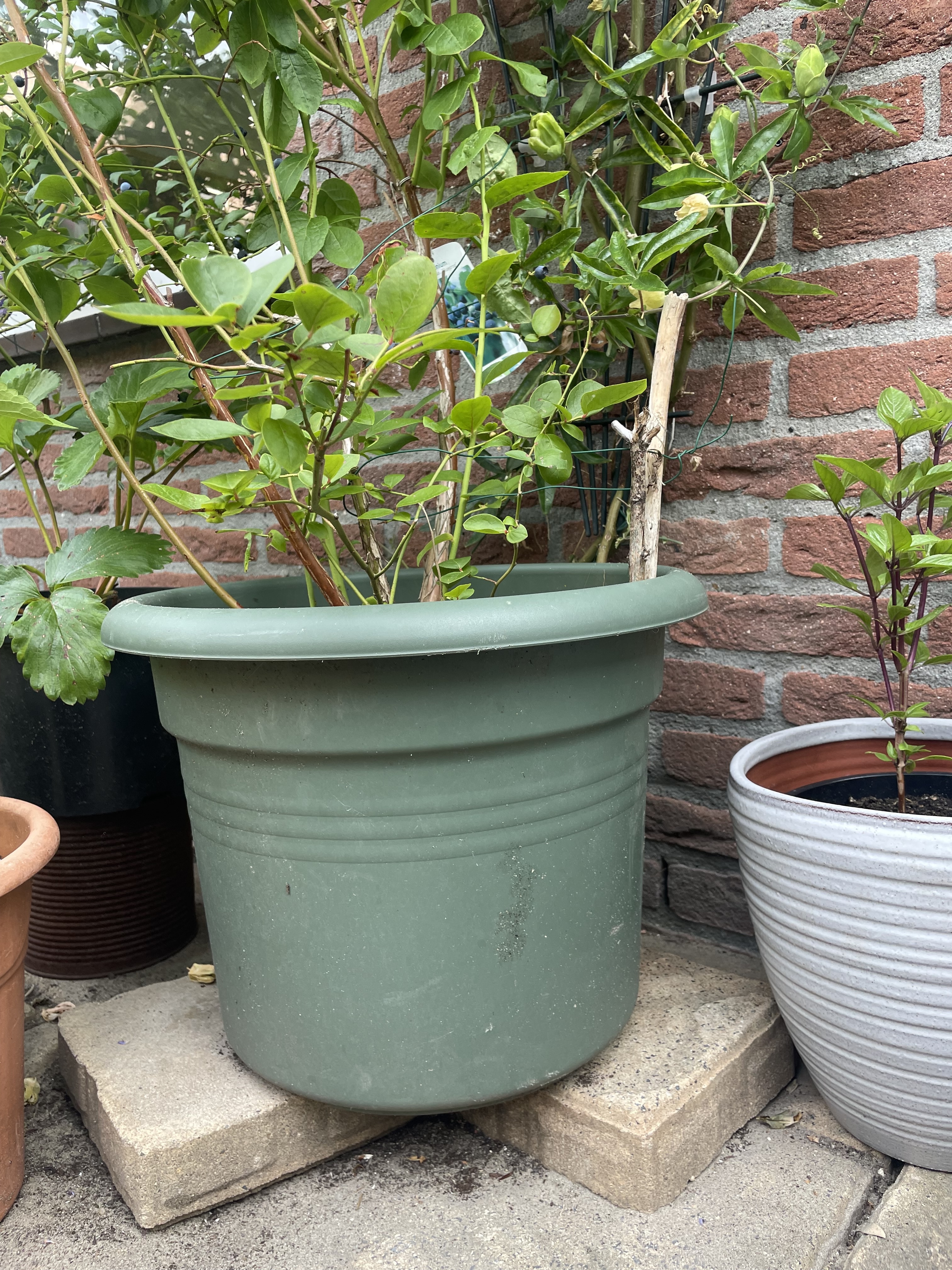
So this autumn, make sure you do some lifting if you have containers with plants that hate having “wet feet”. The list includes:
- rosemary
- lavender
- thyme
- sage
- oregano
- sedum
- olive tree
For older potted plants in rather compact soil, here are some extra things you can do to help with drainage:
- Lift the plant out of its pot, gently loosen the soil around the roots, and then replant it in fresh, free-draining soil.
- Add an extra mix of grits and sand to the bottom of the pot before you put the lifted plant back in.
- Change from a plastic pot to a more breathable terracotta pot
2. Protect Potted Plants from the Wind
I like to move my pots around to catch the sun. But, out in the open, tall and slender plants (like raspberries) are at risk of branches being snapped by the strong autumn winds. Such winds can even topple over lightweight containers, causing serious damage to the plants within.
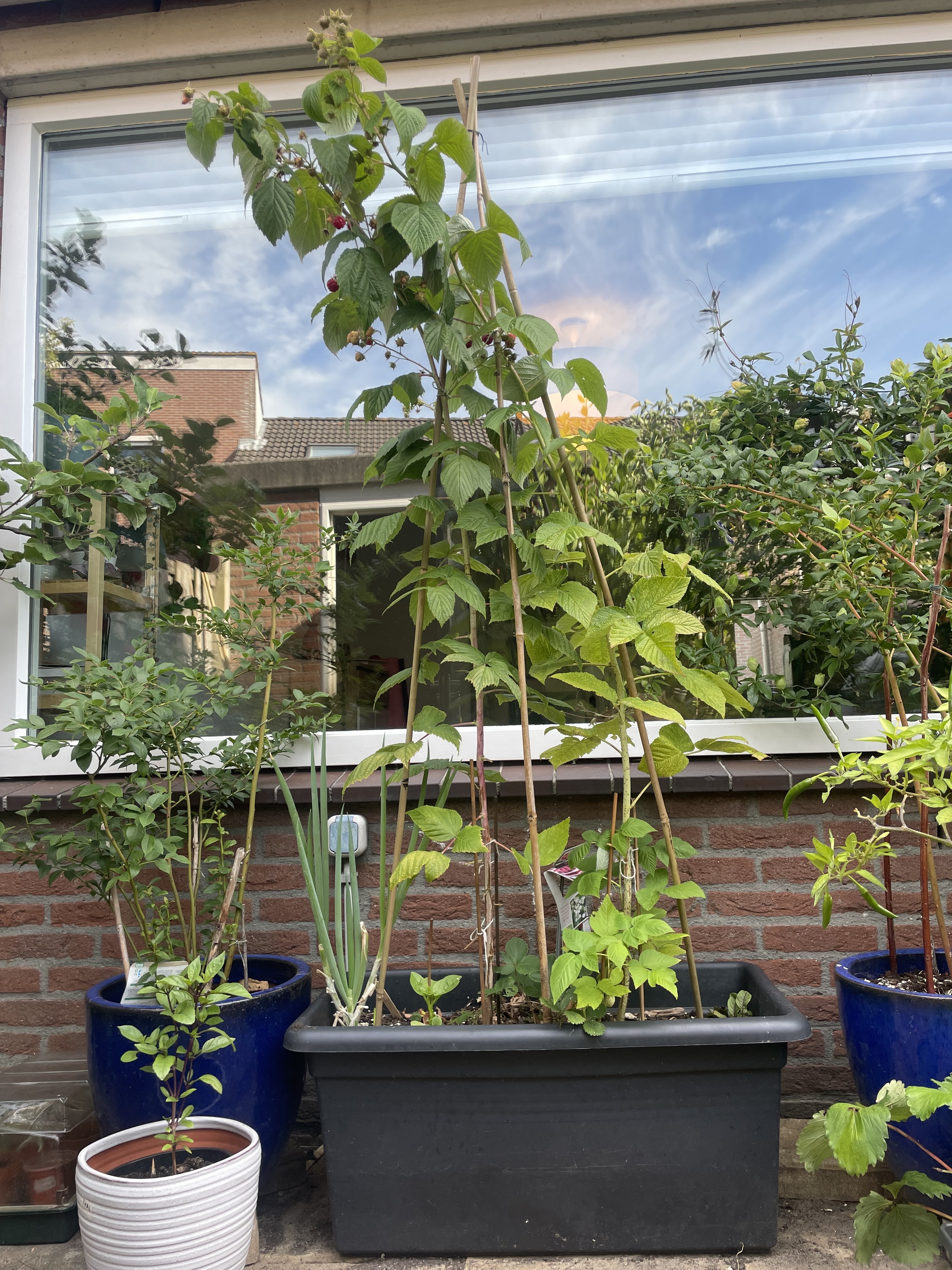
So when autumn comes, I get ready to move the pots (again) to sheltered corners and put up support frames to reduce the rocking that damages the roots.
Sheltering your pots also creates warmer microclimates, giving your plants a little extra protection when temperatures drop.
If you are enjoying this post, you might also appreciate our FREE cheat sheet with 12 Tested Gardening Ideas for Small Spaces.
Provide your info for a link to the downloadable resource and be opted into our email list for the (very) occasional product promotion.


3. Protect Plants Vulnerable to the Cold
Some plants can take a frost or two. Others — like tender herbs or chillies from the tropics— will suffer as soon as the first icy night. Container plants are especially vulnerable, as their roots don’t have the natural insulation of garden soil.
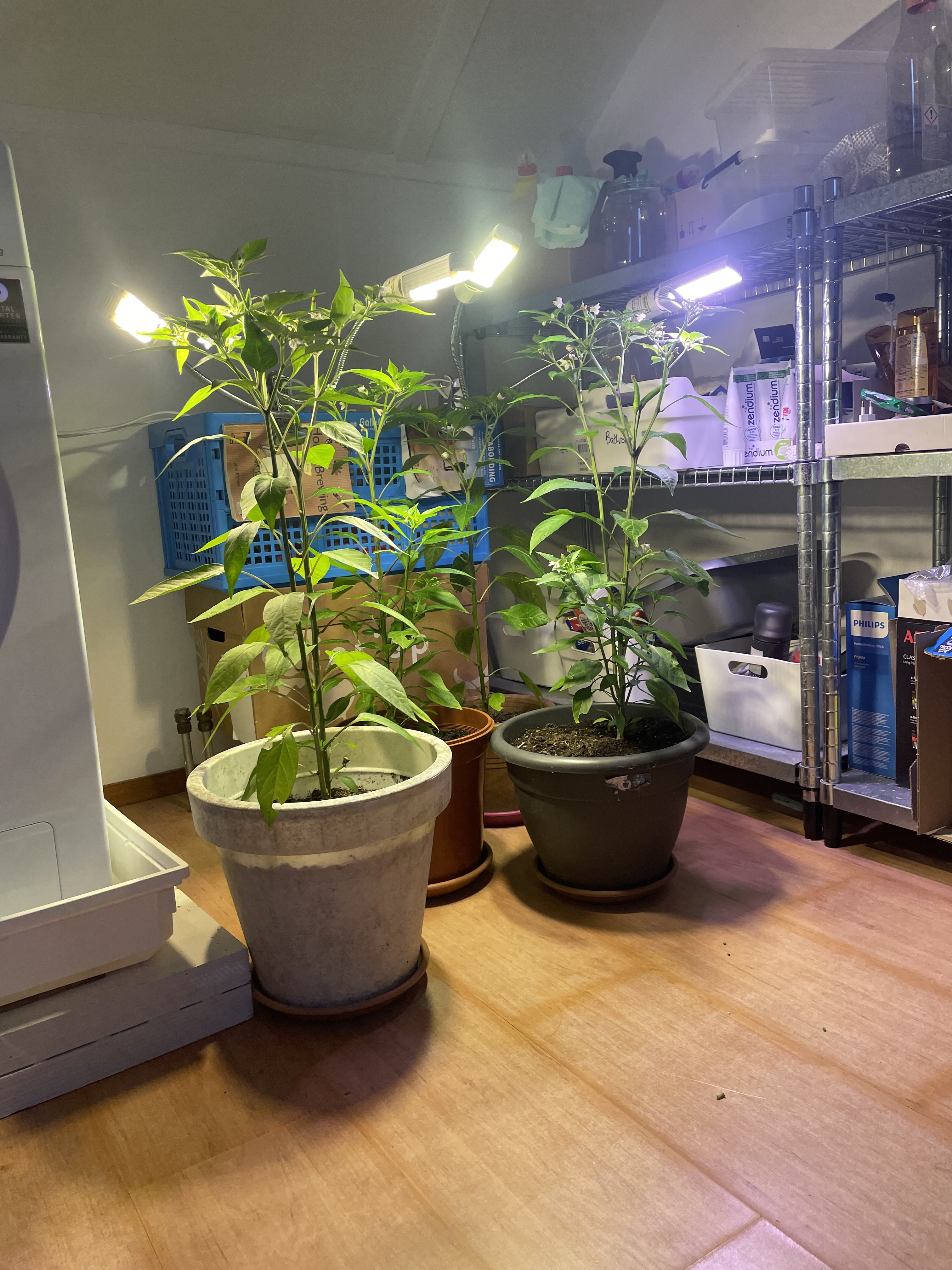
So make sure you protect such container plants with
- Mulching: Add a thick layer of bark, straw, or leaf mould on top of the soil.
- Wrapping: Use fleece, hessian, or bubble wrap around the pots.
- Moving indoors: If you can, bring tender plants into a greenhouse, conservatory, or even a sunny windowsill.
4. Divide Plants That Have Overgrown the Pots
Autumn is an excellent time to take stock of your container plants. Some perennials may have filled their pots completely, leaving little room for fresh growth.
Overcrowded roots lead to poor drainage, hungry plants, and reduced flowering next year.
So, this autumn, make sure you check for signs of plants overgrowing their pots. If they do, divide and refresh. It means tipping a plant out of its pot, teasing apart clumps, and repotting each section in fresh compost.
By dividing and refreshing in the autumn, you give each section more room to grow in the spring. Also, you get some extra plants for free to display in your garden or give to a friend.
5. Feed the Plants That Need It
Autumn is often overlooked as a feeding time, but many container plants still benefit from a boost before winter.
Potted plants that appreciate an autumn feed include autumn-flowering plants (such as chrysanthemums or heathers) or evergreens (like bay, box, or camellias) that keep growing through autumn and winter.
On the other hand, make sure you do NOT feed tender plants heading into dormancy.
 Grow More With Less
Leave a comment