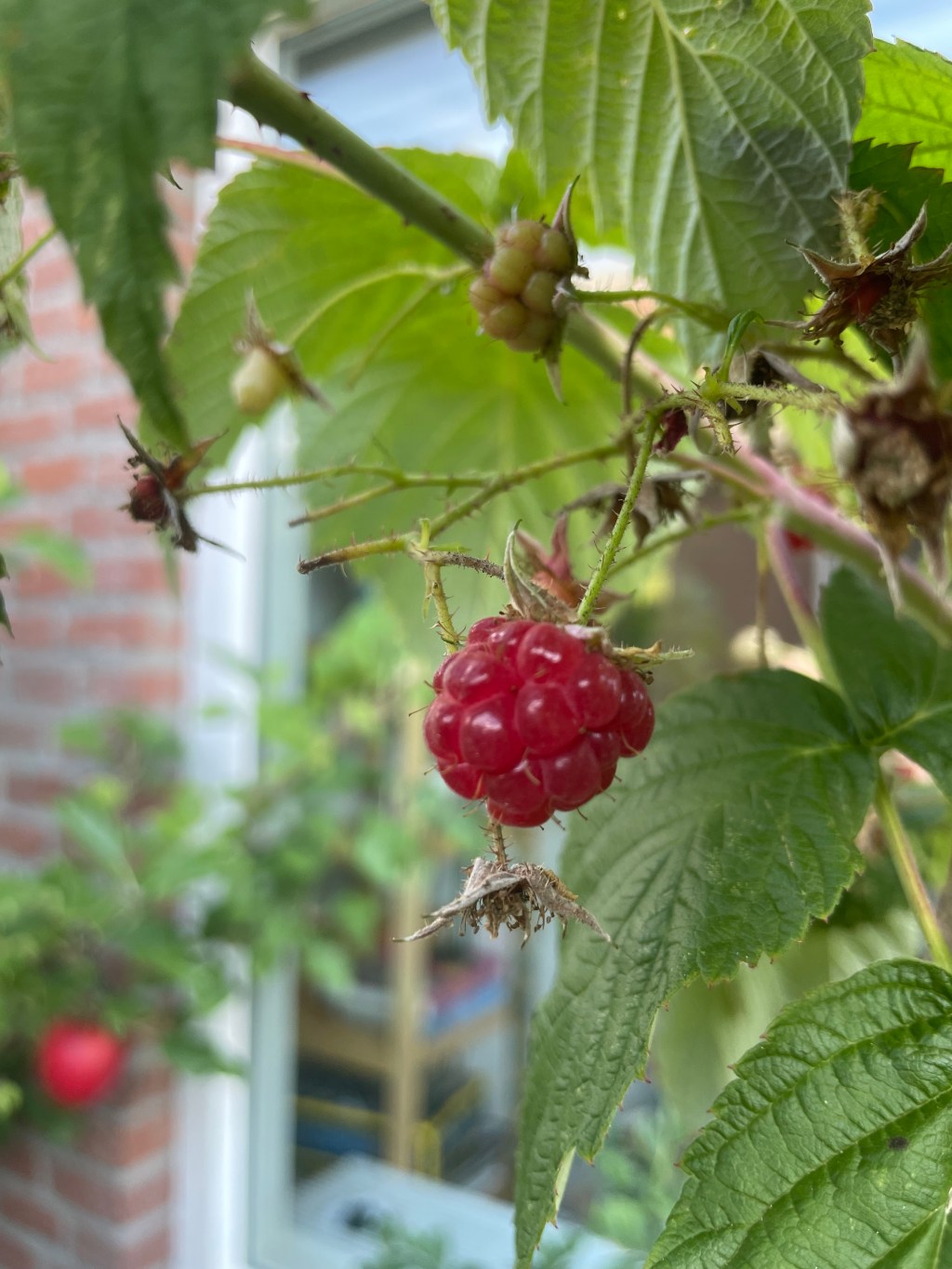
My boy loves raspberries and their tartness. He hunts down the red fruits hidden among the green leaves (and thorny branches) as if they were the best type of treasure.
It always happens so fast: the berries being pulled off their stubby white end (receptacle) by equally stubby fingers and being popped straight into my son’s mouth, often without a glance to check for the little insects.
In our garden, the red raspberries disappear quickly, even with the second patch I created using the young plants that wandered off the original patch.
So when the ground runs out, I looked into growing raspberries in containers. Enter, autumn-fruiting raspberries.
The autumn variety fruits on current season’s canes, so the plants tend to be more compact and, thus, more suitable for container planting.
And the bonus is that with some extra autumn-fruiting raspberry canes in a container, we extend the feasting season into autumn months (rather than finishing it reluctantly in July).
A quick glance (or tl;dr)
- Preferred Soil: Fertile, well-drained soil with a slightly acidic pH (around 5.5–6.5).
- Preferred Place: Full sun in a sheltered position; suitable for beds or large containers.
- Edibility: Sweet, tangy berries eaten fresh or used in desserts and preserves. Leaves can be used to brew tea.
- Pruning Tips: Cut all canes to ground level in late winter, as fruit forms on new season’s growth.
- Harvesting Notes: Harvest when berries are fully colored and pull away easily (generally from late summer to first frosts).
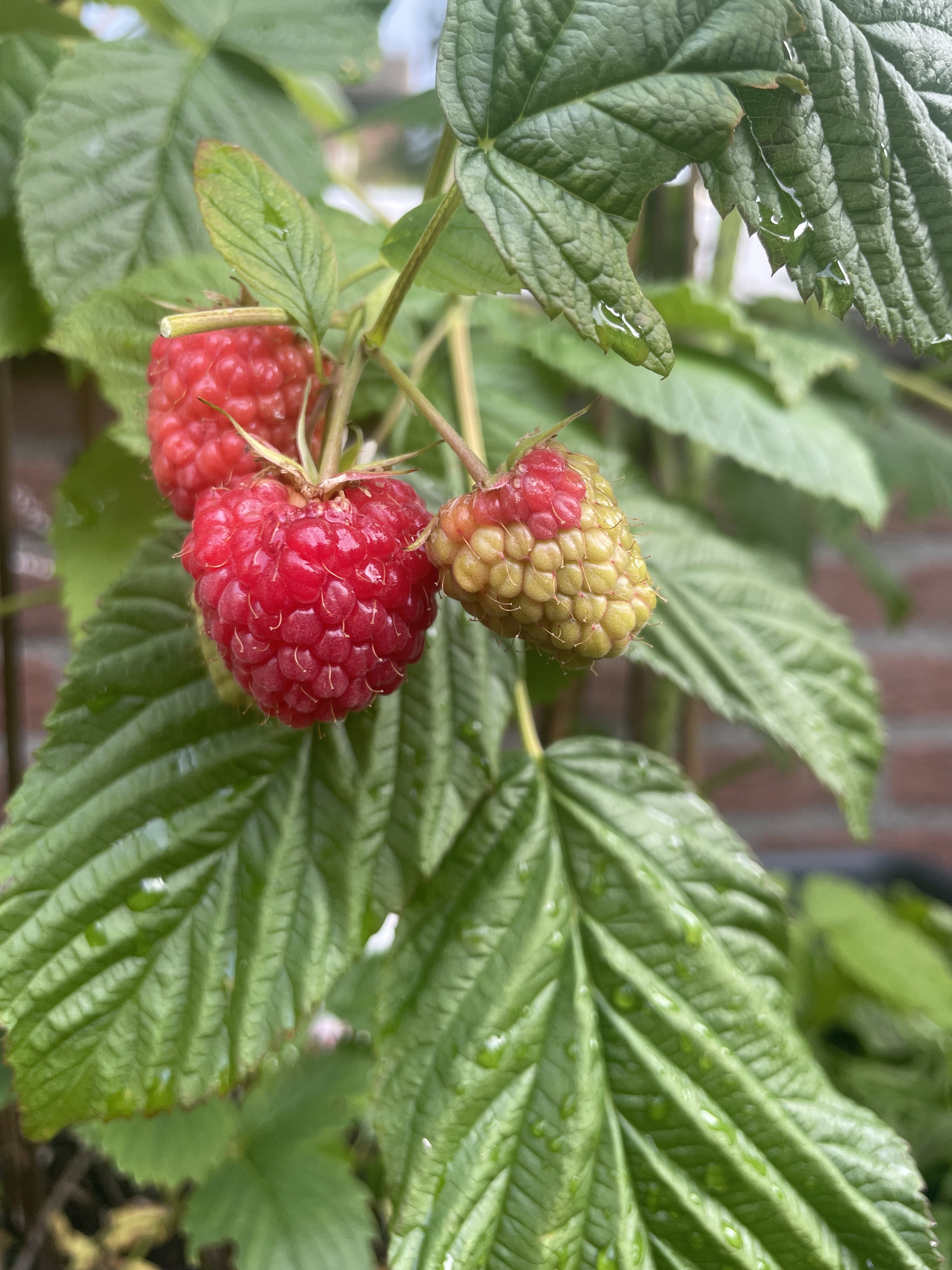
Autumn-fruiting raspberry is an easy win. It is quick to get set up and can keep producing year after year.
Read on for the how-to details.
Setting Up for Planting
How to Start: Young Seedlings or Seeds?
For most home gardeners, the easiest way to grow raspberries is from bare-root canes or potted plants bought from a nursery in winter or early spring. With these, you can expect fruits in the following autumn.
Growing from seeds is possible but slow (and unreliable) — you’ll wait years for fruit.
The Soil
Raspberries prefer fertile, well-draining soil rich in organic matter. In containers, use a high-quality, multi-purpose compost mixed with approximately 25% loam-based compost for added stability. Adding some well-rotted manure or garden compost will boost nutrients.
The Location
Choose a sunny spot for the sweetest berries, though autumn-fruiting raspberries tolerate light shade.
It is also important to shelter autumn-fruiting raspberries from the wind because the canes can grow very tall. By autumn, such slender canes are heavy with berries, making them highly vulnerable to damage from strong winds in an exposed position.
Container Size
When growing autumn-fruiting raspberries in a container, go for as big a container as you can make room for in your garden. Mine is 75 cm x 35 cm x 40 cm in length, depth, and height, respectively. (And the biggest container in my garden)

A large and deep container gives the plants plenty of room to grow and prevents the whole tall structure from toppling over.
Also, with a decent-sized container, you can add other plants to the mix, making use of the space in the sunny spot, especially during the colder months after all the raspberry canes have been cut down to the ground and before the new ones start to grow big and tall. Find the inspiration in our small raised bed planting package, featuring autumn-fruiting raspberries alongside other fruits and vegetables.
If you are enjoying this post, you might also appreciate our FREE cheat sheet with 12 Tested Gardening Ideas for Small Spaces.
Provide your info for a link to the downloadable resource and be opted into our email list for the (very) occasional product promotion.


Plant Care
Watering
Consistent moisture is key. In the growing season, water deeply whenever the top few centimetres of compost feel dry. Raspberries in pots may need watering more regularly than on the ground during hot weather. Mulching the surface with bark or straw will help lock in moisture.
Feeding
From spring to midsummer, feed monthly with a balanced liquid fertiliser. Switch to a high-potash feed (like tomato feed) once flowers appear to encourage bigger, sweeter berries.

Protecting
- Support: Use a few bamboo canes tied together to keep stems upright.
- Mulch: Apply mulch in spring and autumn to regulate moisture and protect roots.
Propagating
Raspberries send up new canes from their roots. In containers, these shoots can be dug up and potted separately to create new plants for free.
Prune and Train
Pruning autumn-fruiting raspberries can be relatively straightforward (much more so than the summer varieties).
In late winter (February in mild climates), you can cut all canes down to the ground. The next season’s fruit will grow on the new canes that emerge in spring.

However, if you are up for a bit more work and some earlier berries, you can leave a few canes standing by cutting them only halfway. Those standing canes will fruit earlier in the summer (before the canes that emerge in the spring do). This pruning technique allows you to have two crops from one autumn-fruiting raspberry container, even if it might be a bit more complicated (to determine which canes to prune or care for).
If you are enjoying this post, you might also appreciate our FREE cheat sheet with 12 Tested Gardening Ideas for Small Spaces.
Provide your info for a link to the downloadable resource and be opted into our email list for the (very) occasional product promotion.
Problems
While raspberries are generally hardy and trouble-free, watch out for
- Root rot due to the poor drainage of a container
- Yellowing leaves — may indicate nutrient deficiency

Harvest
Autumn-fruiting raspberries typically begin producing in late August and continue until the first frost. Pick berries every couple of days when fully ripe (they’ll come away easily when tugged). Eat them fresh, scatter over desserts, or freeze for winter smoothies.
 Grow More With Less
Leave a comment