2025 is my big 40th mark, so I have focused my energy and time on the truly meaningful improvements. I’ve learned to swim, jumping into the deep end and letting go of the trauma. I signed myself up for driving lessons, even so reluctantly. And, I’ve expanded my gardens in new ways.

Bring More Scents To A Sitting Area
We have a bench in the middle of the garden where, in the warmer months, we do our work during the week and hang out with friends during the weekend.
Then, when the cold, wet weather comes around in October, we have the bench covered until a few more months of the new year have passed.
During those few more months at the beginning of this year, I spent a lot more time indoors listening to gardening podcasts than working in the garden.
One thing that I’ve heard really stuck with me: garden scents are great for mental well-being. They say it’s a good idea to concentrate the scents around the seating area where you rest.
So when the warm days came, and the bench cover went away, I set out to plant for scent, focusing first on the bench’s vicinity.
First, I propped up a star jasmine, which would grow vertically along the shed wall, spreading its tendrils and the many white flowers full of sweet fragrance.
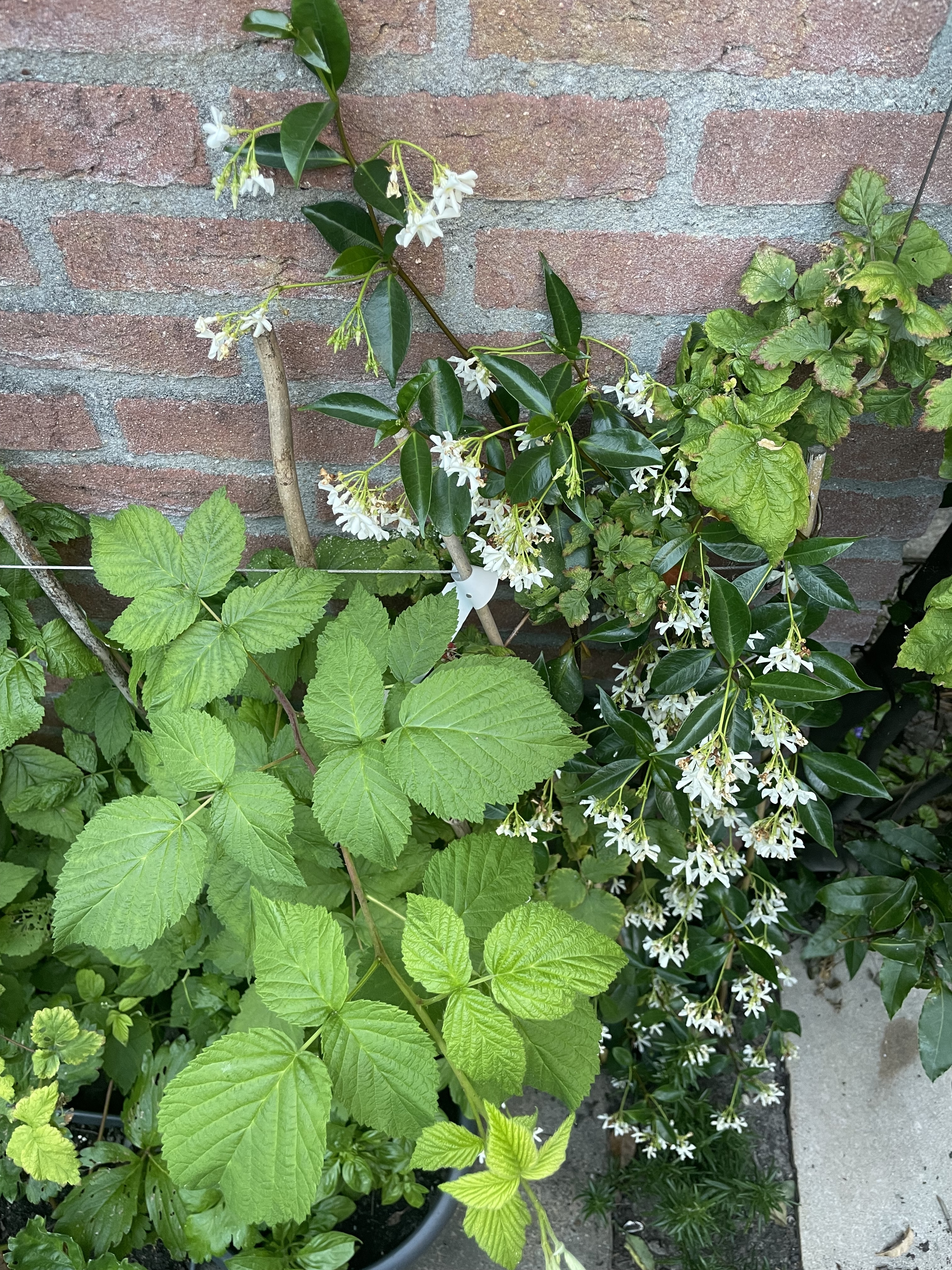
At the feet of the jasmine, I added a rosemary, which offers its own fragrance. The rosemary is tough enough to withstand the brushes of foot traffic getting in and out of the sitting area, and it has a strong scent that can be felt from the higher sitting level.
Also, I have a phlox at the bottom of the garden, along with other plants that are rather neglected and slightly forgotten. Yet, I always like its scent whenever I sit close by for a repotting job or walk past it to reach the leaf mould cage. On my hunt for scents, I decided that the phlox was a bit of a waste, being so far away from the bench. So, I dug it out of the ground, potted it up, and moved the whole thing to where the bench stands.
Nothing too extravagant. Yet, I feel that the 2025 additions and changes truly add another dimension to the sitting area of my garden, from which I have had such enjoyment. So much so that I would continue growing for scent in 2026.
Open Up The Ground, One Slab At A Time
I inherited a garden that was intensively planted around the edges and tiled with concrete slabs in the center.
The setup means I can easily reach all corners with plants without stepping on the soil (and compacting it). And I have enough room for entertaining on nice days. All in all, it was a functional and well-planned garden.
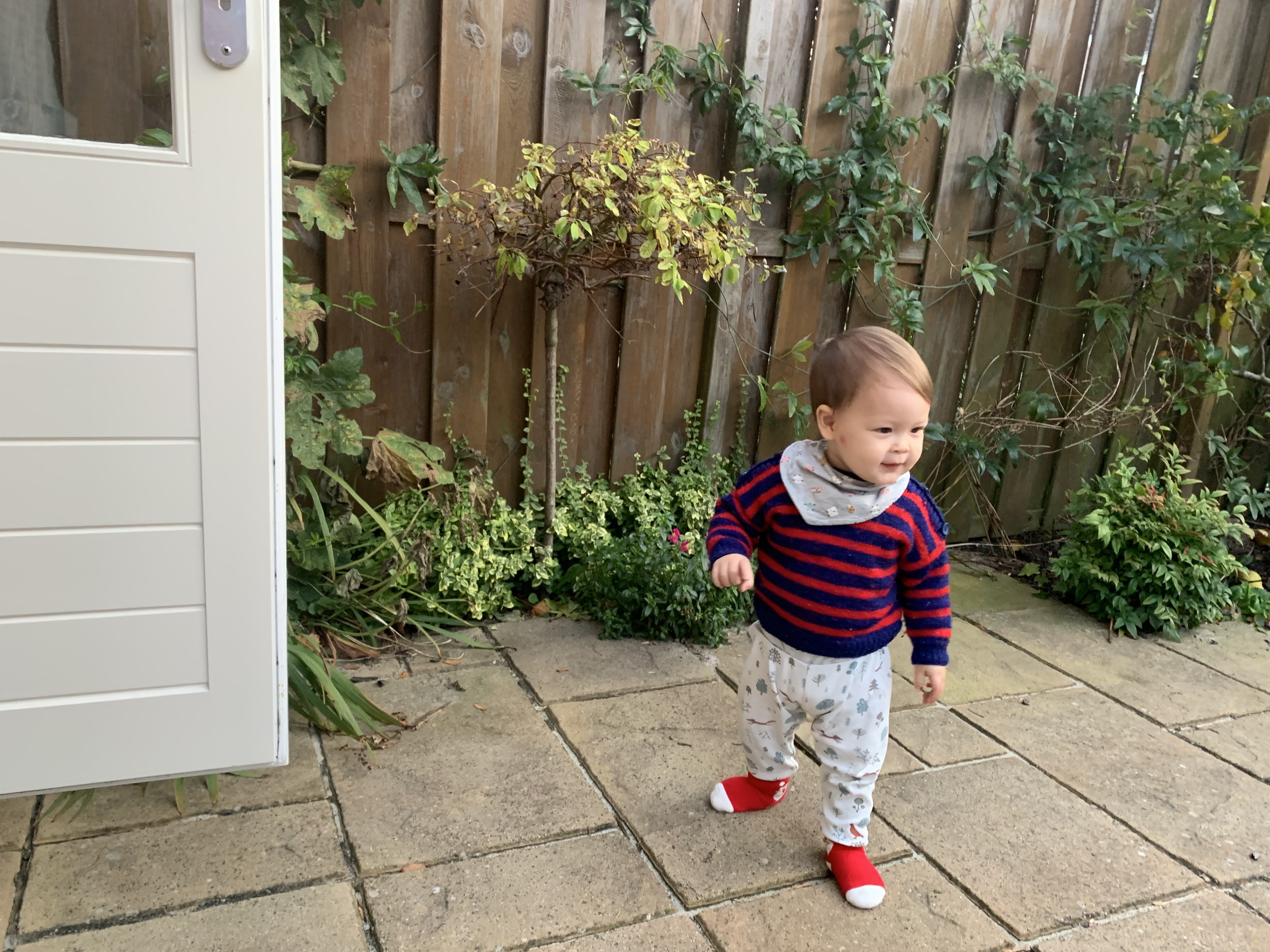
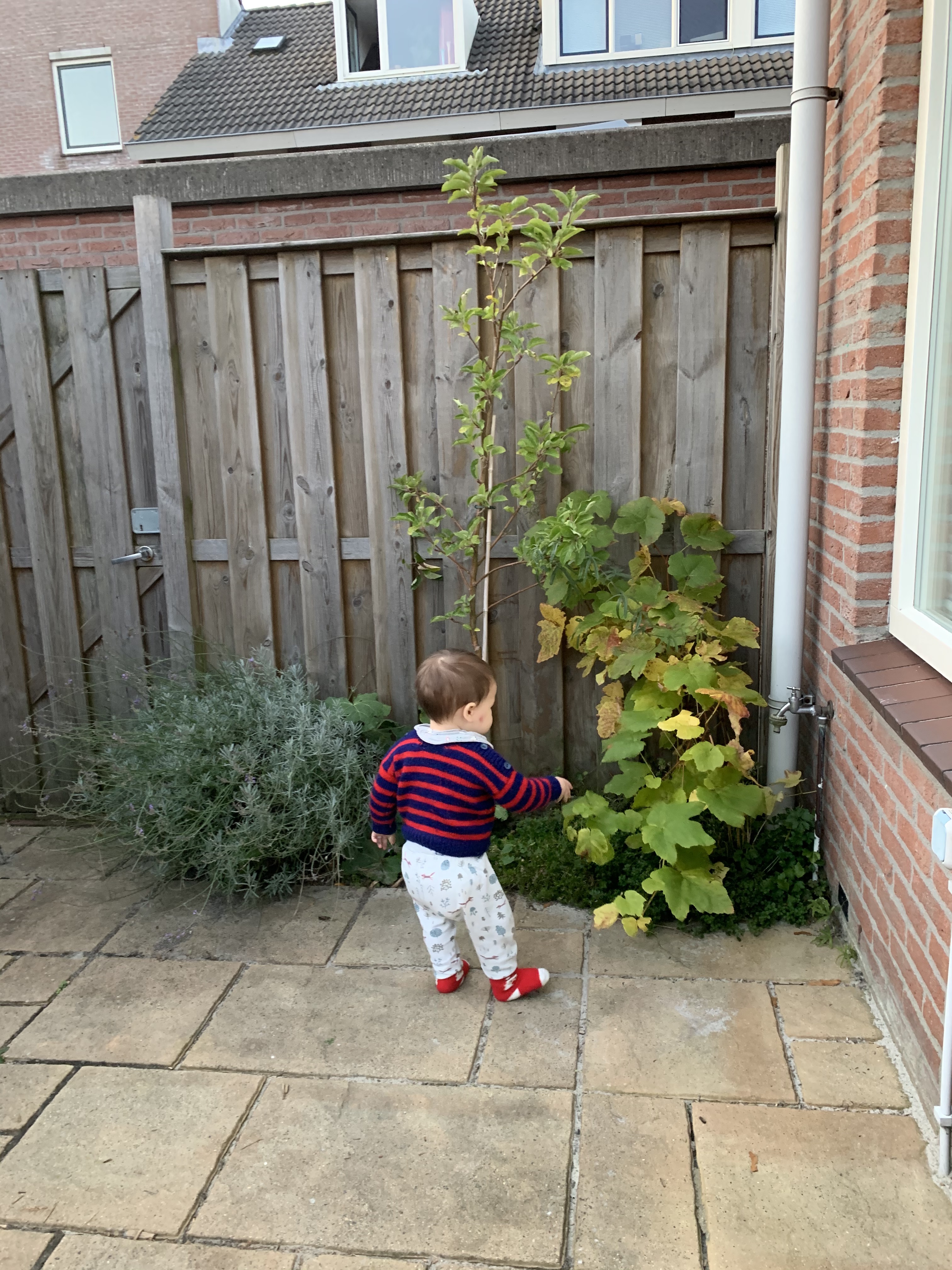

Though I appreciate functionality, I have my own preferences and, perhaps, too many preferred plants.
So I have spent the last five years adding many containers, big and small, with plants that give me joy (and food).

Containers have their limits, though. Even large containers require watering a lot more often than the ground. With the number of containers that I have accumulated, the watering task can be rather daunting.
So I decided to go the other direction, expanding into the ground beneath paving slabs (vs. putting more containers on top).
Though it might not be discussed much in gardening tasks and plans, swapping tiles for plants has quite a few advantages.
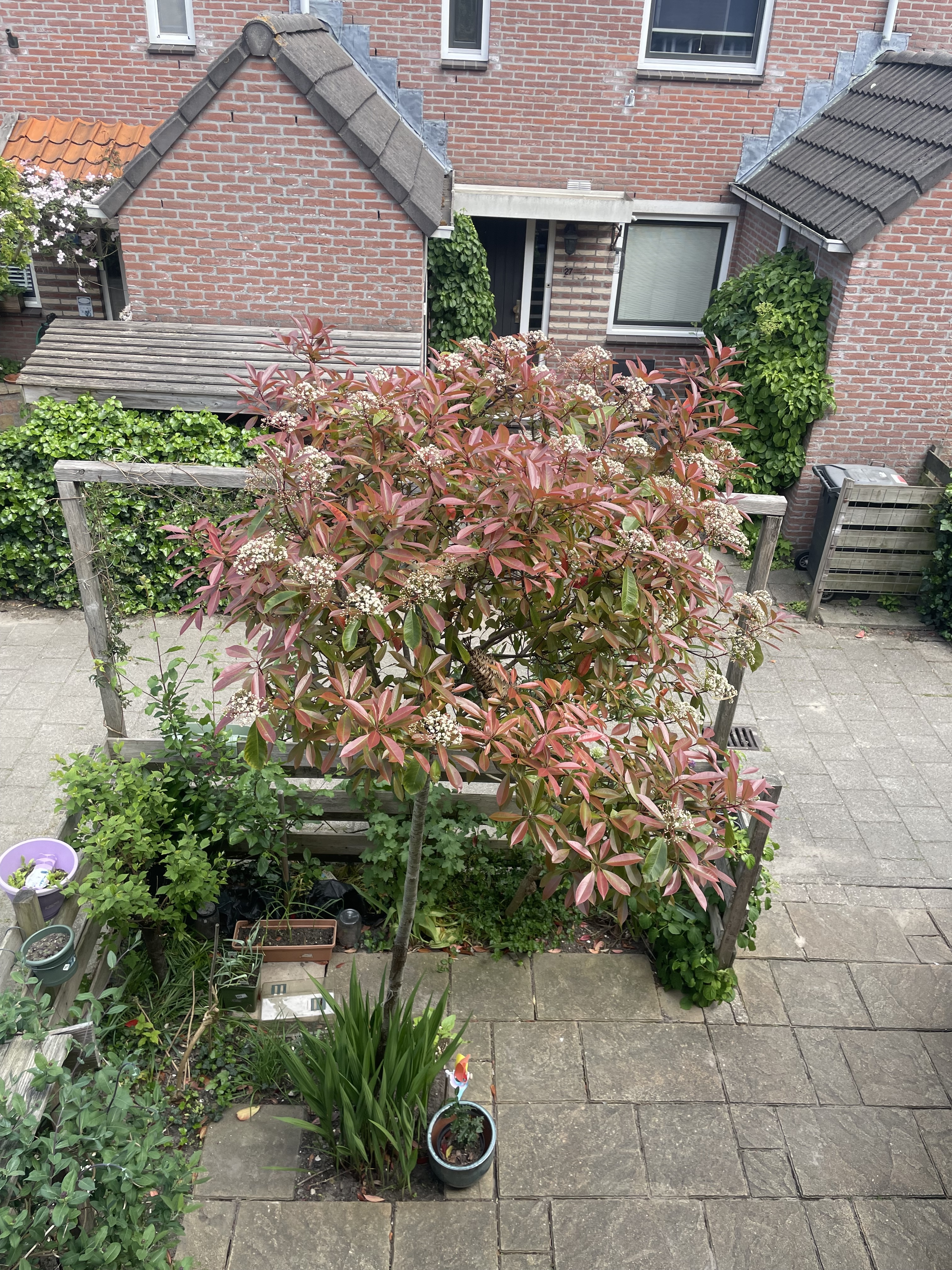
The most obvious benefit of swapping tiles for plants is the extra space for planting. Ground planting also requires much less work in setup and ongoing care than container planting. Putting a plant into the ground feels somewhat more permanent than doing the same thing in a container. You are in it for the long run.
Unpaved ground also absorbs more rainwater, reducing the risk of flash flooding and the damage it causes. I have never seen flash flooding where I live in the Netherlands, but I have heard about it happening in European neighbourhoods and cities not so far away. And I have lived it again and again growing up in the ever more concreted Hanoi.
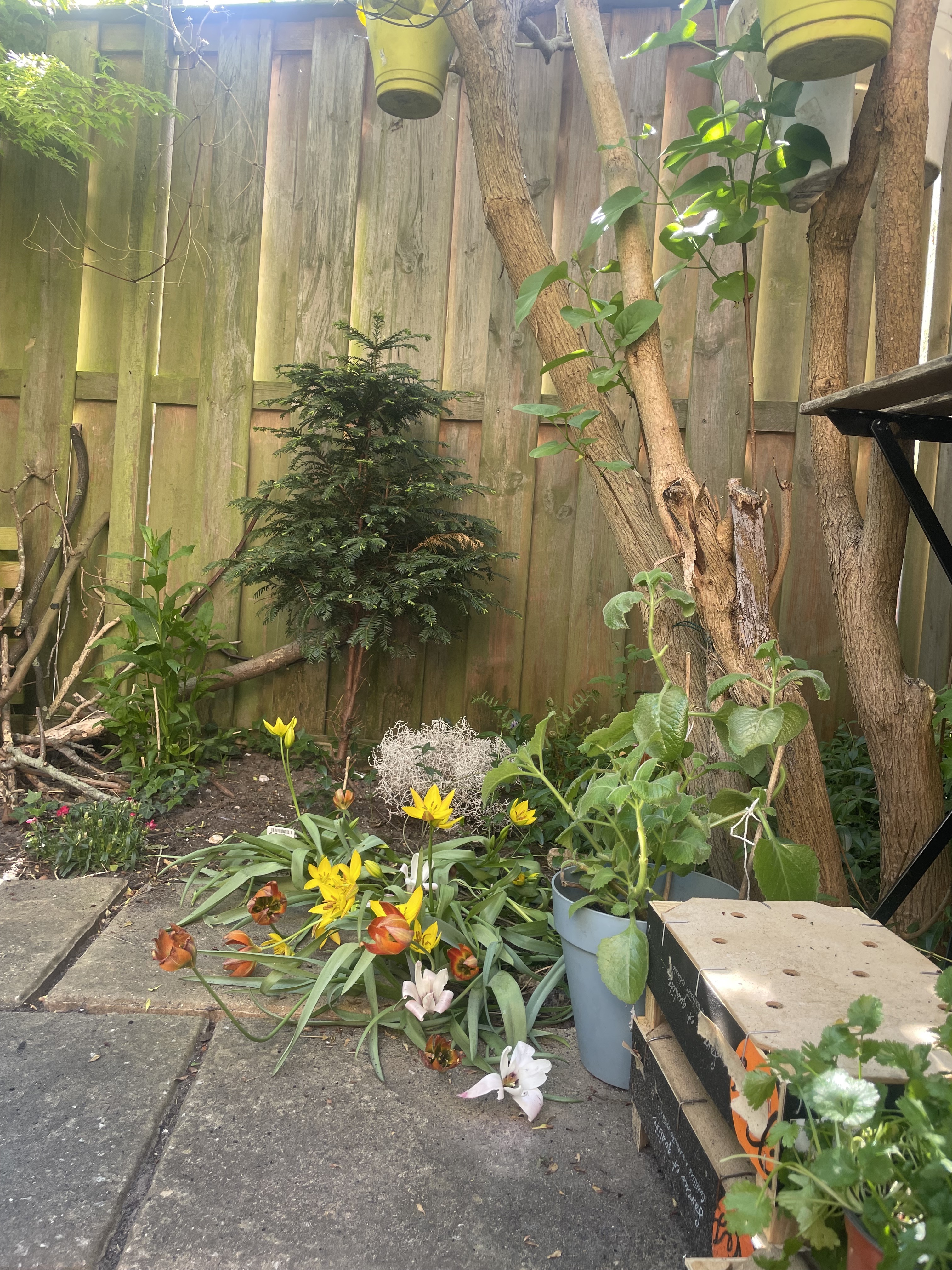
These are the new plants setting roots in my garden soil in 2025, thanks to slab-lifting.
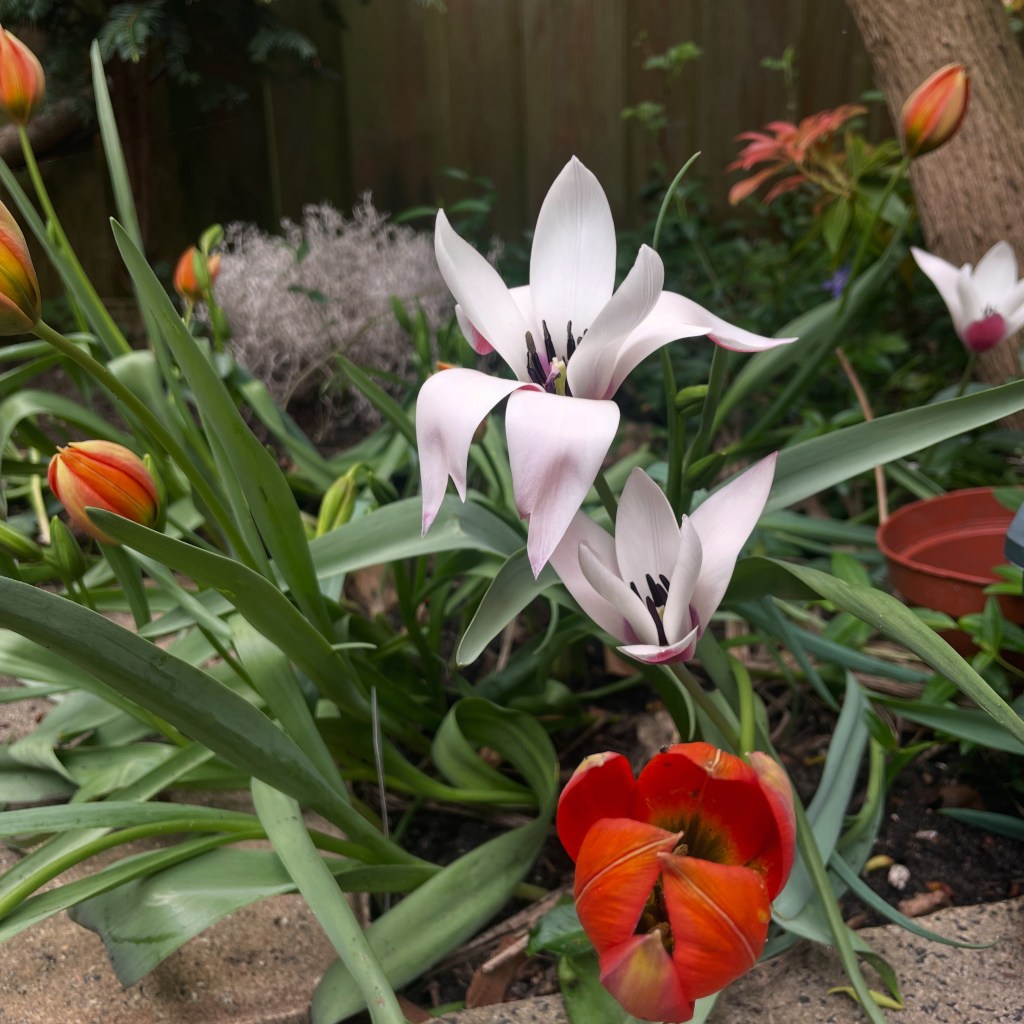
- Species tulip
- Star jasmine
- Rosemary
- Lavender
- Verbene
- Astrantia
- Chives
In 2026, I intend to continue lifting the tiles. I already set the target on a group of paving slabs in the back, where I am going to put a strawberry raised bed, and a few in the front for shade-tolerant herbaceous and climbing plants.
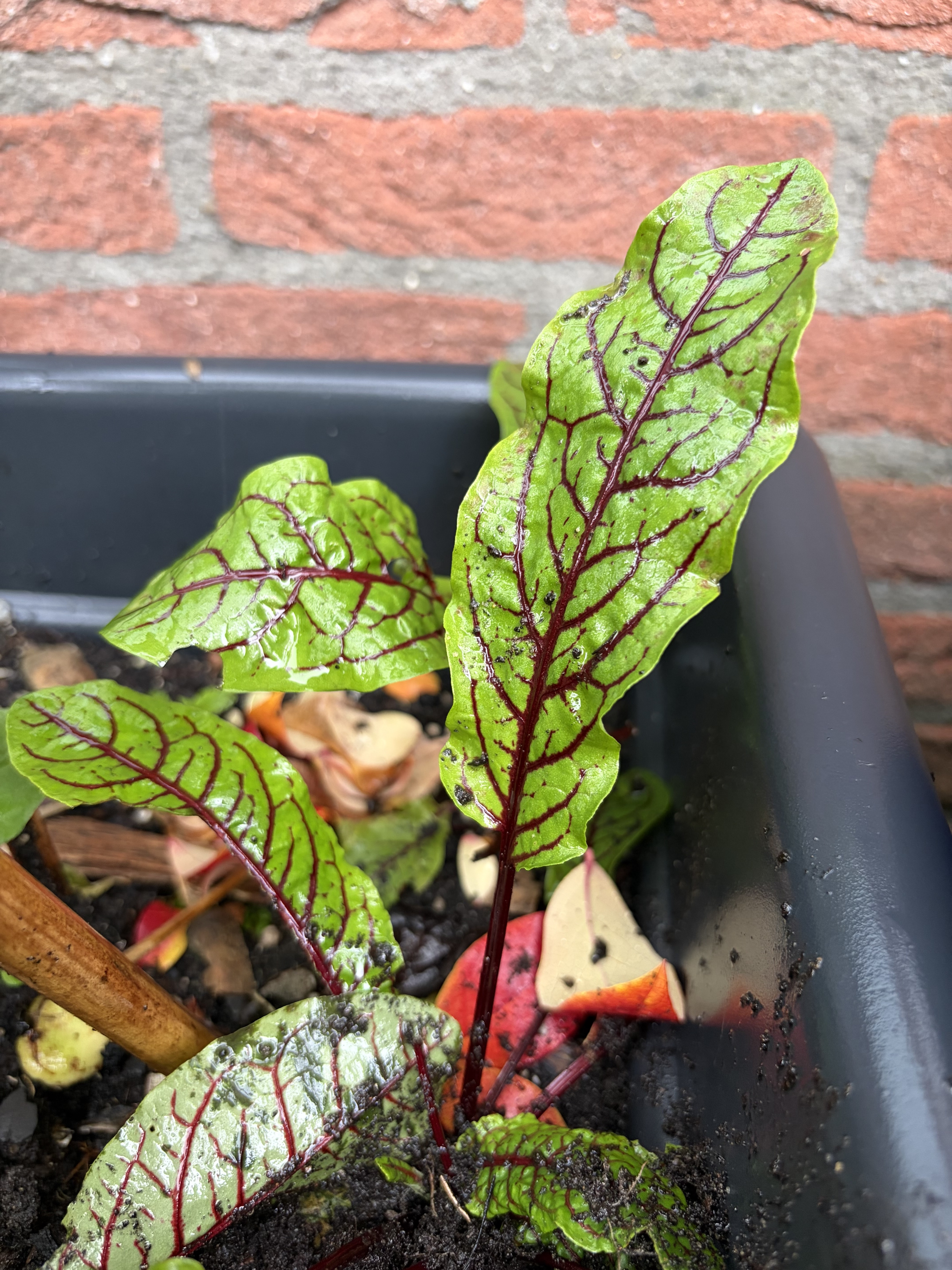
Lean Into Multiple-Season Planting
This year, I focused on carrying plants, pots, and possibilities from one season to the next. Instead of resetting the garden with new seeds and seedlings every spring, I leaned into the idea of
- Growing perennial vegetables, such as sorrel and wild rocket, which keep giving salad leaves without the yearly reset
- Leaving containers with self-seeding plants (like shiso) untouched so they can quietly repopulate themselves next year
- Brought chillies indoors to overwinter, instead of starting again from seeds and racing against the short summer up north.
- Took cuttings from older shrubs to start new plants for a new location or to replace the old ones that have lost their vigour
Multiple-season planting saved time, money, and energy—and made my small garden feel more continuous and alive.
Picking Often and With Purpose
At the beginning of 2025, I stumbled upon the idea of picking fresh herbs to make tea (that soothes my sore throat and quiets my cough). Herbs that I have had for many years, yet have never used them for any purpose other than adding flavour to savoury dishes.
The more I read about herbal tea, the more possibilities show up in the plants around my garden. So I started picking more leaves to dry and store for tea, cutting down on tea bags (which often contain microplastics).

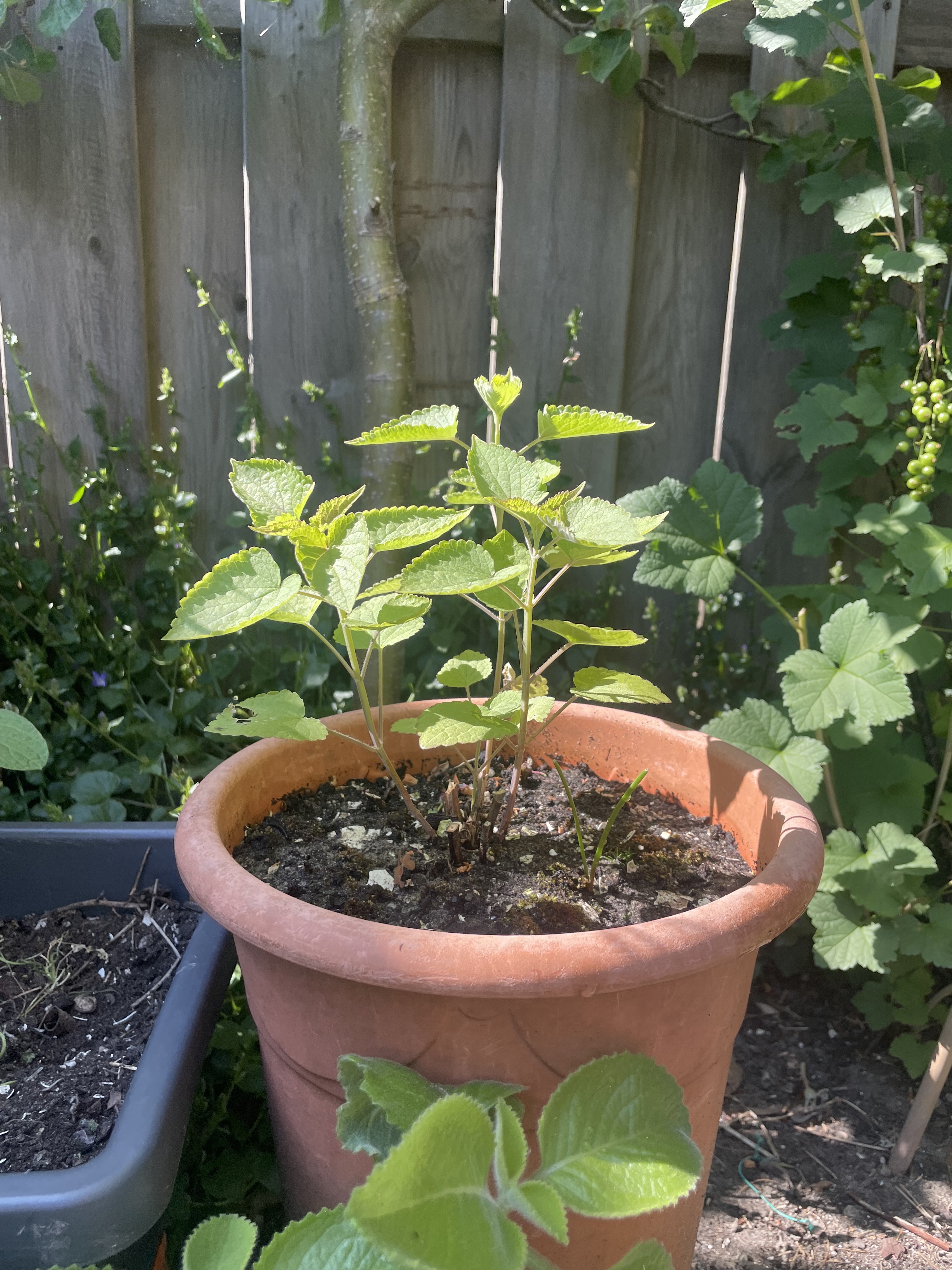
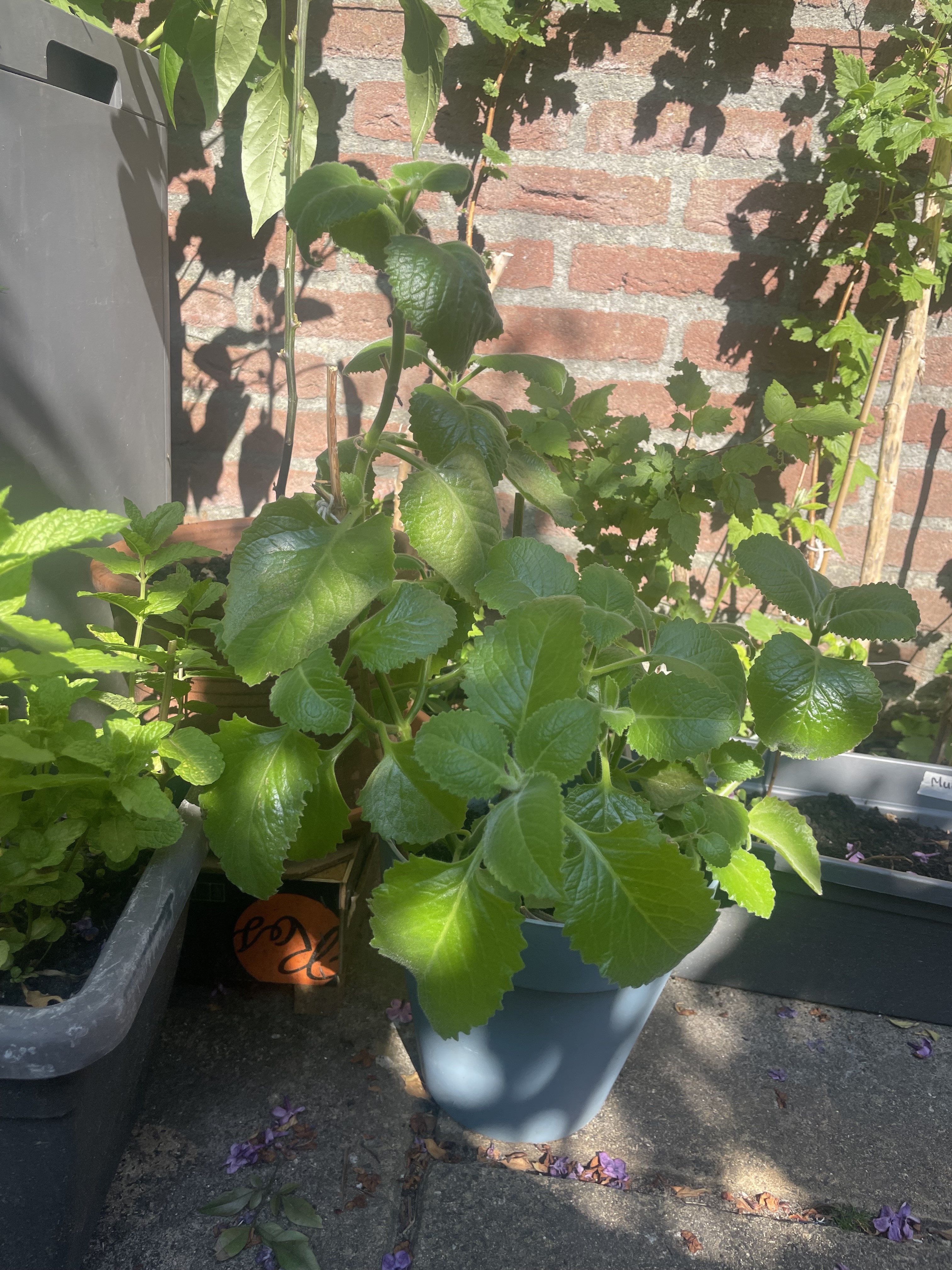
The thing with picking fresh leaves for tea is that it encourages more growth. Also, with each cut, you can reshape your plant, creating a more attractive form. The two thyme plants in my garden, for example, have never looked better.
Next to thyme, I have other leaves that I have picked for brewing tea in 2025.
- Liquorice
- Cuban oregano
- Mint
- Lemongrass
- Raspberry
Still high on tea, I moved on to picking flowers. My general rule is to leave the flowers for the bees. Yet, I found out that some flowers can be cut when they are almost at their end and then dried for display. When picked smartly, I don’t take away much from the bees and have pretty things to decorate my house for months and years.
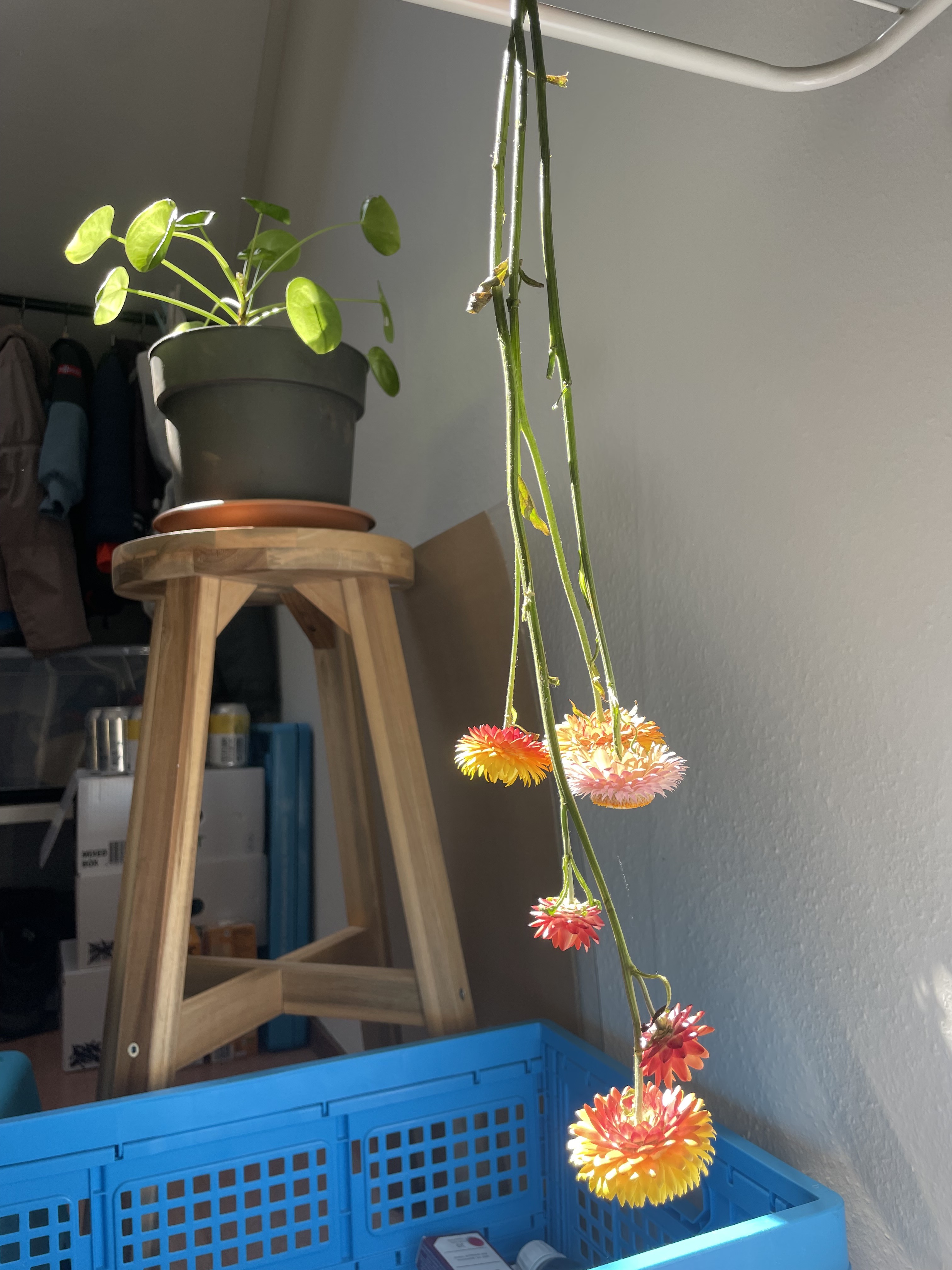
This year, I have made a few vases with dried flowers, picked from our gardens and naturally dried in our loft.
- Lavender
- Astrantia
- Liquorice
- Allium
- Strawflower
Flowers are more than just their beauty. They can also be dried and used in tea. This year, I have my choice of lilac and calendula. I also made infused oil using dried calendula petals and insect-repellent bags using dried lavender.
Experimenting With Sun-Loving Vegetables in the Shade
Not every experiment went well in 2025. I’ve learned one clear lesson: don’t force big sun-loving vegetables into tiny shady corners.
I wanted to grow some fruiting vegetables, especially cucumbers and courgettes. I had cucumbers once. But it was spring when my son was born, so everything was a bit fuzzy (and seemed like a long time ago). So this year, I gave cucumber another try. On top of that, I have sown courgettes for the first time.
These are sun-loving vegetables. But I couldn’t spare any sunny space for them, so I put them in the shade to see how they would turn out.

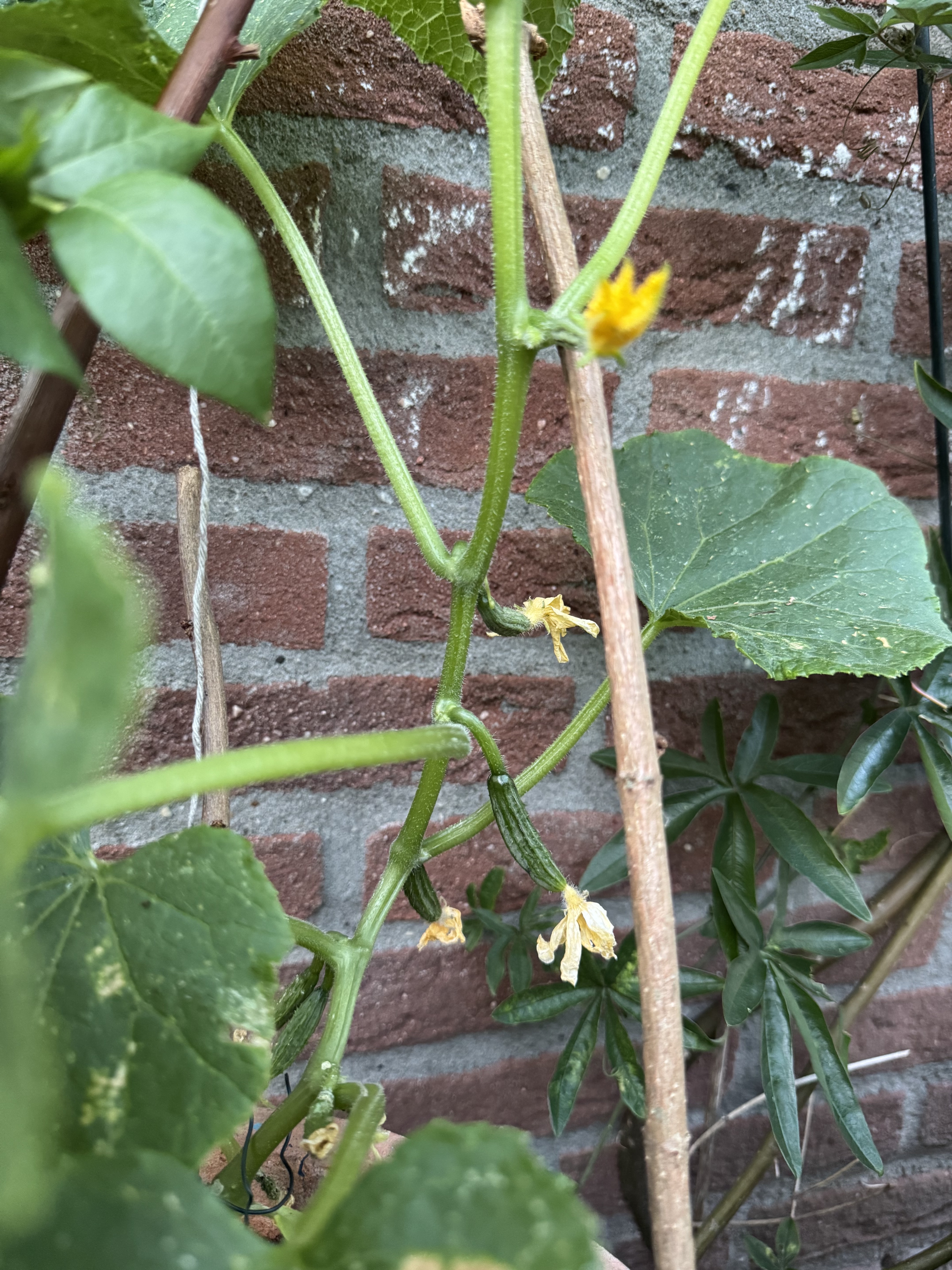
Both produced flowers, but no matured fruit. The plants were telling me what I already suspected: their space wasn’t right for them.
2025 taught me that giving up is not a failure—it’s an act of respect for your space and your time.
Looking Back at 2025
My 2025 wasn’t about scale. It was about intent. About choosing what to keep. What to remove. What to nurture.
If your garden goals feel overwhelming, start small. Lift a tile. Move a plant. Add a scent. Save a cutting. A garden grows through the smallest decisions—one season, one pot, one experiment at a time.


 Grow More With Less
Leave a comment