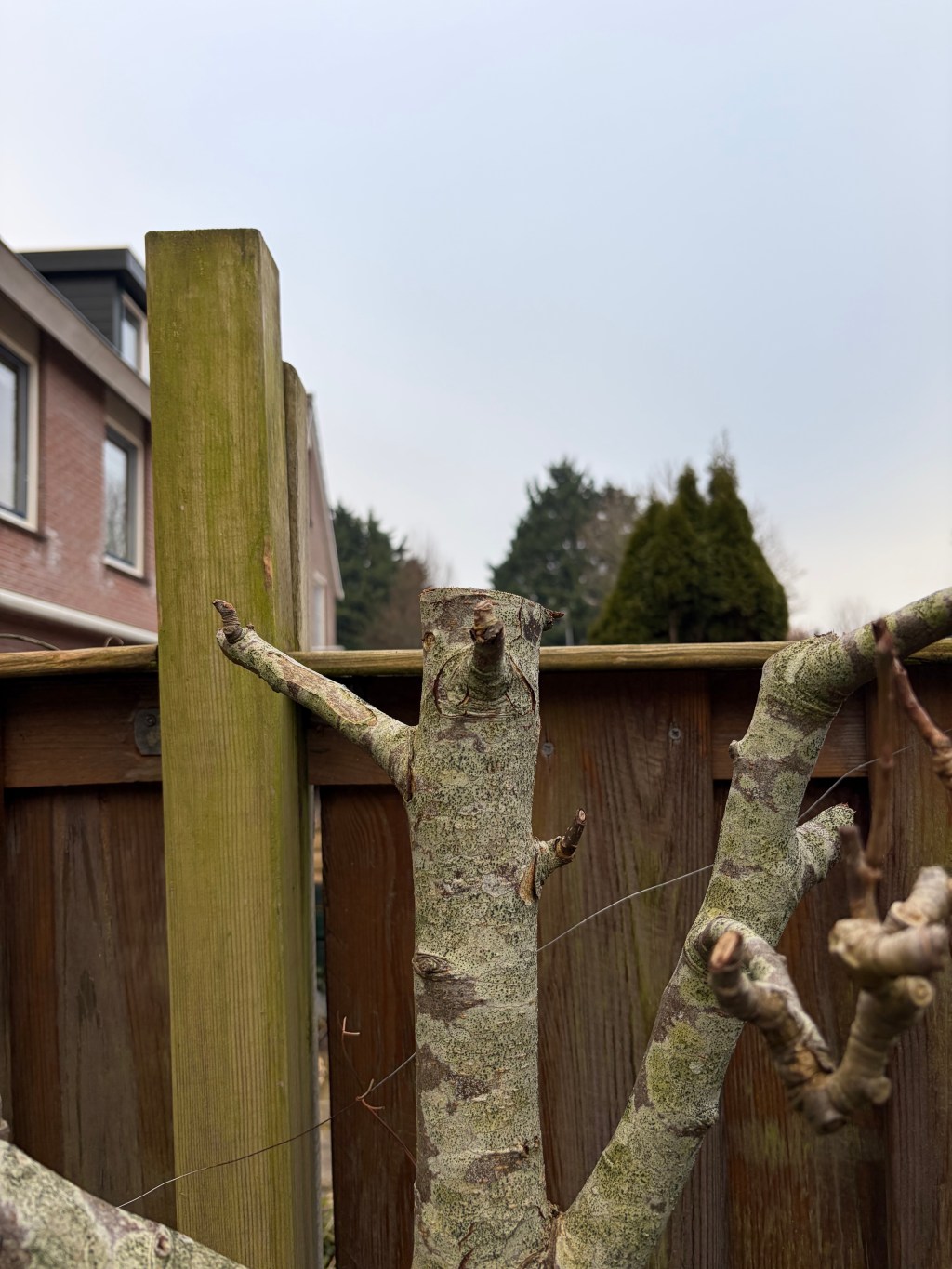
Winter might feel like the least inviting time to head into the garden. The days are short, the soil is cold, and plants look bare and unproductive. Also, some days, it snows.
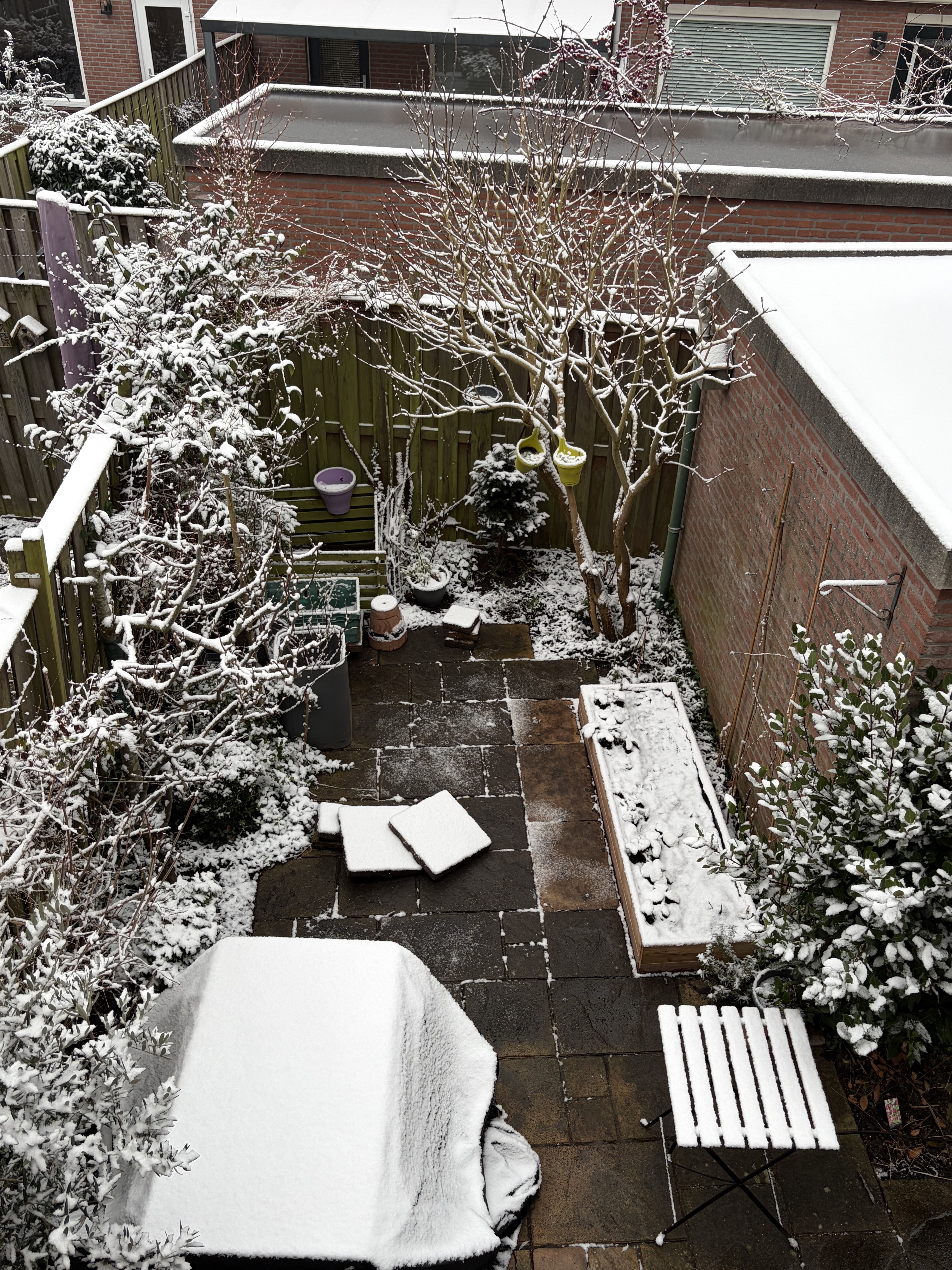
Yet, for many trees, shrubs, and climbers, winter is one of the most important pruning windows, if not the only one.
Tl;dr – Winter Pruning in a Nutshell
- Focus on removing dead, damaged, crowded, or unproductive growth rather than pruning for perfection.
- Winter pruning is safest for many deciduous plants, helping shape structure, remove damage, and direct energy into strong spring growth.
- Bare branches make it easier to see and manage size, light, and airflow—especially important in small gardens.
Why Get Out (in the Cold) to Winter-Prune Your Plants?
You want to prune certain plants in the winter because it is safer, easier, and beneficial for the growth.
Plants Tend To Recover Better From Pruning During Dormant Months
During winter, deciduous woody plants are dormant, while pests and diseases are less active. This means your trees and shrubs have a better chance of recovering from the cuts.
Bare Branches Make Clear Structure
Once leaves have fallen, the true framework of trees and shrubs is revealed.
The bareness of winter means that you can
- clearly see crossing, crowded, or poorly positioned branches,
- easily get in between branches and shape plants to allow better light and airflow, and
- cut back where plants outgrow fences and reach into the neighbouring space.
This is especially valuable in small gardens, where light and space are limited.
Remove Old Growth to Support Vigorous Spring Growth
Plants have limited energy reserves. By removing old, weak, or unproductive growth in winter, you help redirect that energy into fewer, stronger shoots when growth resumes in spring.
In my modest-sized garden, the vines like to shoot up, reaching to the much higher space where more light is available. This leaves the lower eye-level area bare of flowers. Also, there are many leggy branches because they are too far from their nutrient source (the root balls). So, every couple of winters, I cut some vines down near the ground to encourage the vigorous spring growth to stay close where I can see and smell it.
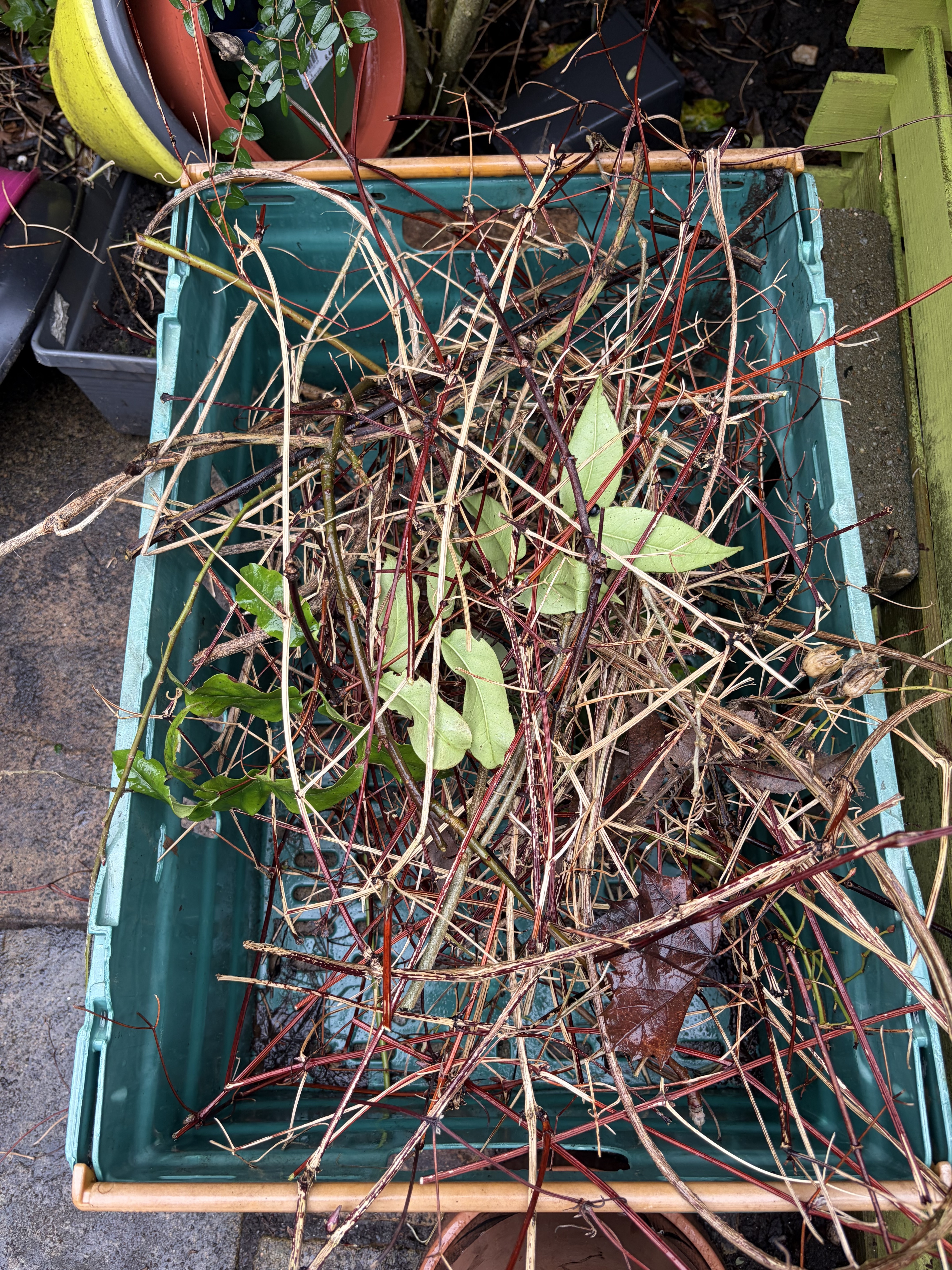
The result:
- healthier plants
- better flowering or fruiting
- easier maintenance through the growing season⠀
Deal With Winter Damage Early
Wind, frost, and snow can crack, snap, or weaken branches. Leaving damaged wood in place invites disease and leads to poor regrowth.
Winter pruning allows you to:
- remove broken or frost-damaged branches as soon as the damages happen
- prevent further tearing in storms
- tidy plants before problems escalate
Common Plants That Benefit From Winter Pruning (and What to Do)
Not everything should be pruned in winter, but the following common plants would benefit from winter pruning.
Apple and Pear Trees
Winter is ideal for shaping and maintaining the structure of your beloved apple and pear trees. Pruning in the winter is great for both traditional goblet-shaped and trained varieties.
What to do:
- Remove dead, diseased, or crossing branches.
- Thin crowded areas to allow light into the centre of the tree.
- Reduce height or spread if the tree is outgrowing its space.
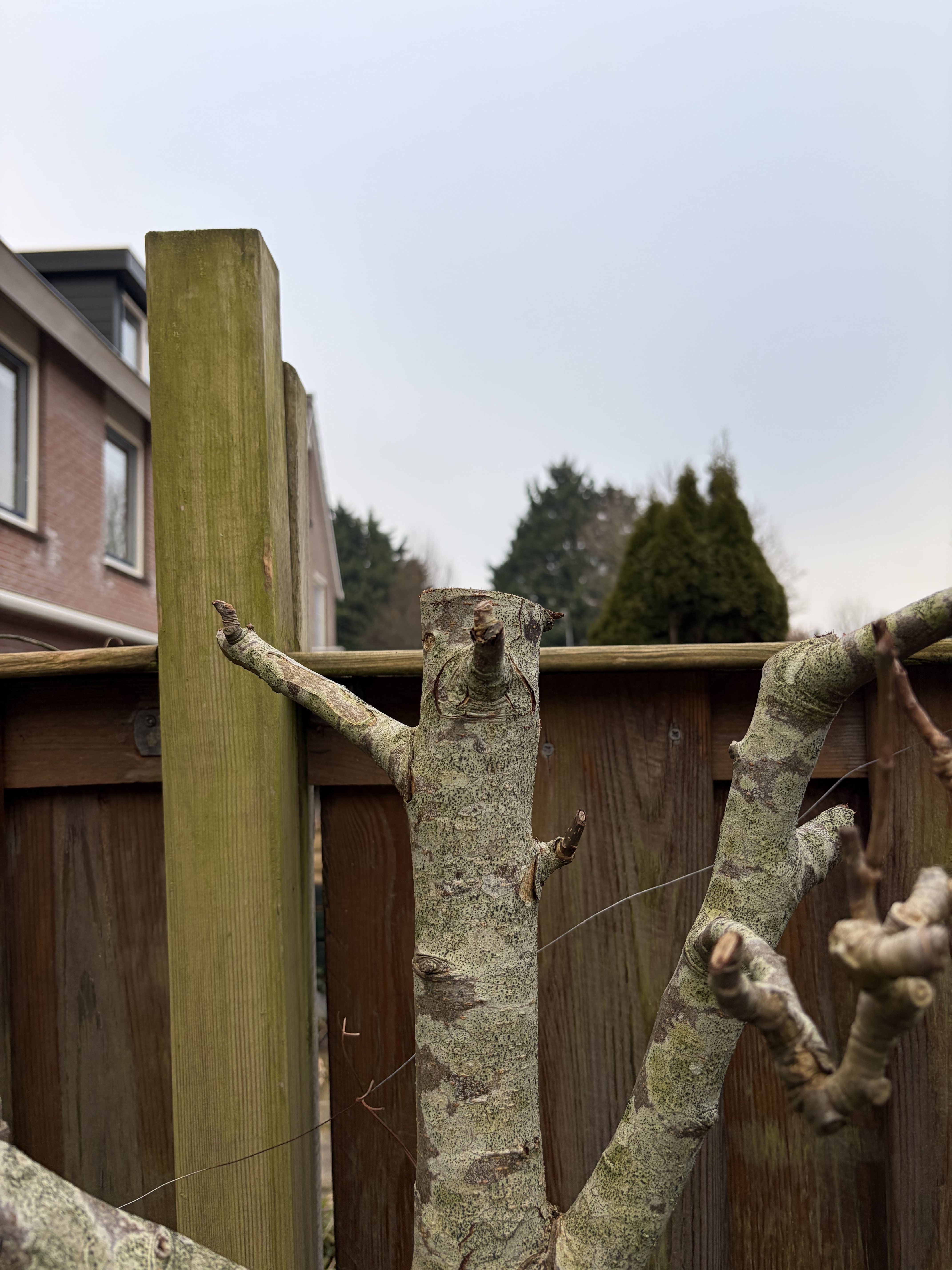
This winter, I had my husband saw off the top 40 cm of the main trunk of my mature pear tree. It’s not an easy decision. Yet, I know it’s needed as the pear tree has long overgrown the fence next to it.
On the other hand, avoid heavy pruning on very young apple and pear — focus on form rather than volume.
Soft Fruit Shrubs
In the winter, you can (and should) prune soft fruit shrubs like blueberries, gooseberries, and red currants.
What to do:
- Remove old, weak, or unproductive stems at the base.
- Aim for a balance of young and mature branches.
- Open the centre of the plant to improve light penetration.
If you want more soft fruits (and who doesn’t), it’s important to avoid pruning (section of) branches where fruits would form. It’ll help to learn to identify the fruiting habit of the soft fruits that you grow for this moment of pruning.
For example, my red currants tend to form fruits at the base of one year old shoots and on the spurs, so my winter pruning of the red currant is more about shortening rather than removing a whole branch (like I would do with older blueberry bushes).
As I’ve said, blueberry is different. The giveaway is the buds’ size and shape. You want to keep as many chubby buds, which will turn into fruit clusters, as you can. If you have a branch with mostly thin, leaf-forming buds, you can consider pruning it as a trade-off for more light and air flow.
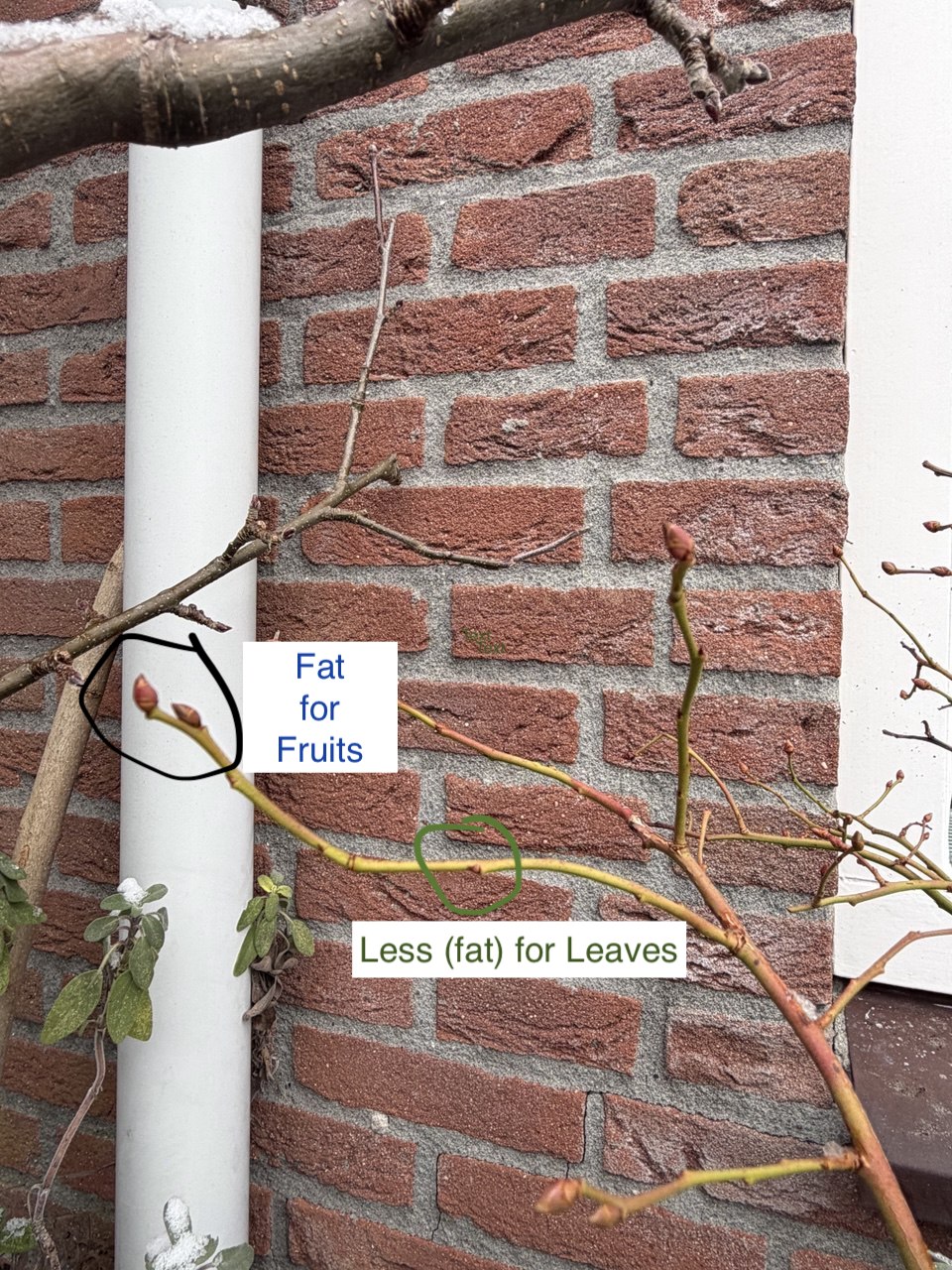
(If you want a detailed explanation about fruiting and vegetative buds in blueberry, I’ve found this YouTube video to be very helpful.)
Autumn-Fruiting Raspberries
These are among the easiest plants to prune. Just make sure you are dealing with the autumn variety, not the summer one, because the latter needs pruning early in late summer, using a different principle.
What to do:
- Cut all canes down to ground level in winter
- Remove debris
- Mulch the base
Autumn raspberries fruit on new growth, so this hard reset is both safe and productive. However, some gardeners take the hybrid approach with autumn raspberry. It means keeping some canes and pruning only half their height (rather than to the ground). These canes would flower and fruit earlier, bringing the long-awaited raspberry into your garden a couple of months early. I’ve tried this before, but this year, I cut them all down, ready for a fresh start.
(Want to know about pruning summer raspberry? Check out this post.)
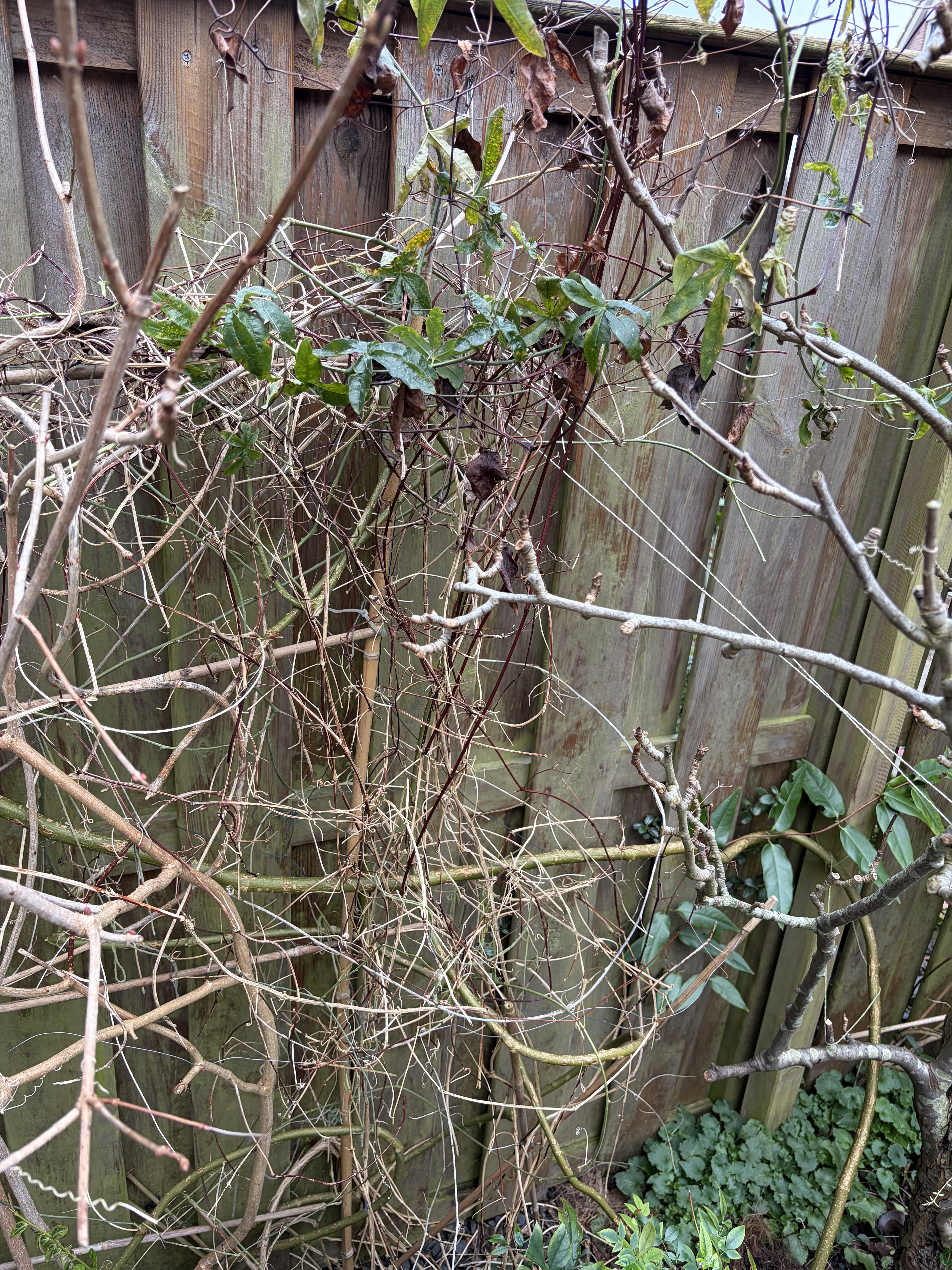
Late-Flowering Clematis
Often called Group 3 Clematis, these plants flower on new growth. Thus, it’s safe (and sensible) to prune the old growth in winter so the plants can focus on brand-new growth come spring.
What to do:
- Cut stems back hard to 20–30 cm above ground.
- Prune just above strong buds.
Winter pruning keeps climbing clematis compact and prevents them from becoming tangled masses.
Japanese Maples
Prune lightly and thoughtfully.
What to do:
- Remove dead, damaged, or crossing branches only.
- Avoid heavy pruning, which can spoil the natural form.
- Focus on clarity and balance rather than size reduction.
Less is more with Japanese maples.
If you are enjoying this post, you might also appreciate our FREE cheat sheet with 12 Tested Gardening Ideas for Small Spaces.
Provide your info for a link to the downloadable resource and be opted into our email list for the (very) occasional product promotion.


Wisteria
Winter pruning is essential for flowering control.
What to do:
- Shorten long whippy shoots back to 2–3 buds.
- Remove excessive growth that shades windows or gutters.
This controls size and concentrates energy into flower buds.
(Overgrown) Honeysuckle
Winter is the best time to bring your overgrown honeysuckle vine back under control.
What to do:
- Remove tangled, woody, or unproductive stems.
- Cut back to a manageable framework.
- Don’t worry about being too gentle — honeysuckle is forgiving.
Grapevines
Winter pruning is essential for grapevines.
What to do:
- Prune hard while the vine is fully dormant (mid to late winter before the risk of sap bleeding).
- Remove most of last year’s growth, leaving a clear framework.
- Focus on one or two main arms and reduce side shoots to short spurs.
This prevents excessive leaf growth and encourages better fruiting.⠀
How to Approach Winter Pruning (Without Overthinking It)
You might find it much to try to remember all the different instructions for different plants. Also, You might find it hard to remember all the different instructions for different plants. Also, the actual window, aka the okayish moments, to go out in the garden and do some pruning before your bottom freezes, is short and rare during the winter months.
So here are the essentials to approach winter pruning:
- Choose a dry moment on a frost-free day to reduce disease risk (if the sun is out, don’t waste it inside).
- Use sharp, clean tools to make clean cuts. (Make it the chores of the many other damp, wintry days to keep your tools clean and sharp.)
- First priorities are the damaged branches, then the ones that grow towards the centre.
- Step back often to assess shape and balance.
- When in doubt, remove less rather than more.
Remember: pruning is not about perfection. It’s about guiding growth, not controlling it completely.
 Grow More With Less
Leave a comment