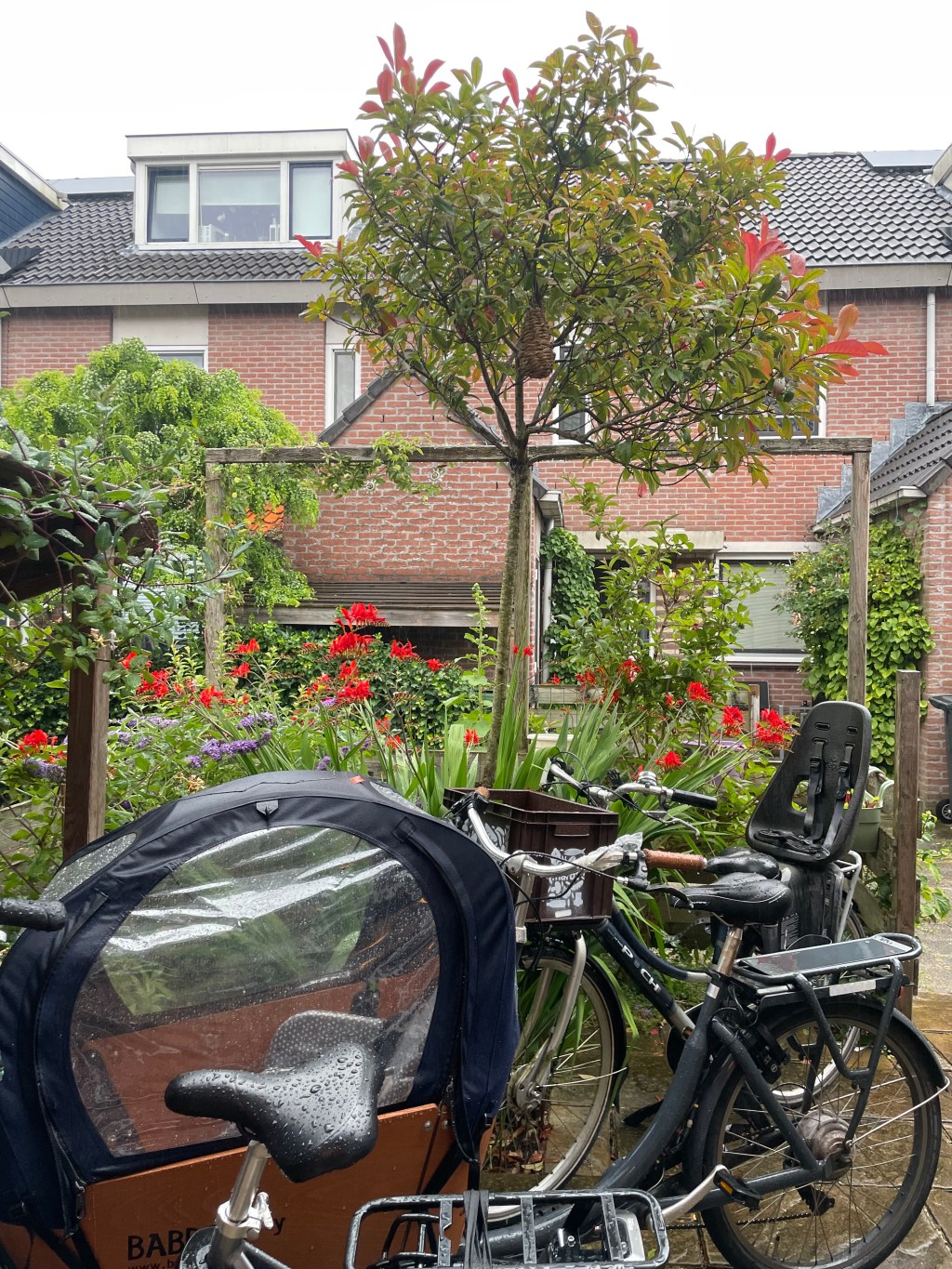
The first major change I made to our front garden after we moved in was to remove three large hydrangea shrubs and pave over the spot where they had stood. I needed a parking area for our cargo bike.
Getting rid of plants is what I mostly do very reluctantly, if at all. But I’ve made the practical choice then and there. As our son grew out of the back seats attached to our normal bikes, we needed a new solution, aka the cargo bike, and a place for it.
I believe there is a similar story in many homes. The front garden space is the prime location for parking.
But what I have realised over the years is that the parking function doesn’t have to be the only thing our front garden can offer.
In fact, the front garden can be a place of seasonal colours. And even a place for wildlife, nestling in around and between the parked vehicles.
With some planning and intentional adjustments, it can all be possible and joyful. You can bring green leaves, vibrant flowers, and essential wildlife into your front garden without sacrificing practicality.
Here are a few simple ways to make your front garden work for both parking and planting.
Shrink the Hard Surface to Make Room for Plants
You need a hard surface for parking a car or a few bikes. But do You need a hard surface for parking a car or a few bikes. But do you need all the space there is? Or can the paved area be cut back a little to make a big difference in planting?
There are greening opportunities in the smallest strips of soil along edges, fences, or boundaries. You just need to take a step back, visualise the alternatives, and get down to find the right plants for the place. It might take some experiments (and patience), but it’s feasible.
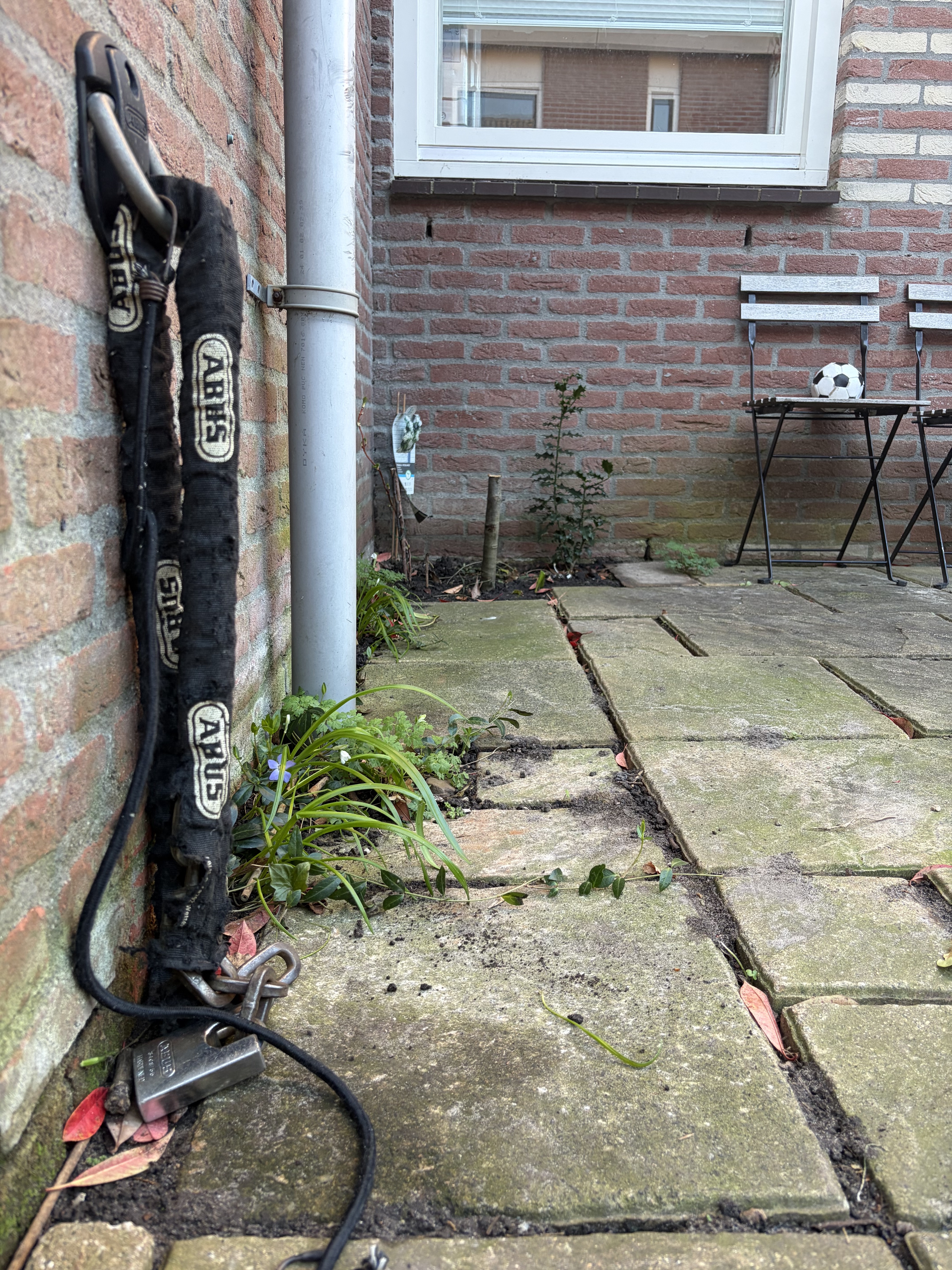
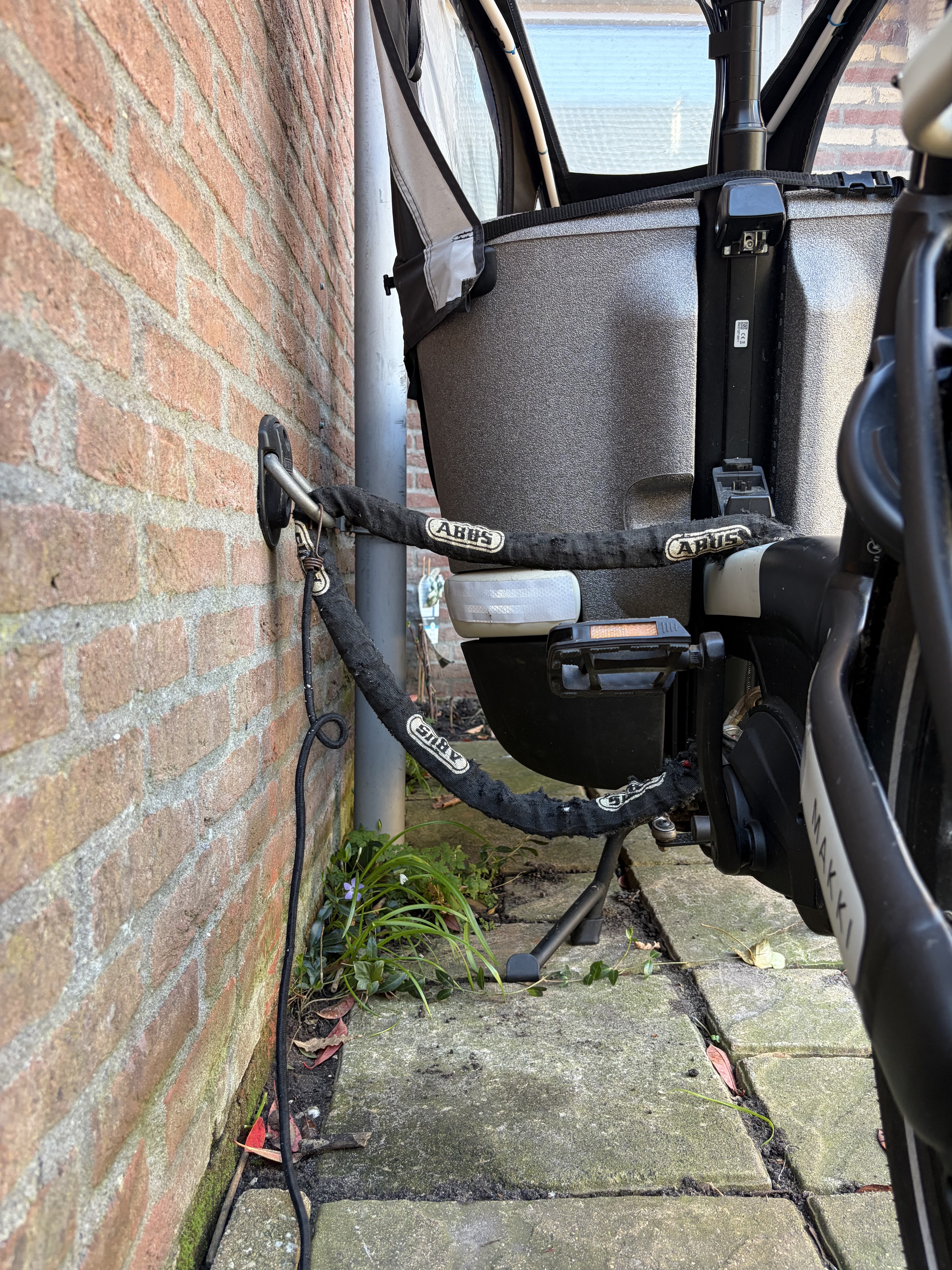
Planting in the tiny strip of soil next to the paved parking space
So, back to the cargo bike story.
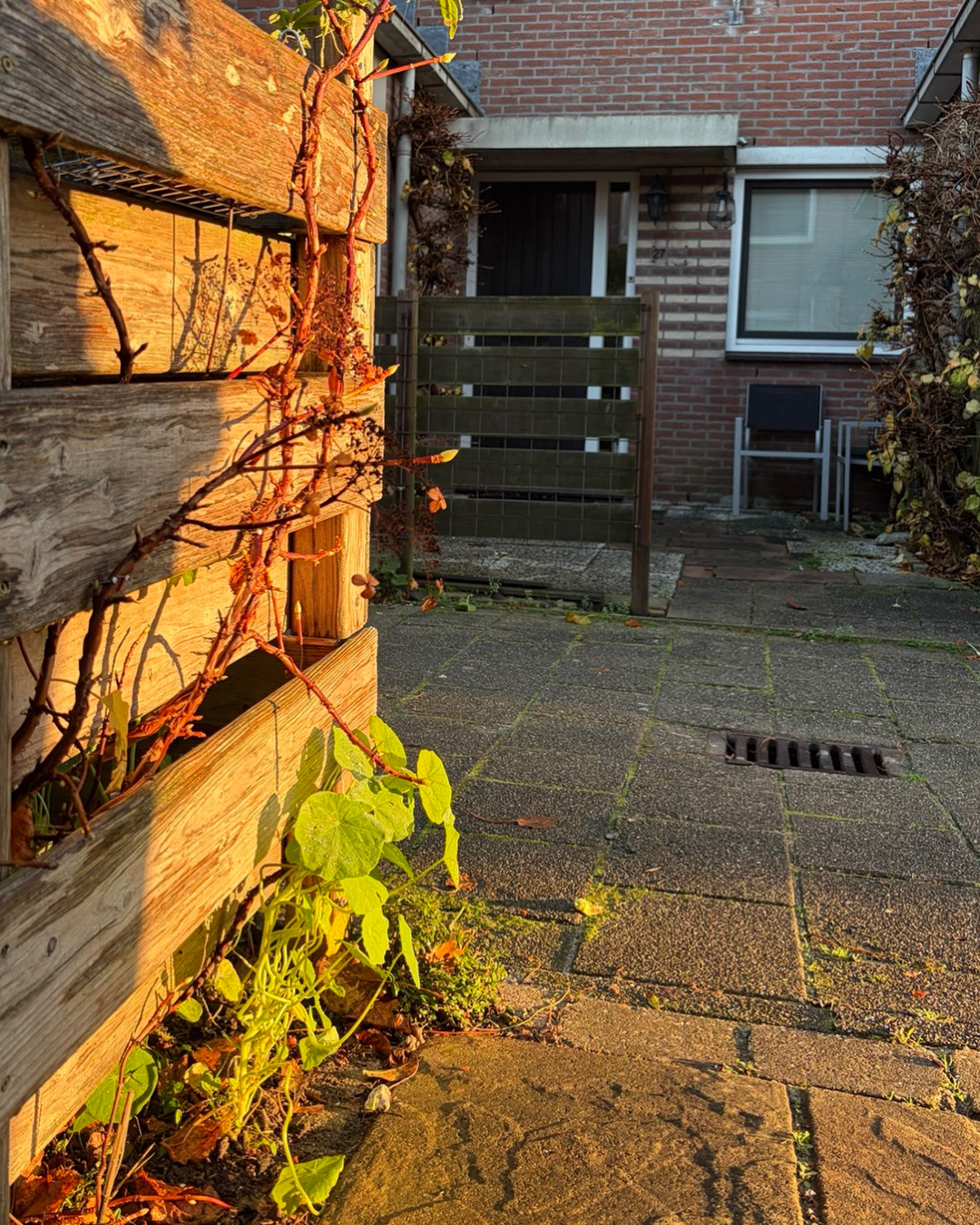
I paved over the hydrangea area because it is the most convenient place to wheel in the long cargo bike and keep it locked to a wall. But I left a small edge along the length and a bigger area at the top so that I could still plant around the bike. No room for bushy hydrangea, but possible for a climbing one. And a few shade-tolerant ground covers. It was a tough job to get the new additions going. Yet, I believe I am getting there with both the ground-level and the vertical planting.
By planting along the edges of the parking zone, you soften the hard surface and create a more interesting outlook to welcome guests (and yourself) to your house.
Also, the more unpaved ground that you have, the more water your front garden can absorb. In the grand scheme of things, paved front gardens increase the risk of flash flooding in urban areas, while unpaved ones reduce it.
You will be doing your part by helping with every concrete slab removed from your paved front garden.
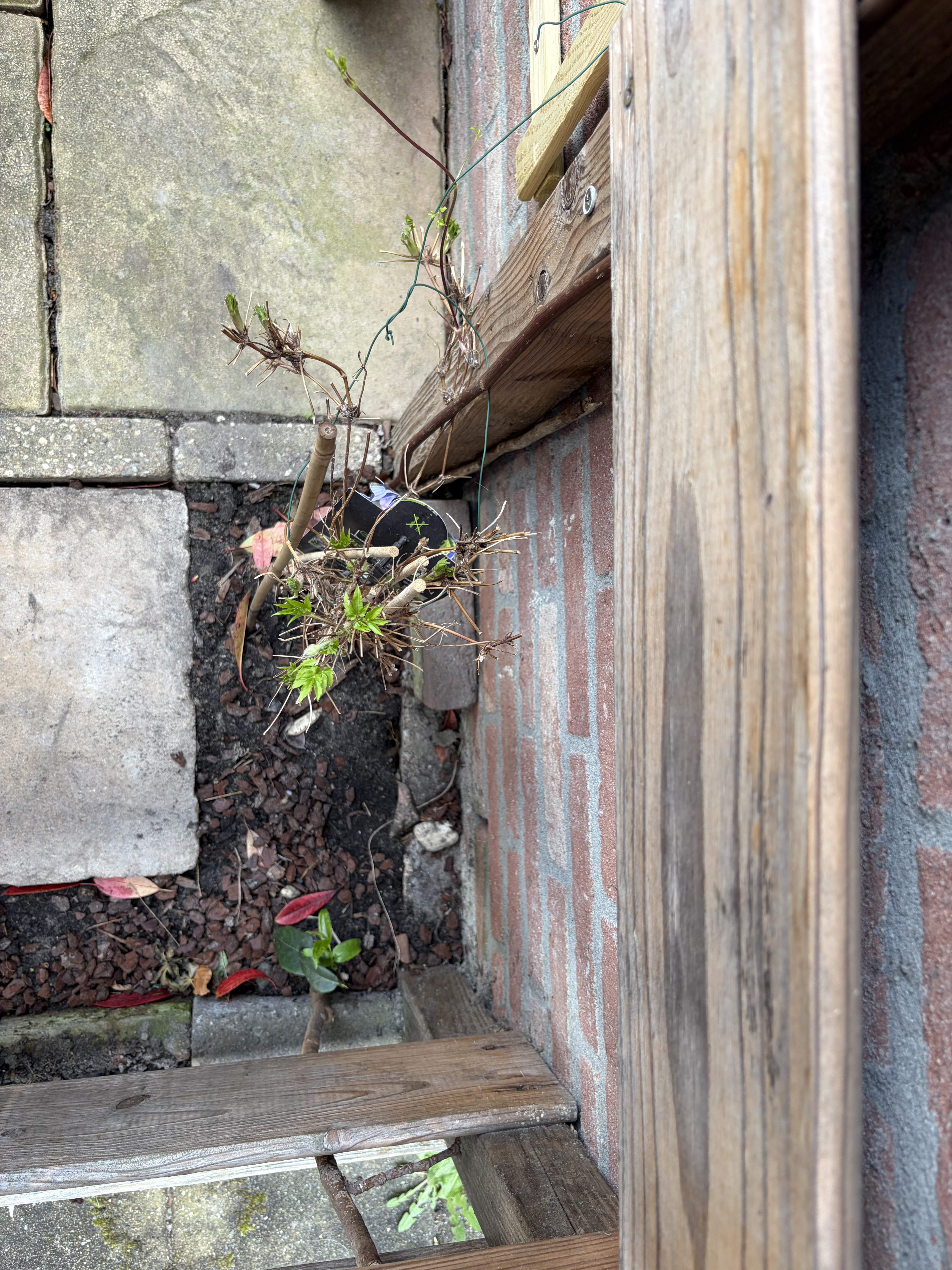
At the start of 2026’s growing season, I got rid of 10 slabs, big and small, from my front.
- Along the narrow edges running along the wooden bike shed, I’ve planted three climbers and sown wildflower seeds.
- In the newly extended red robin island, I’ve added two shade-tolerant “purperklokjes” (heuchera), one lavender, one common daisy, and one oregano.
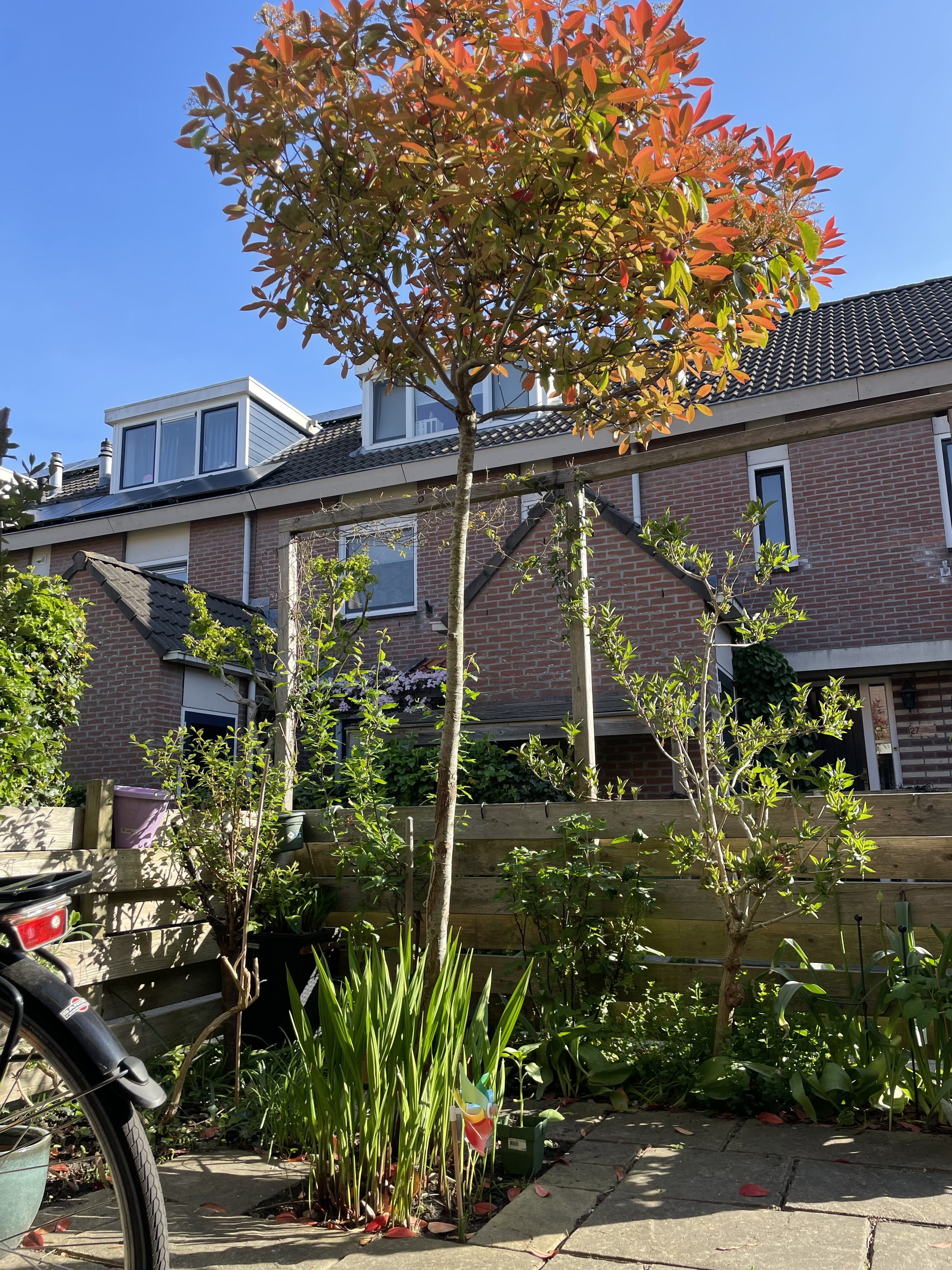
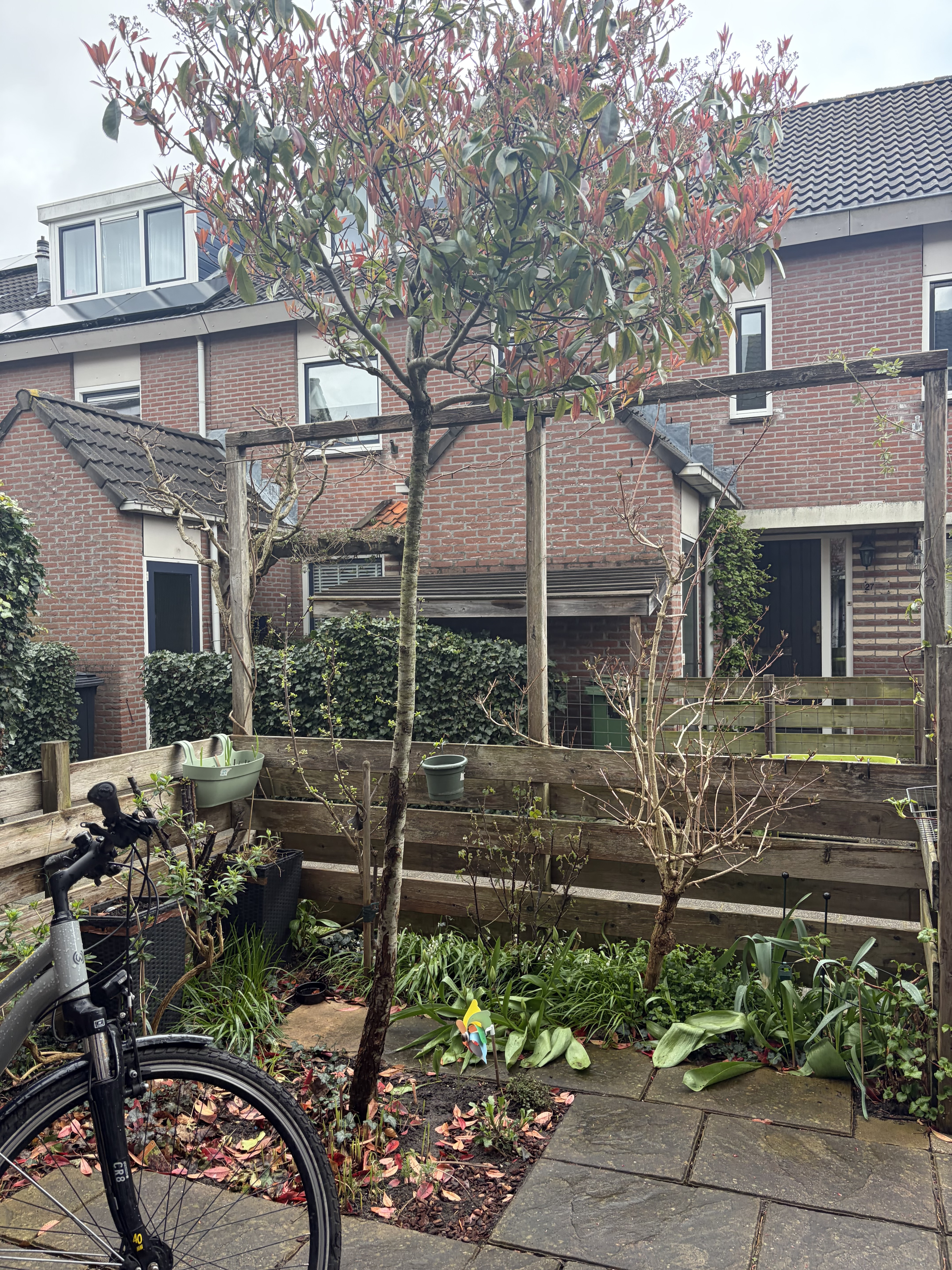
If you build your front garden from the ground up, consider permeable surfaces such as gravel grids, spaced pavers, or reinforced grass systems. These options support a car while allowing rainwater to soak into the soil rather than flooding drains.
Plant Up The Vertical Space For More Colours
When ground space is limited, vertical planting can transform the garden.
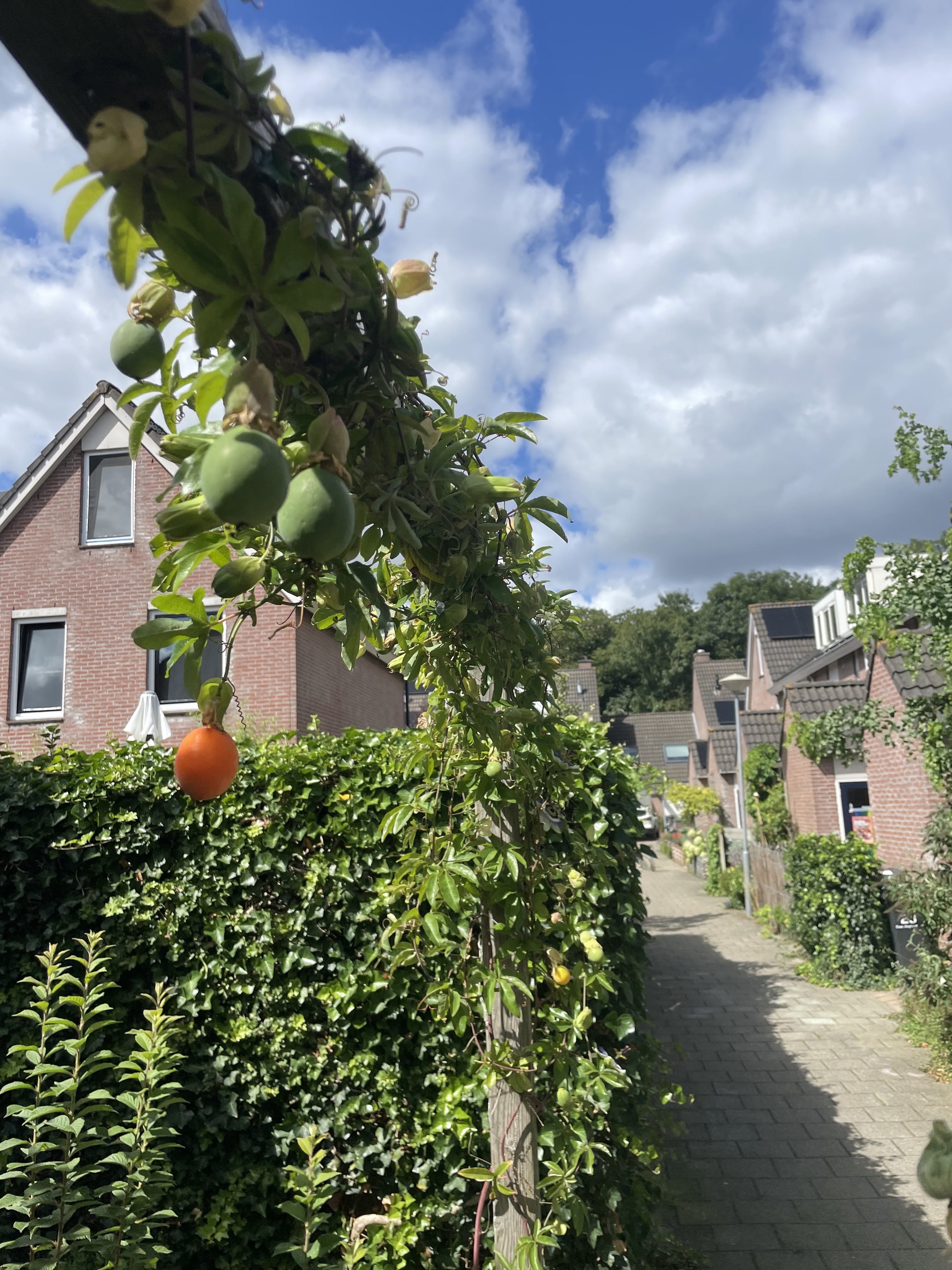
Plant climbers and wall-trained plants to add colours to the vertical spaces, be it boundary walls, fences or the roof of a bike shed.
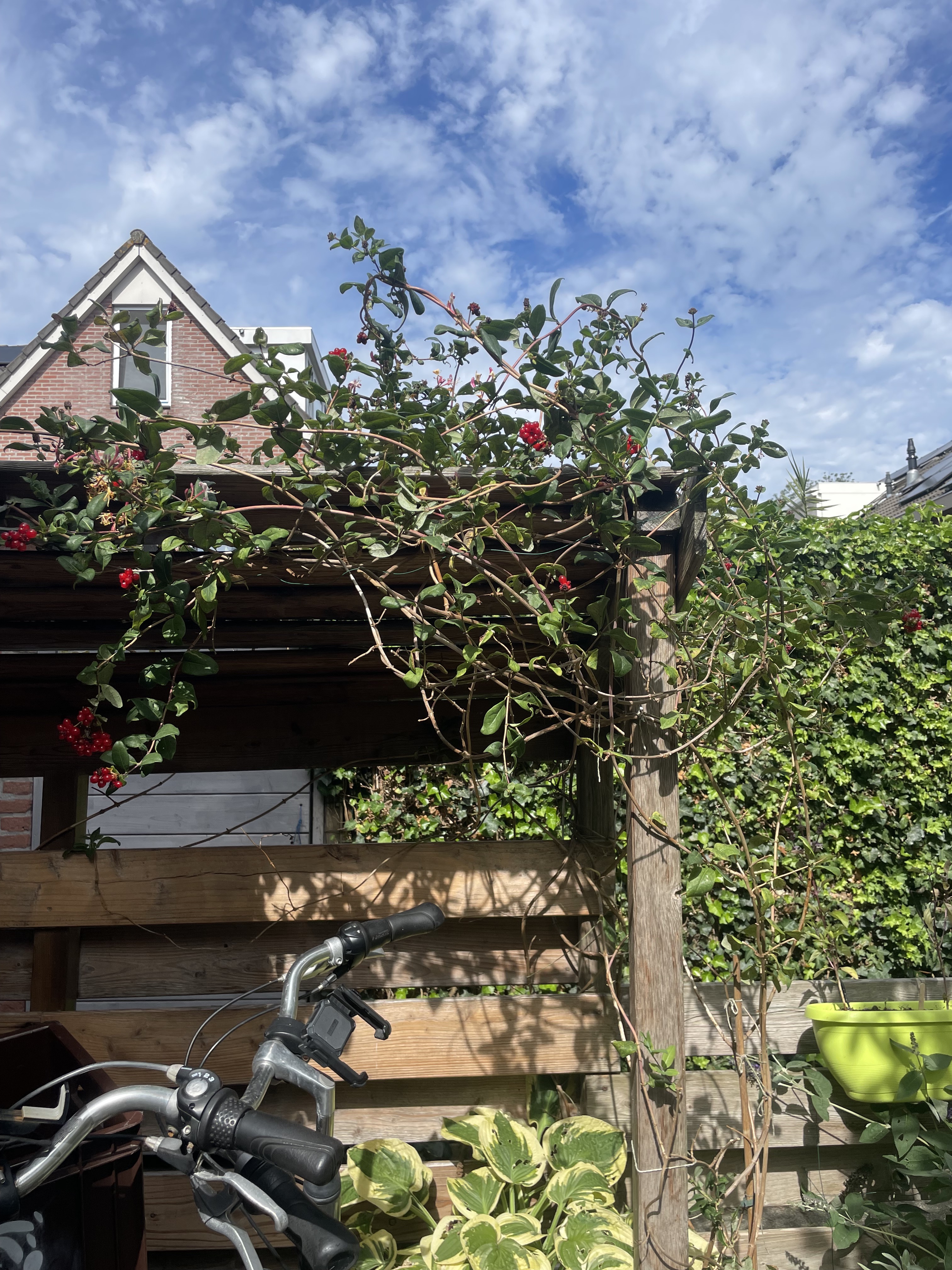
Climbers can:
- soften plain walls
- create seasonal interest
- provide shelter and nectar for insects
- form green privacy shield
Some good options include:
- jasmine
- honeysuckle
- clematis
- climbing roses
- passion fruit
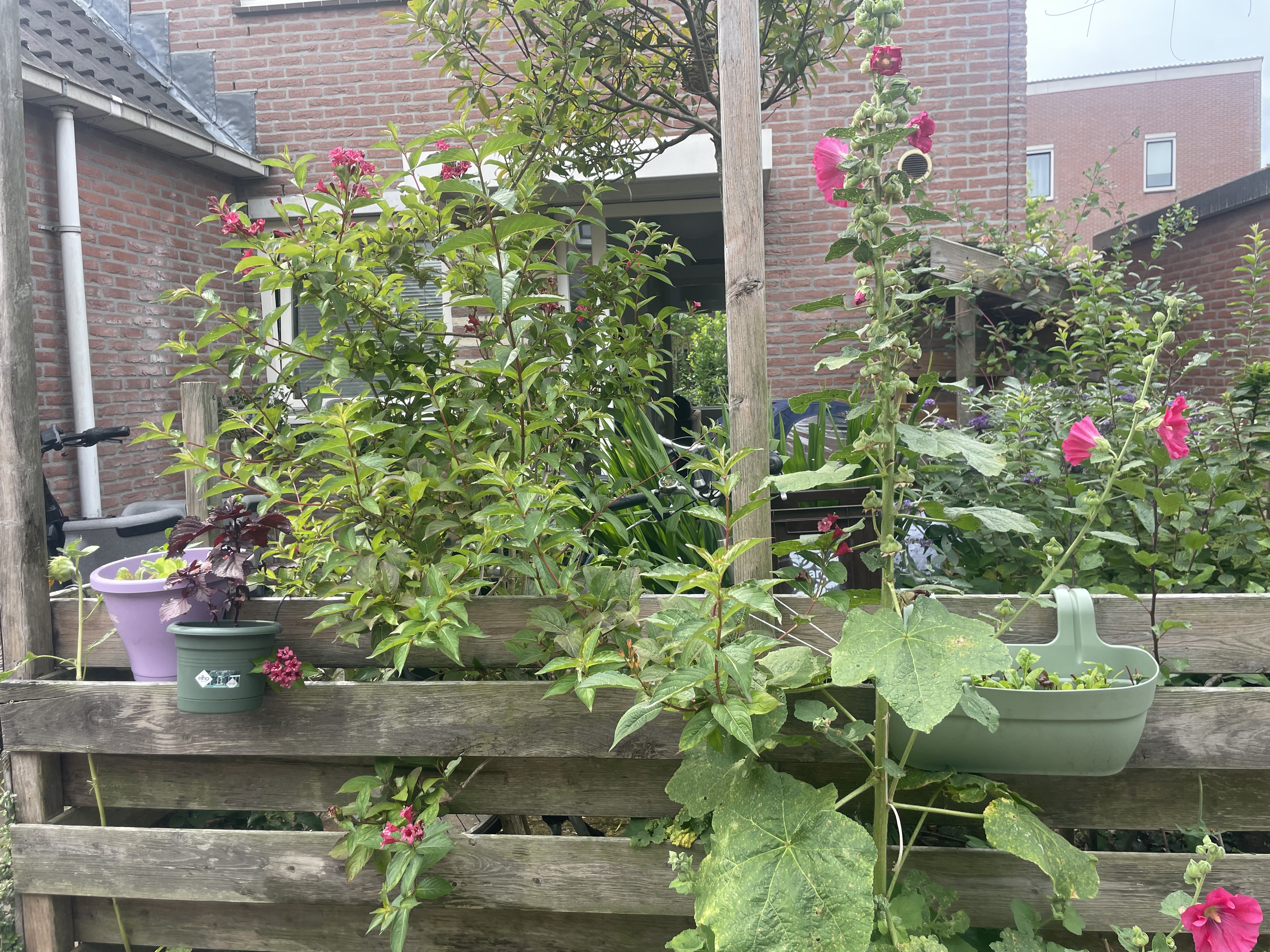
You can also use hanging baskets to add more colours to the front garden. Thanks to my fence, I could position several hanging baskets in the sunnier corners of the front garden and enjoy the colours and the produce they bring.
If you are enjoying this post, you might also appreciate our FREE cheat sheet with 12 Tested Gardening Ideas for Small Spaces.
Provide your info for a link to the downloadable resource and be opted into our email list for the (very) occasional product promotion.


Add Containers to Paved Corners Not Needed for Parking
Not all the corners or edges of the paved ground are needed for parking. You can place pots there, drawing the eyes away from the grey ground.
- Pots allow you to introduce plants without removing paving.
- Pots equal flexibility: you can rearrange them when and where needed.
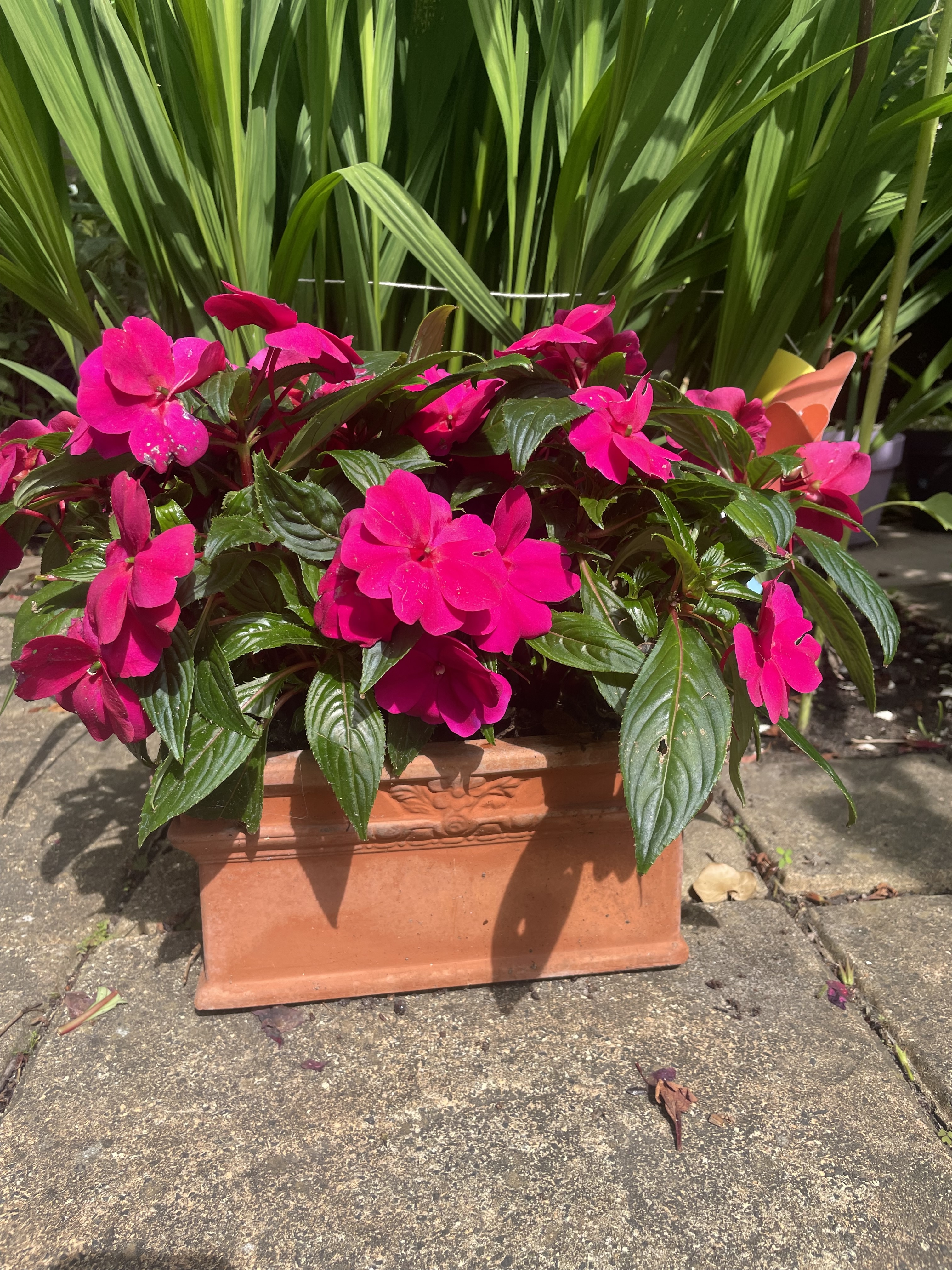
If possible, go for the larger containers. They retain moisture better and support healthier plant growth.
Choose Plant Combinations That Provide Colour Across the Seasons
Front gardens are seen every day — not only by you, but by neighbours and passers-by. Choosing plants that provide interest across multiple seasons keeps the space lively throughout the year.
A simple approach is to mix plants that offer:
- spring flowers
- summer colour
- autumn foliage or berries
- winter structure or evergreen leaves
Here’s the selection I have for continuing colours in my front garden.
- tulips and alliums for spring
- Bristol ruby and blue passion fruit blossoms for summer
- red flowering grass-like plants (croscomia) and reddish climbing hydrangeas for autumn
- evergreen red robin and holy for winter
Layering different seasonal plants helps create the feeling of abundance even in small spaces.
Plant for Pollinators and Small Wildlife
Front gardens can play an important role in supporting urban biodiversity. Even a small planting area can provide plenty of food and shelter for insects and birds.
Choose plants that produce:
- nectar
- pollen
- seeds
- berries
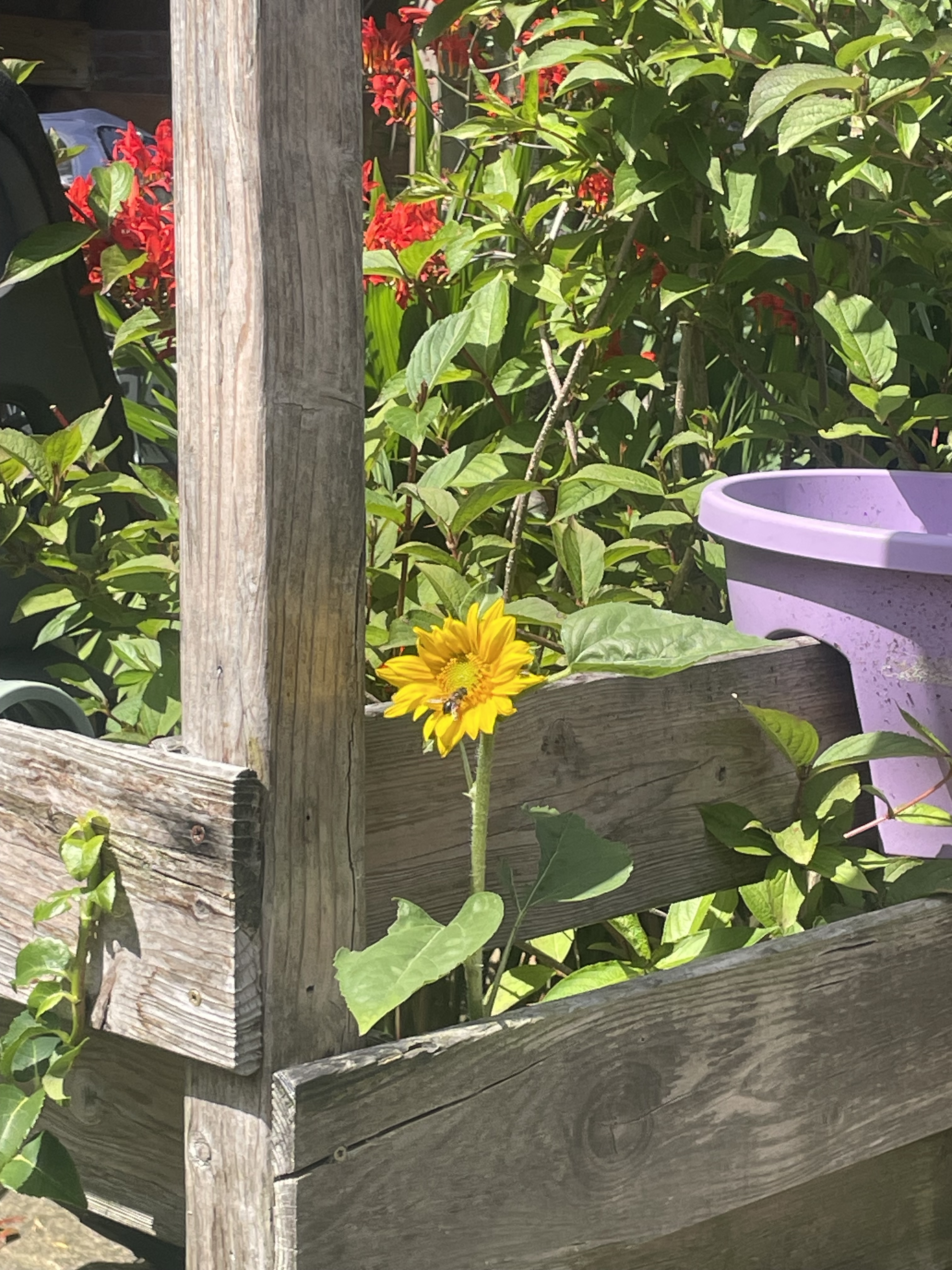
Examples include:
- sunflower
- lavender
- rosemary
- salvia
- echinacea
- flowering herbs
- and many more
Allowing some plants to flower fully before cutting them back helps pollinators make the most of the garden.
A Small Space Can Still Be Alive
A front garden does not have to choose between function and beauty. With thoughtful planting, even a space designed for parking can support colour, greenery, and wildlife.
By reclaiming small strips of soil, planting vertically, adding containers, and choosing plants with seasonal interest, you can turn a purely practical space into one that feels alive again.
Sometimes the smallest patches of soil are the ones that make the biggest difference.
 Grow More With Less
Leave a comment