
When I turned 40, a friend gave me 40 early-season tulips. They were lovely.
Yet, there’s a slight problem. I didn’t (and still don’t) have a vase big enough for 40 tulips. Nor for 10.
I have a modest-sized garden. Therefore, as pretty and cheerful as a vase of freshly cut flowers can be, I never feel like sparing the valuable space for growing flowers just for cutting.
Once you start thinking beyond cut flowers, though, it won’t take long to see that a flower can offer so much more. A flower can feed bees and butterflies, bring a memorable scent to a sitting area, or provide material for dried arrangements that last for months or years.
Small-Space Flowers to Grow for Pollinators
Think bees, hoverflies, and butterflies.
More of them will buzz in and out of the garden if you grow flowers offering nectar and pollen with easy access. Pollinators are a lovely sight, plus the help of wings (and legs) for your fruiting plants.
Note: Easy access is key here because, when it comes to pollinators, not all flowers are equal.
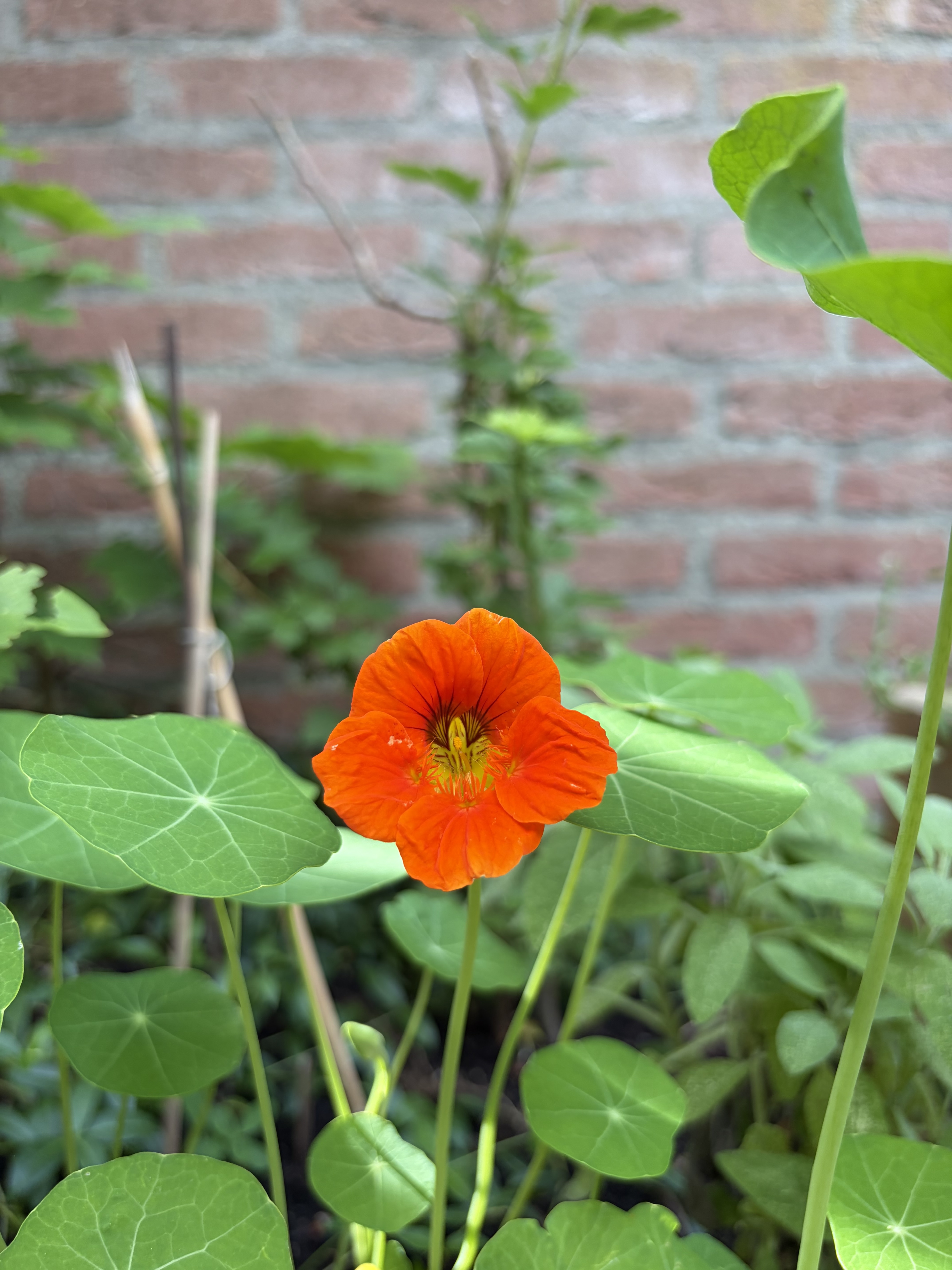
Here are some bee-friendly flowers that are easy to grow and easily suitable for a small gardening space:
- Nasturtiums
- Calendula
- Borage
- Verbena
Or you can simply pick up a mix of wildflower seeds at any local garden centre and spread them in corners that can be a bit messy. Wildflowers are generally best for native pollinators (even if they might not be the most predictable or tidiest-looking plants).
Small-Space Flowers to Grow for Scent
Scent is perhaps one of the most underused garden features. Yet, for a small garden, growing for scent can make such a joyful difference.
You don’t need many scented plants to make a small garden smell wonderful.
In fact, because you’re likely to pass close to them regularly, fragrance can be much more noticeable than it would be in a large garden.
My top choice for scented flowers is star jasmine. These evergreen climbers don’t take much of your precious ground and have the most memorable fragrance. Plus, its glossy foliage provides longer visual interest.
Similarly, sweet peas are another excellent choice for scent in a small garden where you can train the plants upwards. Colourful delicate sweet pea flowers are also useful when you want to build a bouquet for a special occasion.
Small-Space Flowers to Grow for Drying and Displaying
Fresh flowers have a short life in a vase, while dried flowers can stay with you for months—or even years.
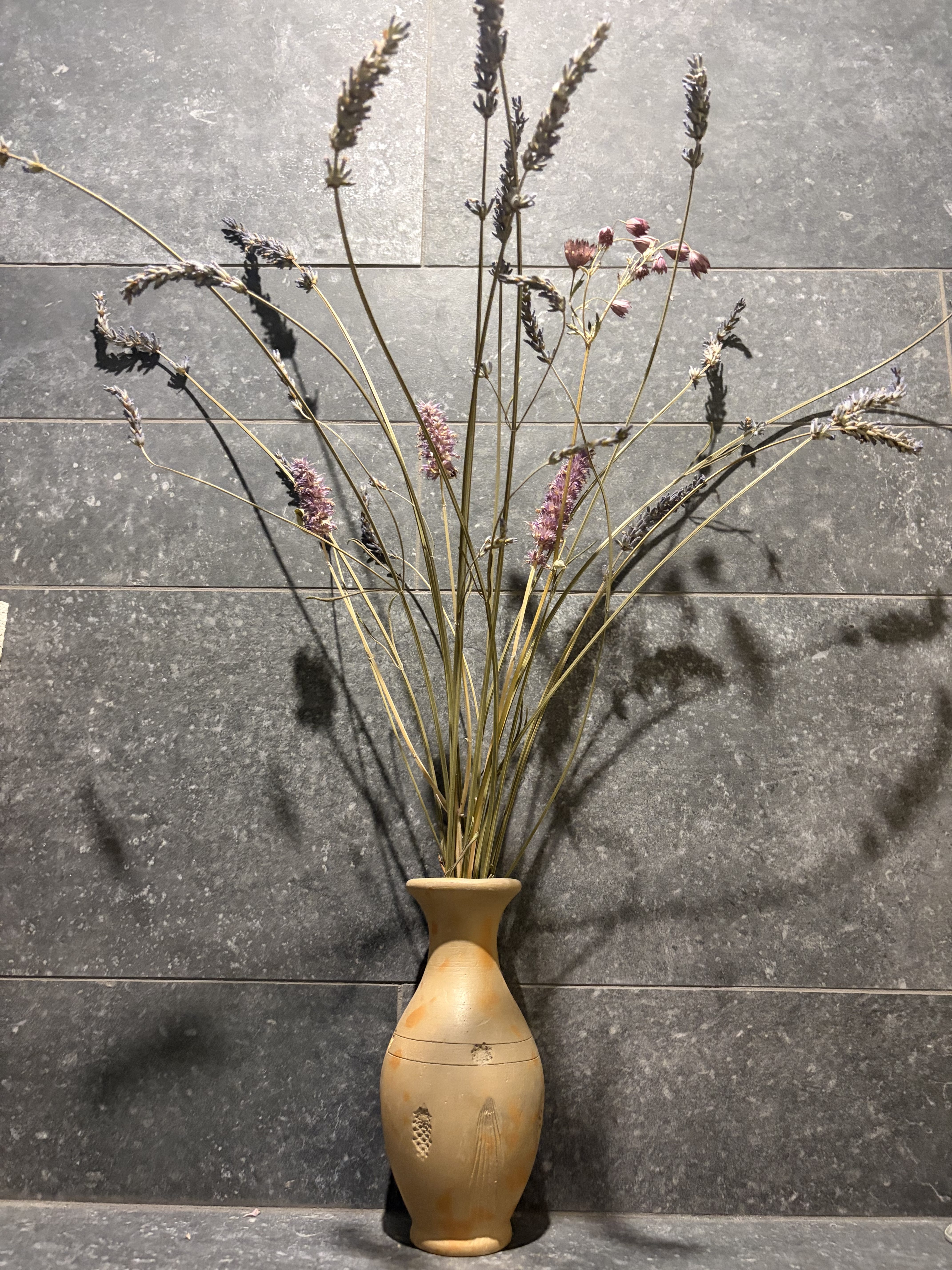
For that reason (and the bees), I very rarely keep a vase of fresh flowers in my house. Yet, dotted around the different floors are little arrangements of the dried ones that I love and treasure. I got my materials from:
- lavender
- allium
- hydrangeas
- astrantia
- hyssop
- strawflower
All of the above, except for strawflower, have been grown at some point in my small garden. Even when I had to let go of some hydrangeas that overgrew their space (and were past their prime), I got to keep the dried flower heads to remember them by.
And The Clear Winner is Lavender
As I write this post, I realise that lavender is such a treasure.
- Bees and butterflies love lavender.
- Lavender smells amazing, and retains its fragrance for years as it dries.
- You can dry lavender flowers on their stems and add them to display arrangements. They retain the colour decently after drying.

So we should all grow lavender, even if it’s not something you’d classify as a cut flower.
Enjoy my garden writing? Buy my a coffee (or a bag of seeds)

