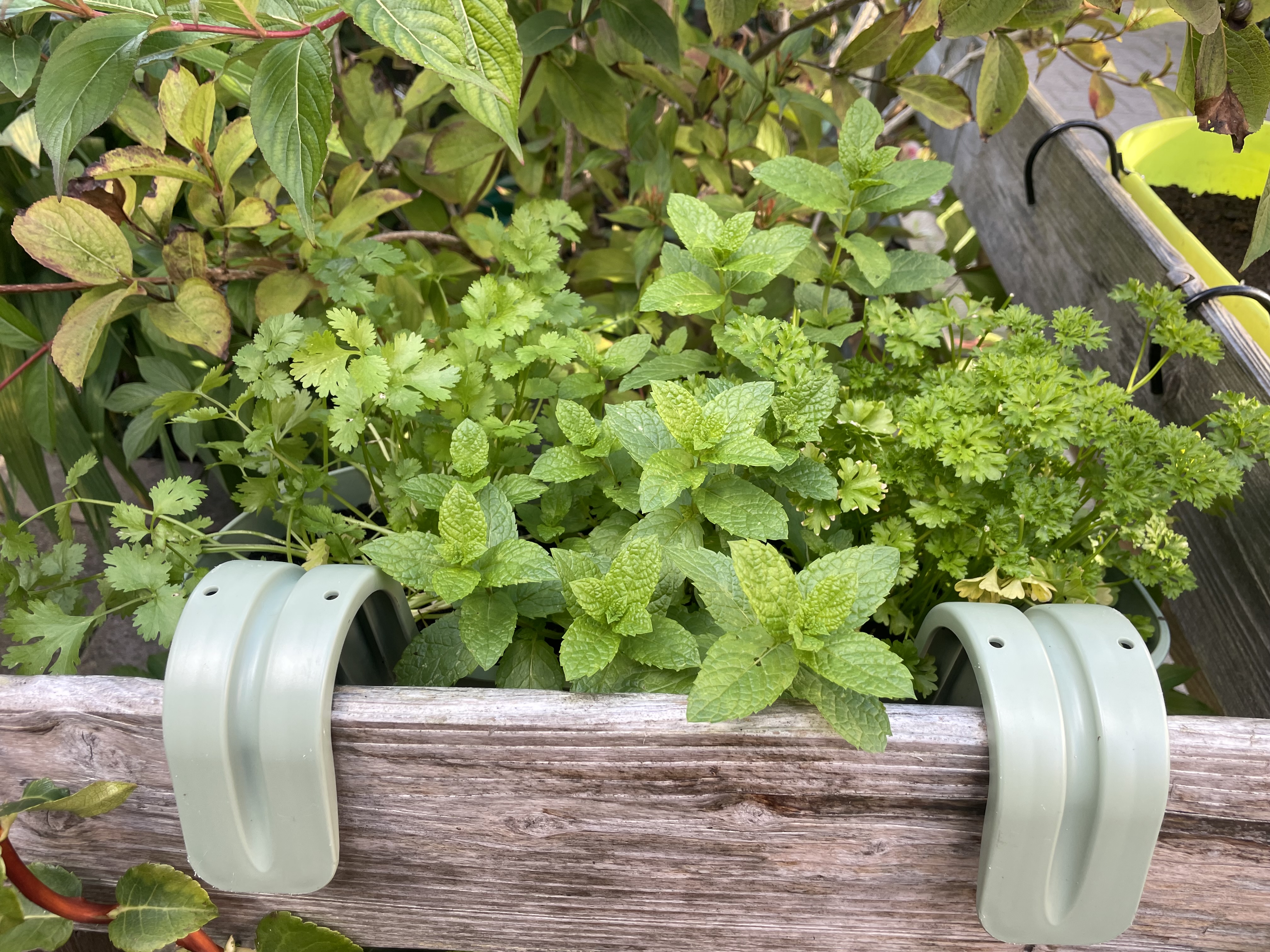
When I started growing herbs on a tiny balcony, I planted one herb at a time, each in its own pot. Simple enough, right?
It didn’t take long before I was drowning in pots—and spending way too much time (and water) keeping everything alive.


The reasoning is that a small pot of one herb is easier to find room for on your balcony or terrace filled with other pots.
Also, sowing different seeds in separate modules is the key for sanity when you grow from seeds. Then, quite naturally, the single-module plant gets moved to a single pot. And then, you end up with these 👇


Yep, I moved those pots from a small balcony to a bigger terrace (and, finally, a small garden). I diligently watered them almost daily during each growing season, not excluding the day I went into labour.
Lately, I get the occasional help from the new one…

But overall, it required a lot of me watering the plants while the many pots crowded the garden.
I don’t recall the exact moment when the light bulb went on that changed that one-herb-one-pot default.
In fact, it probably happened gradually as I started to grow bigger and more permanent perennials.
I bought big containers to grow blueberries, raspberries and the like. Then I realised I could add small soft annuals with perennial shrubs, filling the gap and covering the bare soil. Finally came the realisation that such big containers require less frequent watering as the big volume of soil holds more water, and the covered surface loses moisture less quickly.
The final push for grouping herbs came as a one-month holiday loomed. Fewer big containers mean less watering hassle for the friends who would look after the plants for me.
Suddenly, I was all excited. Maybe the herbs would survive my long absence. Perhaps the new containers would look and smell great. And maybe it would even clear some more gardening space for my son to play (or for me to grow more plants 😋).
So, if you need more convincing, here are the reasons to grow herb combos instead of single herb pots, especially in small gardens:
- Having a few big containers instead of many little pots means less clutter (and often more harvest) in the same space.
- Bigger containers have simpler watering needs (such as every few days instead of daily).
- Mixed containers tend to look better than a line of lonely pots.
- Picking herbs to mix in one container is an exciting experiment, advancing your gardening skills and the fun.
So (mostly) for the fun part, below are some herb container combinations you can experiment with to save water and maximise the space.
Want to save time also? Check out this illustrated guide for 5 herb container combinations. The downloadable cheat sheet visualises 5 container planting diagrams and the profiles of all herbs used so that you can quickly learn how they grow, how to care for them, and what to harvest.
Mediterranean Mix: Rosemary, Thyme, Sage, and Oregano

You can create a minimum-fuss container by combining two or more Mediterranean perennial herbs like rosemary, thyme, sage, and oregano. These drought-tolerant herbs will thrive in hot, sunny conditions.
- Watering: Low; allow soil to dry between waterings
- Sunlight preference: Full sun
- Container tip: Use free-draining soil in a terracotta or unglazed container
- What you get from this combo: Fragrant herbs for roasted vegetables, grilled meats, bean soups, and infused oils
A container with perennial rosemary, thyme, sage, and oregano offers a more permanent feature in your garden and amazing flavours in your kitchen. And the bonus is that such a container could thrive on being mostly left alone.
The Shade Tolerant Pair: Coriander and Chervil
Coriander and chervil make a great container combo for partially shaded spots in your garden. Because coriander and chervil grow well in colder temperatures, they are ideal for early sowing in spring or later sowing in autumn when other plants might not have started or have already finished.
- Watering: Moderate and stable (irregular watering can cause bolting in coriander)
- Sunlight: Partial shade, especially in hot summer
- Container tip: Use wide, shallow containers and sow successively
- What you get from this combo: Edible leaves and seeds enhance a dish’s flavour.
A container with coriander and chervil provides early or late-season harvests when other herbal annuals haven’t started or have already finished.
Pasta-Sauce Herb Container: Basil and Parsley

A container with basil and parsley is your gateway to the quick, easy, and flavourful pasta sauce. These cut-and-bushy-again herbs are most rewarding, even if they require more water during the active growing months.
- Watering: Medium to high; keep the soil consistently moist
- Sunlight: Full sun to partial shade
- Container tip: Choose a glazed or plastic pot to help retain moisture
- What you get from this combo: Fragrant herbs to add another flavour depth to your tomato sauce or to make pesto with.
A container combining basil and parsley is less water-demanding than a series of pots for individual basil and parsley plants. Also, the bendy parsley stems soften the look of straight basil stems, creating a more interesting visual.
Tea Time Trio: Chamomile, Lemon Balm, and Mint
Tea enthusiasts can create a container combining mint, chamomile, and lemon balm. These calming herbs prefer similar growing conditions where they get the morning light and are shaded from the hotter afternoon sun.
- Watering: Medium to high; keep soil evenly moist
- Sunlight: Morning sun and afternoon shade work best
- Container tip: Use a large, deep pot—mint and lemon balm can spread aggressively
- What you get from this combo: Incredible smells from the garden and the occasion calming cuppa.
A container with chamomile, lemon balm, and mint can look very pretty, smell amazing, and give you the ingredients to brew calming tea.
If you are enjoying this post, you might also appreciate our FREE cheat sheet with 12 Tested Gardening Ideas for Small Spaces.
Provide your info for a link to the downloadable resource and be opted into our email list for the (very) occasional product promotion.


Asian Cuisine Container: Shiso, Mint, Spring Onion, Dill, and Chives
If you are interested in different cuisines, making containers with a separate cuisine theme, like Asian cuisine, could be a fun experiment.
In my garden, I grow many herbs used in Vietnamese dishes because their flavours are much stronger when cut fresh on the day of cooking than when cut, packed, sold, and bought over days (or weeks). Some herbs, like chives and dill, are grown from seeds, while others, like mint and spring onions, are propagated from cuttings. Yet, I often start each herb in its own pot to make it easy to track and care for during the early stages. When they are established enough to handle the moving, I group them together in a big container 👇

Here are the herbs I use in the above container:
- Shiso
- Mint
- Chives
- Spring onion
- Dill
Note that when you create a container with both perennials and annuals, you will still need to look after the container during the winter when the perennials are still around. Thus, it is a good idea to consider succession options for the annuals.
For example, with this Asian cuisine container, I would sow coriander seeds later in the second half of the year when the weather gets cooler, and the dill would have died off, leaving some empty space.
Leave a Reply