
Blueberries are one of the most rewarding fruits you can grow in a small garden — fresh, nutritious berries and beautiful sights from spring blossoming to summer fruiting to autumn colours.
But growing blueberries in pots isn’t quite as simple as just sticking the bare-root plants you order online in a random container and watering occasionally.
Though it doesn’t have to be hard, either.
A quick glance (or tl;dr)
- Preferred soil: Acidic, moist, well-drained soil with a pH between 4.5 and 5.5.
- Preferred place: Full sun; sheltered from strong wind; suitable for containers, and raised beds.
- Edibility: Yes (fruits)
- Harvesting notes: Harvest berries when fully blue and they fall off with a gentle touch
- Small Garden Candidate: Yes
After three years of growing blueberries in containers, I’ve learned a few important lessons. The trials and errors have resulted in one sterile plant and another that is yet to recover from a serious disease.
Yet, our family got to enjoy a steady stream of fresh blueberries this summer, right outside our doorstep. It’s a much-welcome reward.

So, here are the hard-earned lessons for planting blueberries in containers (so you don’t have to learn the hard way).
Not All Pots Are Equal
It’s always tempting to use whatever pot is on hand and get on with the planting. That’s what I did with my very first blueberry. And I had learned the hard way that such a slapdash approach only costs me time and effort when it comes to planting blueberries.
Small Pots Dry Out Fast
My first three blueberry pots were just 25 cm in diameter because they were the most available in my small collection.
Such a size is technically big enough for a young blueberry bush. By the middle of the first summer, though, I had noticed that the blueberry leaves were turning brown. During hot days, even with plenty of water given in the morning, there were withered leaves in mid-afternoon.
Soon, it became a twice-daily watering job for the blueberry pots. Not an inconsiderable amount of work, considering everything else going on in the garden in the summer.
The reason was that the plants had outgrown their small pots.
Blueberry roots grow wide, yet shallow. Once the roots have filled the top layer of the soil, the plant will struggle to get enough water and become stressed, resulting in withering and browning leaves and eventually small and few fruits.
Oversized Pots Aren’t Ideal Either
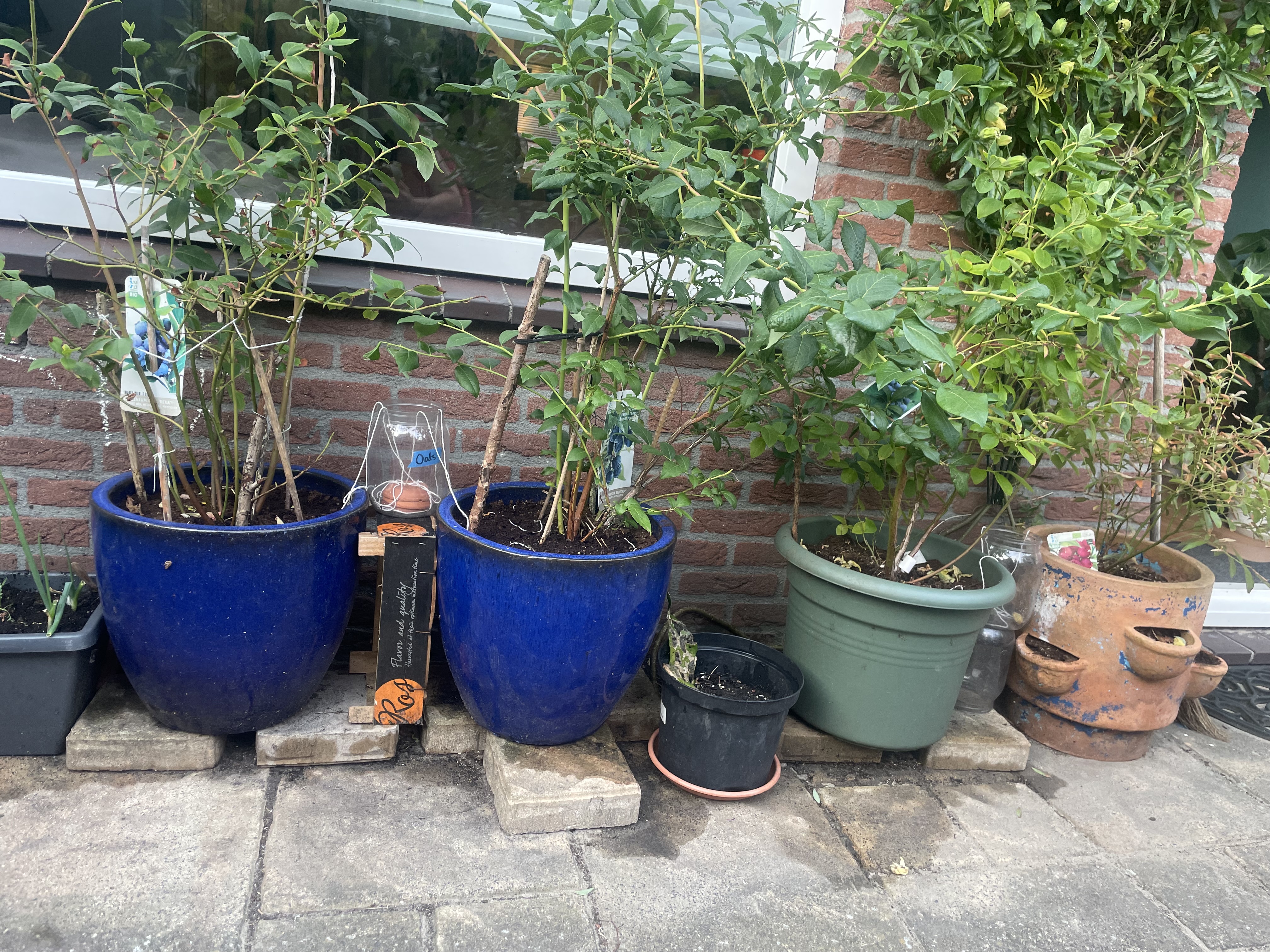
So next, I went big. Really big. A 50-litre pot standing on four slabs of old garden tiles to aid drainage.
It worked in terms of root space, but then I had a new problem: weight. Once filled with moist compost, the pot was super heavy. It was impossible for me to move the filled container anywhere else but where it stood.
In the small growing space I have, I constantly need to move containers around, from giving sun priority to a certain plant at its peak fruiting time to sheltering a leggy, fragile bush from the wind. (In this part of the Netherlands, it gets very windy more often than not.)
In brief, the very large container of blueberry plants didn’t work out in my small garden.
Blueberry container size tip for a small garden: Choose a pot with a capacity of around 35–40 litres, ideally made from lightweight plastic or recycled material, and raise it up from the start.

Acidic Soil Is Non-Negotiable
Blueberries aren’t fussy about much, but they absolutely insist on acidic soil. Try to grow them in regular garden compost, and you’ll end up with a sulky, yellow-leaved plant that refuses to fruit.
Use Ericaceous Compost
Ericaceous compost is formulated for acid-loving plants like rhododendrons, camellias, and of course, blueberries.
It’s available at most garden centres. So, make sure you grab ericaceous compost in advance for your blueberry pots.
And, buy enough of the ericaceous compost. In other words, avoid having to dilute your blueberry planting medium with multi-purpose compost.
I had one blueberry plant that didn’t fruit for three years. Eventually, I decided to let go of the plant (so that I could use the pot for another plant that would thrive). Only when I cleared out the pot that a memory came back to me. When I prepared that pot, I didn’t have enough ericaceous compost. As I didn’t want to delay the potting process to order more ericaceous compost, I mixed in some old potting soil, the regular kind that had been recycled from other containers. The added ingredients likely resulted in the lack of fruit.

Use Ericaceous Feed
Regular plant feed can mess with soil pH. It’s best to use a liquid or granular feed designed for acid-loving plants.
As a general rule of thumb for container planting, it’s essential to feed a potted plant regularly during the active growing and fruiting months.
You would want to feed your potted blueberry plants every month (or more often, depending on the size of the pot) during the peak growing season (from April to August in the Netherlands).
Top Up Yearly
It’s a good practice to top up blueberry pots each spring with a layer of fresh ericaceous mix. I also mulch with pine needles or bark chips, both of which help retain acidity. It maintains the soil pH stability and provides the plant with a fresh boost.

Use Rainwater Whenever Possible
Tap water in many regions is alkaline. Over time, this neutralises your soil and causes problems for acid-loving plants, such as blueberries. For this reason, rainwater, being naturally acidic, is ideal for watering potted blueberry plants.
You can collect rainwater using a rain barrel, also known as a water butt. When rainwater isn’t available during dry spells, I occasionally acidify tap water with a few drops of lemon juice or cooking vinegar — just enough to keep the pH on the right side.

You Want Two Plants, And Possibly Three
Most blueberries are partly or fully self-pollinating, so you can produce a crop with just one plant. However, blueberry bushes tend to fruit far better with cross-pollination, not just between two different plants but also between two different varieties.
For decent harvests and plump berries, get at least two blueberry plants from two different varieties. Ensure that you get varieties that overlap in the flowering and fruiting times.
Water Daily During Hot, Dry Summer Days
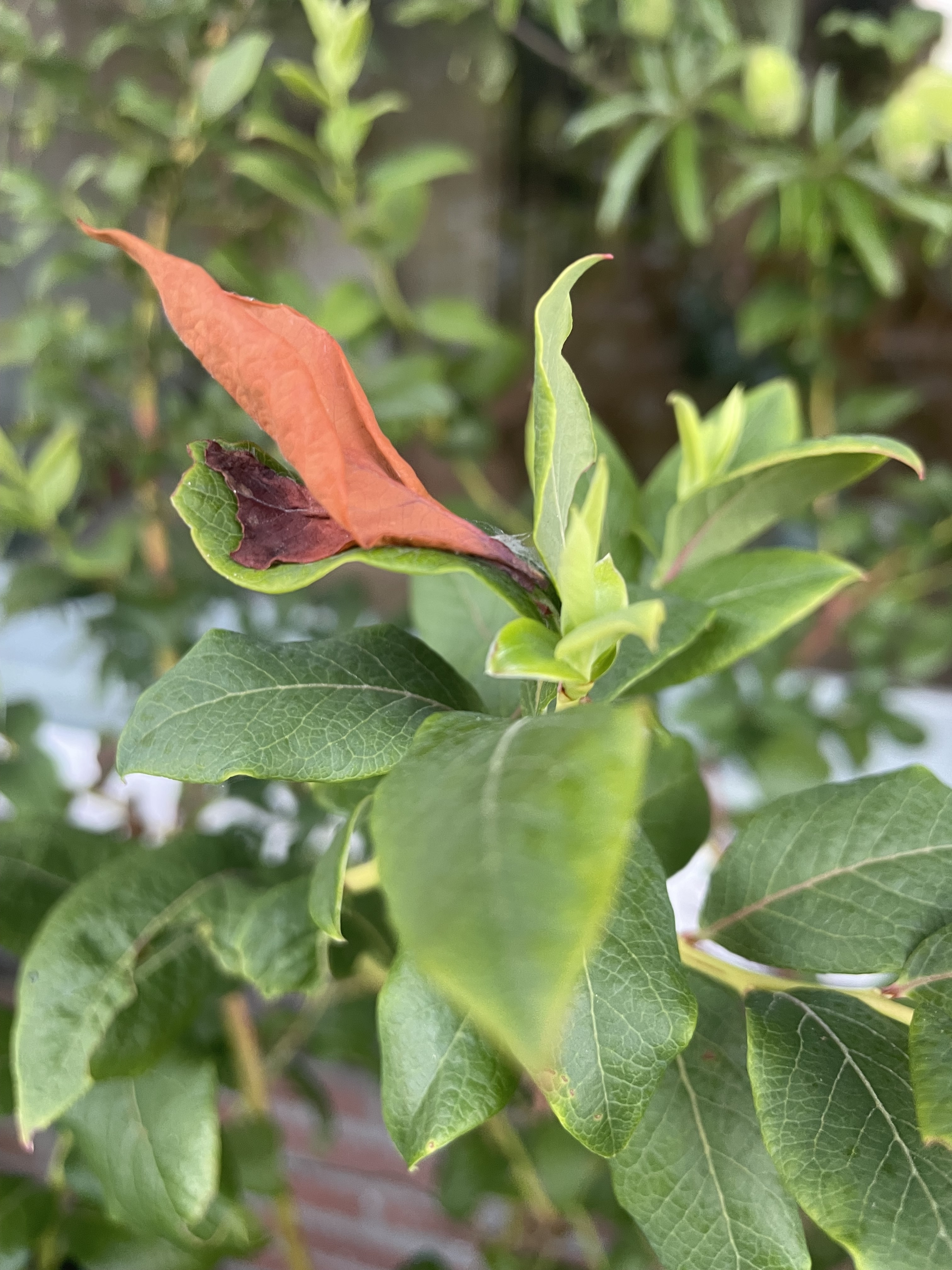
This one is straightforward but critical: blueberries in pots require frequent watering in the summer, most often daily, especially if there is little to no rain. If you are behind on watering, you are likely to see it straightaway— drooping leaves and fruit shrivelling before ripening.
Water deeply, ideally in the morning, so the roots stay cool and evenly moist.
In extreme heat, I sometimes have to water twice a day. A thick layer of mulch helps retain some moisture, but blueberries are thirsty plants and won’t tolerate neglect. Think of them more like tomatoes, not typical shrubs, in terms of water needs.
This water neediness is something to consider if you often go on a long holiday during the summer.
I don’t often feel like I can ask a friend or a neighbour to pop in for watering my blueberry pots every day. So, before each summer trip, I set up a system with water cans and strings, hoping that the roots would pull the needed water when needed.
Learn to Prune Your Blueberries — And Do It
This was probably the most intimidating part for me at the beginning — pruning fruit bushes felt like something only pros do.
However, if left unpruned, after a year or two, the older stems in your blueberry plants will become woody, resulting in fewer berries. That’s your signal to get snipping.
Why Prune?
- Encourages new, productive growth.
- Maintains a healthy, open shape.
- Prevents the plant from becoming leggy and top-heavy.
This spring, one of my blueberry plants was sick. It has many flowers, but they all turned brownish before they became fruits. And the stems were covered in brown spots. My investigation into growing healthy blueberries suggests that my lack of pruning may have weakened the plant, making it more vulnerable to fungal attacks.
When To Prune A Blueberry Bush
From the 3rd year, a blueberry bush often benefits from pruning. Although pruning a blueberry bush can be done anytime from November to March, late February to early March is typically the best time for pruning. At this point, it is easier to spot the fat buds that produce flowers and fruits. Prioritise keeping these buds over the smaller, flatter leaf buds.
How To Prune A Blueberry Bush
When pruning a blueberry bush, remove:
- any dead or damaged wood
- cut out the oldest stems (those thicker and grayer) to the base
- lightly thin out crowded areas to let light in
You should aim for a ratio of 1/3 old stems, 1/3 middle-aged stems and 1/3 young stems when you finish pruning a mature blueberry bush.

Final Thoughts: Is It Worth It?
Absolutely. Growing blueberries in pots takes a little more planning than I expected, but the rewards are sweet, literally. The blooms are beautiful in spring, the leaves turn crimson in autumn, and the fruits are so fresh, eaten straight after picking. My blueberries are not as sweet as some bought from the shop, but the freshness is incomparable.
Here’s a quick summary of the key lessons I’ve learned:
- Choose a pot that’s big, but not back-breaking.
- Commit to ericaceous compost and feed.
- Collect rainwater.
- Grow more than one plant.
- Water generously and regularly, especially in summer.
- Prune mature bushes annually for long-term success.
If you are enjoying this post, you might also appreciate our FREE cheat sheet with 12 Tested Gardening Ideas for Small Spaces.
Provide your info for a link to the downloadable resource and be opted into our email list for the (very) occasional product promotion.
Your message has been sent

 Grow More With Less
Really enjoyed your artic
Thank you so much