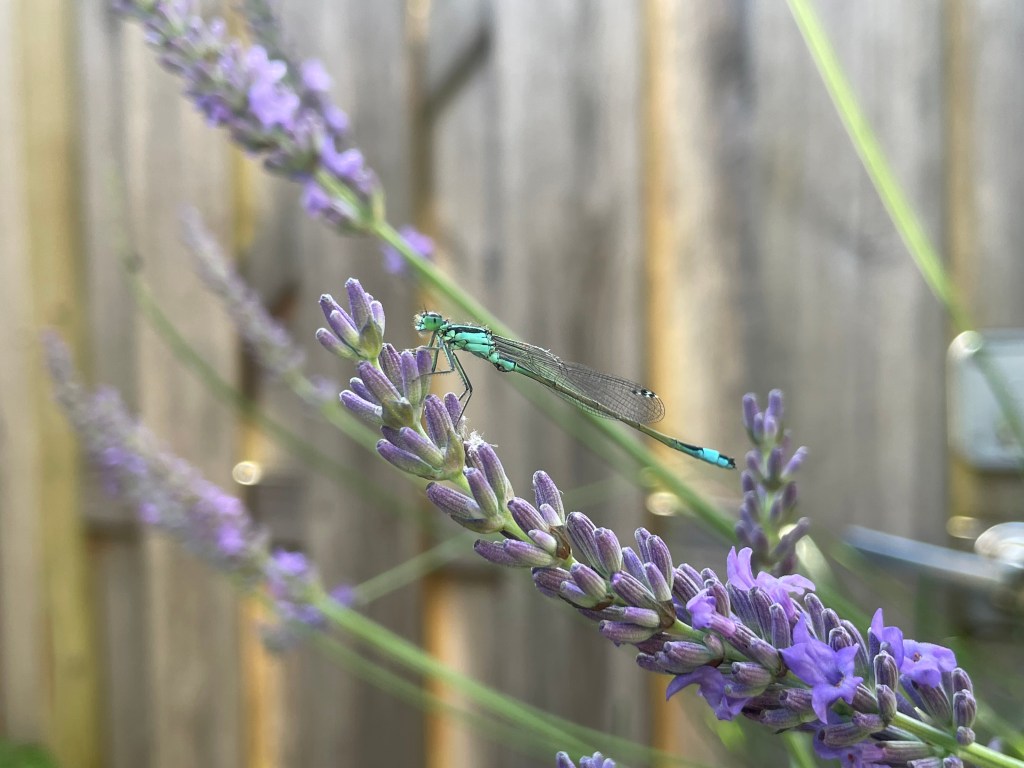
The other day, when we sat in the garden with some first-time visitors, my husband told them that everything they could see was edible. Though his statement is more like an exaggeration tease, there lies a kernel of truth.
I started growing plants for the kitchen. Coriander, spring onion, and bird’s eye chillies came first and foremost. As my growing space expands, my collection extends to include ornamental plants that please the eyes, though most of them were gifts.
I guess you have gathered by now that I am a practical gardener. I grow vegetables for stir fry and berries for oatmeal. I tend herbs for brewing tea. I want plants with a purpose that I understand.
So, three years ago, when my husband asked me to plant jasmine because he likes the smell, I went for honeysuckle instead.
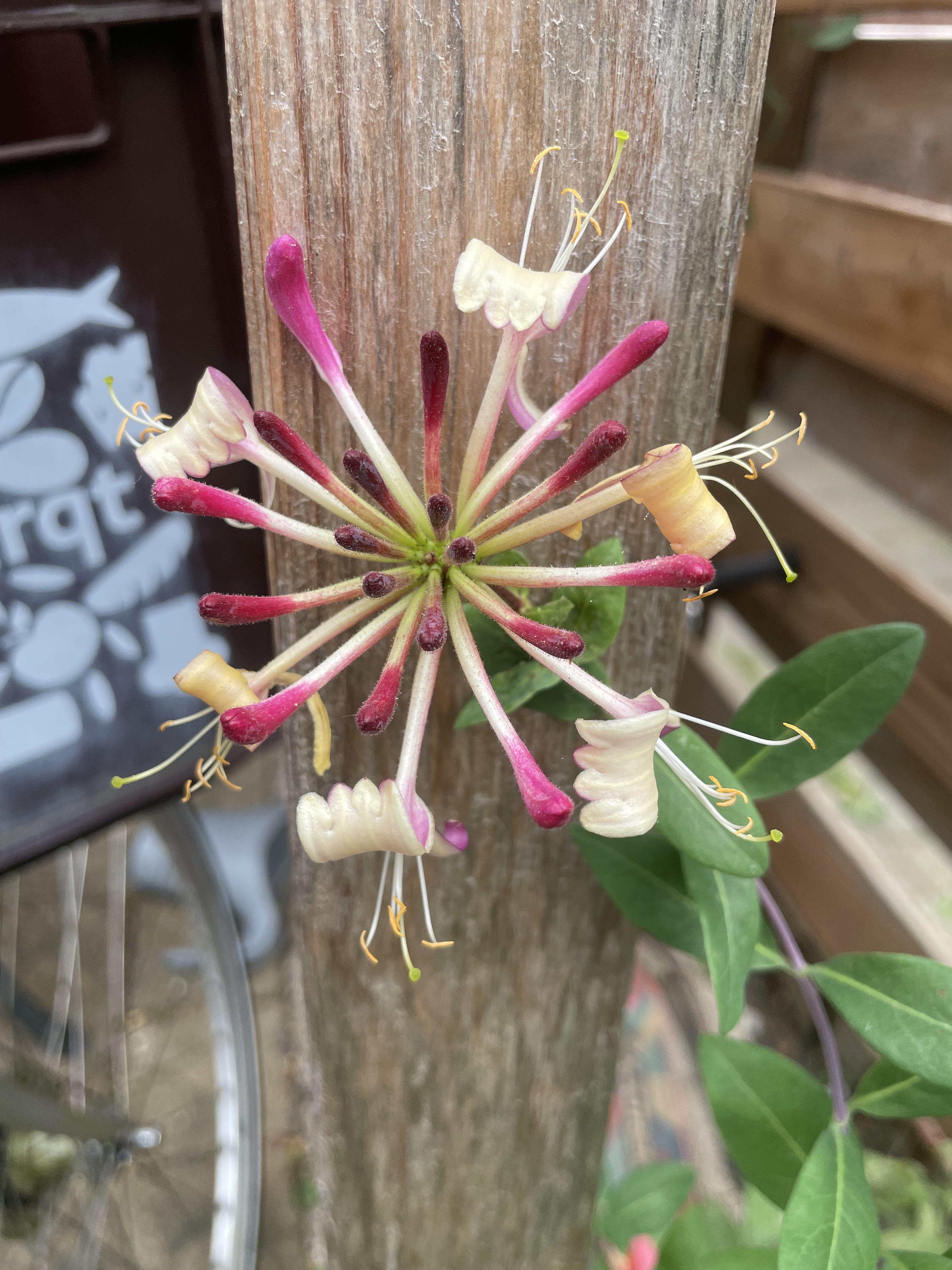
My reasoning was that honeysuckle blooms also have a nice scent, while the plant grows natively in this part of Europe. So unlike jasmine, honeysuckle flowers attract more native pollinators. Again, a purpose I understand.
And, I have to be picky in this relatively small garden, so I prioritise the bees.
But this summer, I have really enjoyed the jasmine fragrance every time I sit at the garden bench next to the jasmine plants that I had put into the ground in the spring.
The change of heart came from a talk on my favourite garden show discussing the mental health benefits of scents in the garden, especially near where you sit down for a rest or walk past every so often when you do your gardening jobs.
And with the intense fragrance of jasmine flowers, I have started to understand the wants and needs for scents.
Why You Should Also Grow for Scent (Especially in a Small Garden)
Scent is too often an underrated and overlooked component of a garden, especially one with limited space. It often loses in the competition with colour, form, or harvest.
But here are all the why that you should consider growing for scent if you haven’t yet done so:
Scent Makes a Small Space Feel Luxuriously Full
Unlike big gardens that impress with sweeping views, small gardens are experienced up close.
That’s exactly where fragrance works its magic. The closer you are to a scented plant, the more it reveals itself. A couple of jasmine plants by the bench or a rose climbing near the back door can make the entire garden feel lush and abundant — even if space is tight.

Fragrance Creates Lasting, Sweet Memories
My husband always says that the jasmine scent brings him back to Singapore on our first-ever backpacking trip together. A fond memory made unforgettable with a smell.
Scent Helps You Break the Rush
There is a thing that our boy often does. He would rub lavender between his fingers, then run to find me so that I could smell “something every nice”. The smell would stop me from whatever I am doing and just share a moment with my boy, knowing that one day he would stop being so little and stop repeating one game the 100th time.
Modern life pulls us forward at an exhausting pace. A scented garden — even a tiny balcony or narrow border — gives us the excuse to pause and breathe. Lavender, rosemary, lemon balm, and mint have calming, mood-boosting properties. Simply brushing past them can shift your mood and energy.
Fragrance Extends the Garden’s Appeal Beyond Visuals
If you design for scent outside the peak growing season, you add an outdoor interest when there are not a lot of flowers to look at or berries to pick.
A winter daphne in bloom, for example, can keep your garden “alive” even when the colours dim.
So if you have decided that scent is a quality you want while choosing an addition to your garden, here are some scented plants that would grow outdoors in areas with cold, but not super cold, winters (like the Netherlands).

Easy Climbers to Grow for Scent
When space is limited on the ground, go up. Climbers let you add fragrance vertically, ideal for fences, trellises, pergolas, or even balcony railings.
- Star Jasmine (Trachelospermum jasminoides) – Evergreen and highly fragrant with small, white pinwheel flowers in summer. Works well in pots.
- Sweet Peas (Lathyrus odoratus) – An annual classic with a romantic, sweet scent.
- Honeysuckle (Lonicera periclymenum) – A woodland beauty with evening scent that attracts pollinators.
- Roses (Climbing varieties) – Look for scented types like ‘Eden‘, ‘Madame Alfred Carrière‘, or ‘Zéphirine Drouhin‘ (thornless and shade-tolerant).
- Chocolate Vine (Akebia quinata) – A less common but intriguing climber with vanilla-chocolate fragrance.
Shade-Tolerant Plants to Grow for Scent
A small garden often has many shady corners because of its physical boundary, from the house itself to the fence and the shed’s walls.
Shade doesn’t mean you can’t have fragrance. These shade-tolerant plants offer subtle or strong perfumes for darker spots.
- Sweet Box (Sarcococca confusa) – Small evergreen shrub with powerful winter scent and glossy foliage.
- Daphne odora – Fragrant in late winter or early spring; prefers partial shade and shelter.
- Lily of the Valley (Convallaria majalis) – Low-growing, incredibly fragrant in spring, and thrives in shady borders. (Note that lily of the valley is poisonous, so consider the little ones or pets that might visit your garden before you choose this scented plant.)
- Viola odorata (Sweet Violet) – Tiny purple or white flowers that release a delicate perfume in spring.
- Mahonia × media ‘Charity’ – For larger shady spots, this spiky evergreen offers winter scent and bright yellow flowers.
Best Scented Plants for a Narrow Border
Narrow borders are often overlooked, but they’re perfect for building a fragrant edge that surprises as you walk by.
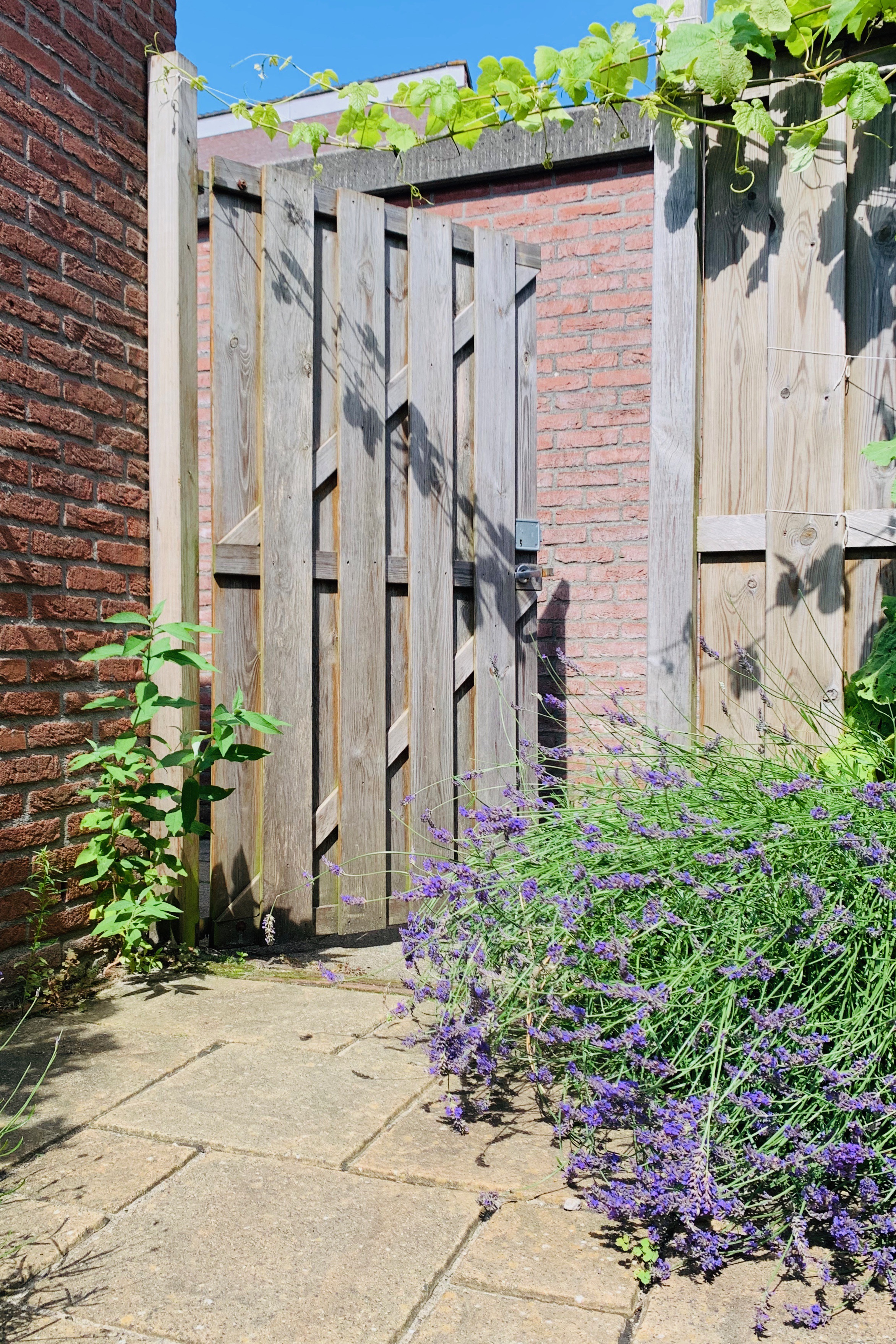
- Lavender (Lavandula angustifolia) – Classic scent, great for sunny narrow borders and drought-tolerant.
- Nepeta (Catmint) – Minty-floral scent with long blooming season and great pollinator value.
- Thyme – Fragrant even when not in bloom; walk past and let your clothes brush against it.
- Dianthus – Many varieties have a sweet clove scent. Compact and lovely for edging.
- Scented Pelargoniums (Geraniums) – Crushed leaves release citrus, rose, or minty aromas, ideal for containers or narrow beds.
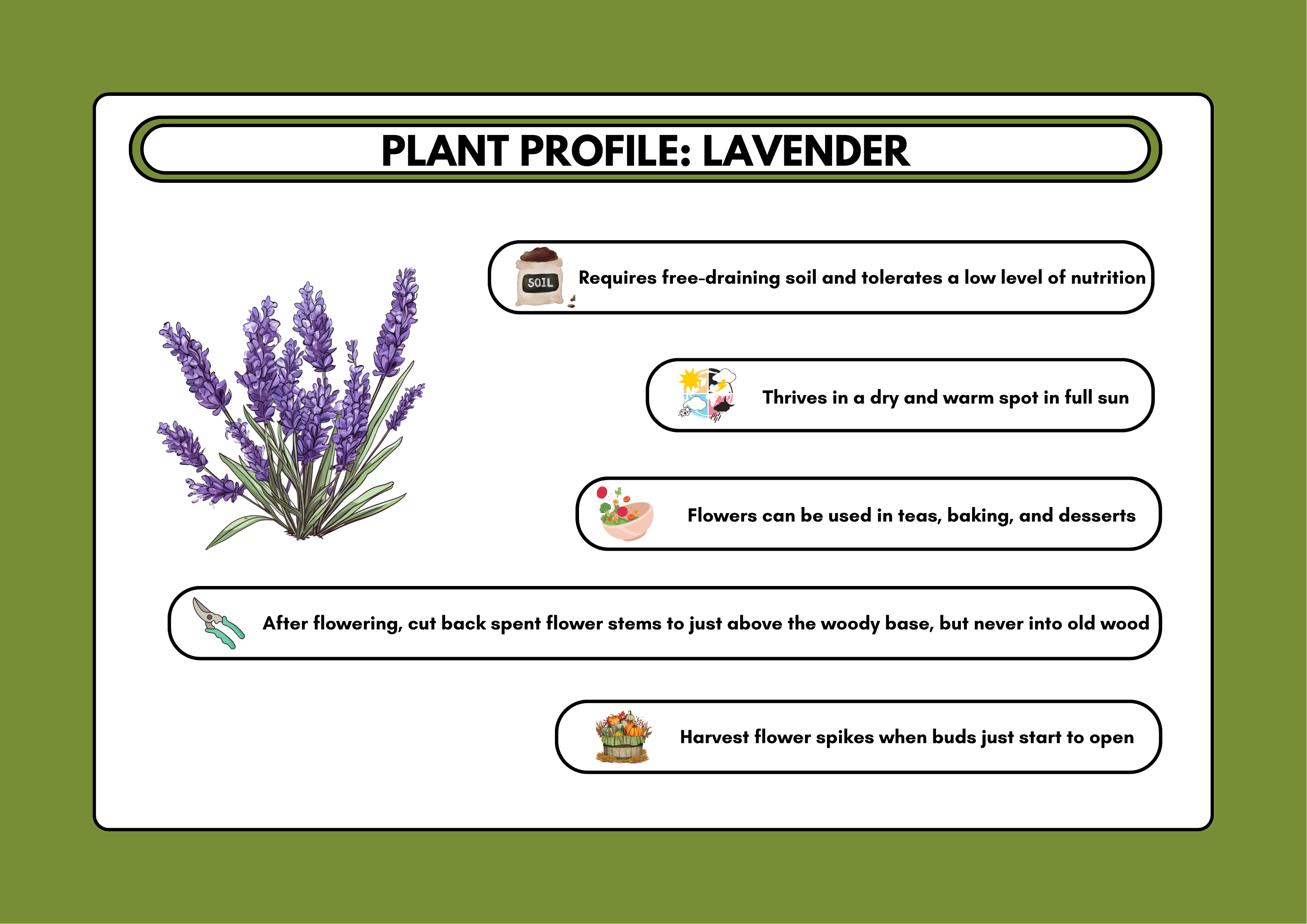
If you want a border planting plan with both scents and harvests, check out our PDF guide specifically designed for narrow borders (a slim side yard, a fence line, or a sunny wall). The intensive planting scheme combines scented lavender and sage with bigger shrubs, vines, and trees to maximise the space. The PDF also contains profiles of all the plants used. (The above illustration is the lavender sneak peek.)
Most Compact Plants to Grow for Scent
If you garden in pots, planters, or raised beds, choose fragrant plants that won’t sprawl or overwhelm. These compact wonders bring scent without the bulk.

- Herbs (Rosemary, Mint, Lemon Balm, Basil) – Ideal for small spaces, with multi-purpose value for cooking and scent. Fragrant herbs can also be combined into a big container to maximise the space and the scent experience.
- Alyssum – Low-growing annual with a honey-like smell and soft, trailing habit.
- Hyacinths – Richly fragrant spring bulbs that work beautifully in containers.
- Scented Violas and Pansies – Perfect for a front step or windowsill, with subtle sweetness.
- Miniature Roses – Often surprisingly fragrant and easy to maintain in small pots.

Best Trees to Grow for Scent
Even small gardens can host a tree. In fact, I would argue that a tree can benefit the design of a small garden greatly. (Check out this article to learn how to fit a tree into a small garden).
And if you want to go for a scented tree, then here are some ideas:
- Citrus Trees (Lemon, Orange, or Calamondin) – Amazing scent from flowers; great in pots and can be moved indoors in winter.
- Magnolia stellata – Compact magnolia with sweet, star-shaped blossoms in early spring.
- Amelanchier (Juneberry) – Subtle fragrance in spring flowers, plus edible berries later on.
- Lilac (Syringa) – Small varieties like ‘Miss Kim’ or dwarf Korean lilac suit small spaces.
- Crabapple (Malus) – Some varieties offer a mild floral scent with bonus blossom and fruit.
Final Notes: Design With Your Nose in Mind
Designing your garden for scent isn’t just about plant selection — it’s about placement, intention, and experience.
- Plant near where you pause: Scented plants near doors, benches, windows, or garden paths are more likely to be enjoyed regularly.
- Layer fragrance: Combine plants that flower at different times so your garden smells beautiful through every season.
- Mind the wind: Fragrance travels best on still, warm air. South or west-facing spots often intensify scent.
If you are enjoying this post, you might also appreciate our FREE cheat sheet with 12 Tested Gardening Ideas for Small Spaces.
Provide your info for a link to the downloadable resource and be opted into our email list for the (very) occasional product promotion.


 Grow More With Less
Leave a comment