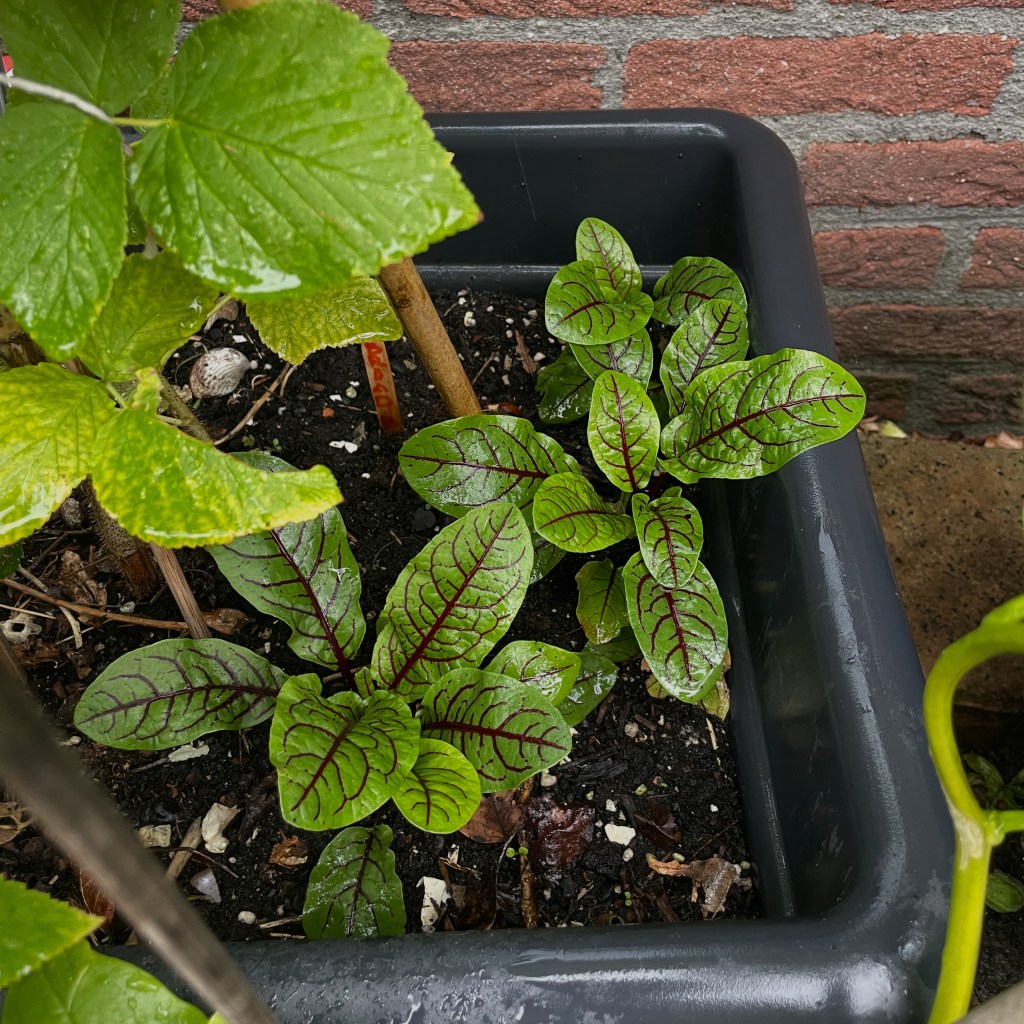
On some autumn days, you might not want to go out into a garden where it is cold and wet. But you are more likely to do so if there are promises of harvests, like the tasty, tangy, and strikingly gorgeous sorrels. That is totally the case for me.
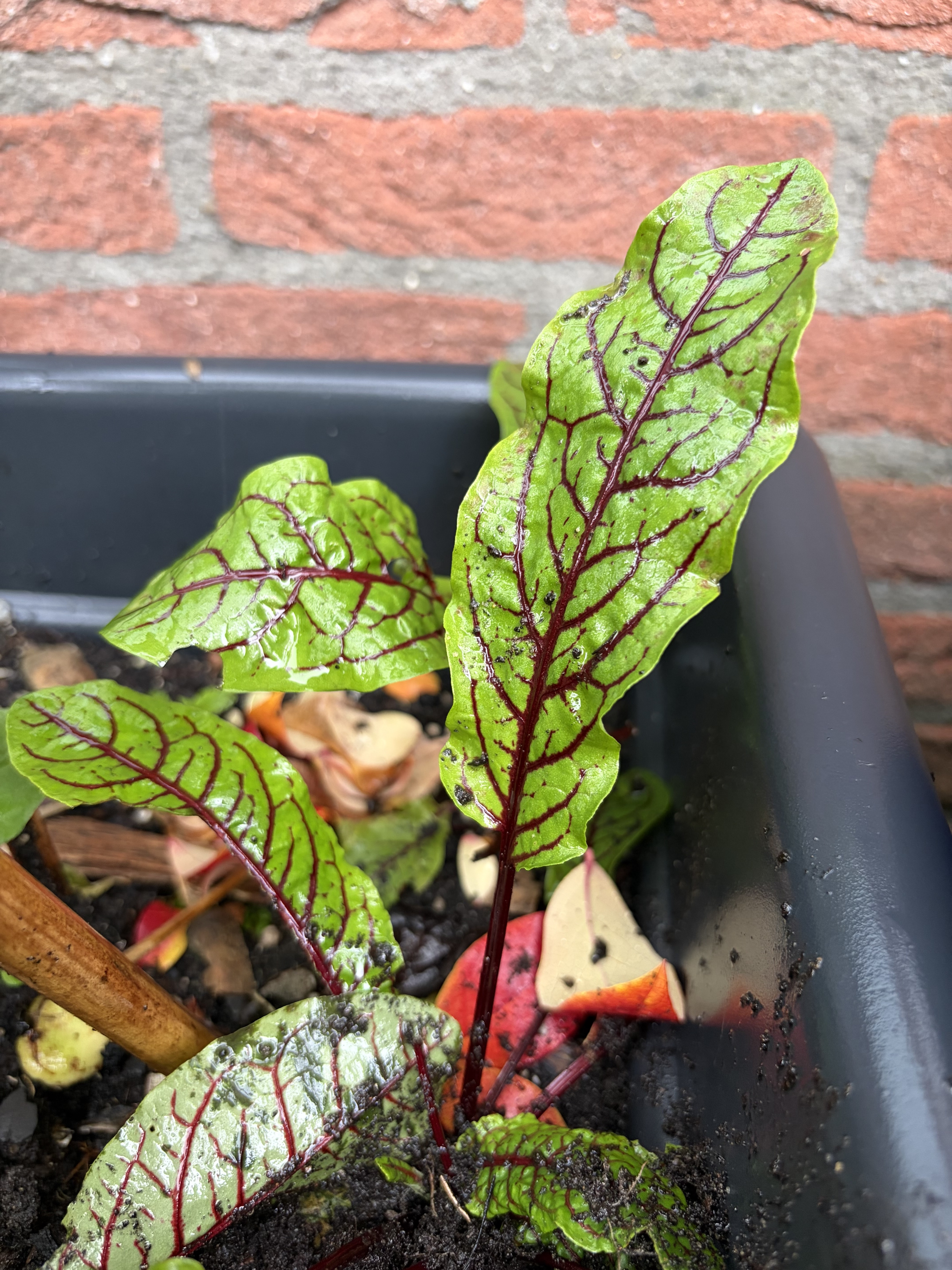
Sorrels are low-maintenance perennial that comes back year after year and adds a sharp, lemony zing to salads, soups, and sauces. Best of all, it takes up little space, thriving even in small containers.
A quick glance (or tl; dr)
- Preferred Soil:
Moist, fertile, well-drained soil. - Preferred Place:
Full sun to partial shade; thrives in garden beds or perennial herb patches. - Edibility:
Yes – the tangy young leaves can be used in salads and the older tougher one are suitable for soups and sauces. - Prune or Other Care Tips:
Regularly remove flower stalks to keep leaves tender and prevent self-seeding. - Harvesting Notes:
Pick young outer leaves regularly from spring through autumn for the best flavour and texture.
How to Set Up for Planting
Start with Seeds or Seedlings?
The easiest way to start is with seedlings, which are easily available at nurseries in spring.
Buying healthy seedlings can save you the time and effort required for seed sowing. Also, being perennial, the two or three sorrel seedlings you buy once can provide salad leaves for many years. There’s no need to buy them again the spring after, and the ones after that.
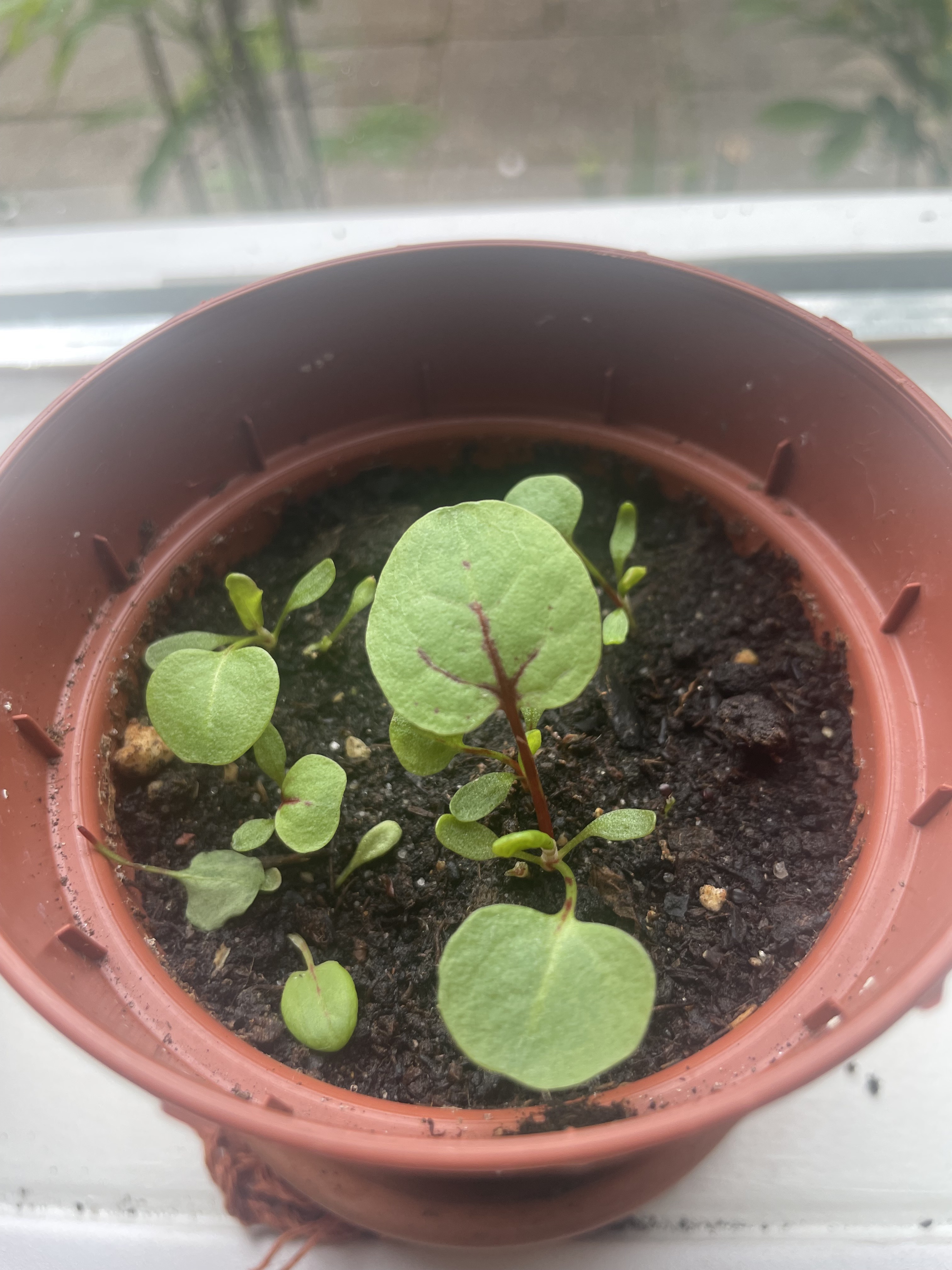
Alternatively, you can start with seeds. Germination for sorrels is fairly straightforward, even if it might take a bit longer (about 6 weeks).
Provided you are also sowing other seeds, adding sorrel to the mix doesn’t increase the work or time by much.
When sowing seeds indoors early, you will need to harden the young plants before putting them into their permanent outdoor spots.
Soil
Sorrel prefers moist, well-draining soil rich in organic matter. Mix in some compost or aged manure before planting, especially if you’re using potting soil in containers.
Location
Choose a sunny to part-shade spot. Sorrel tolerates some shade, which can even help keep its leaves more tender and less bitter, especially in summer.
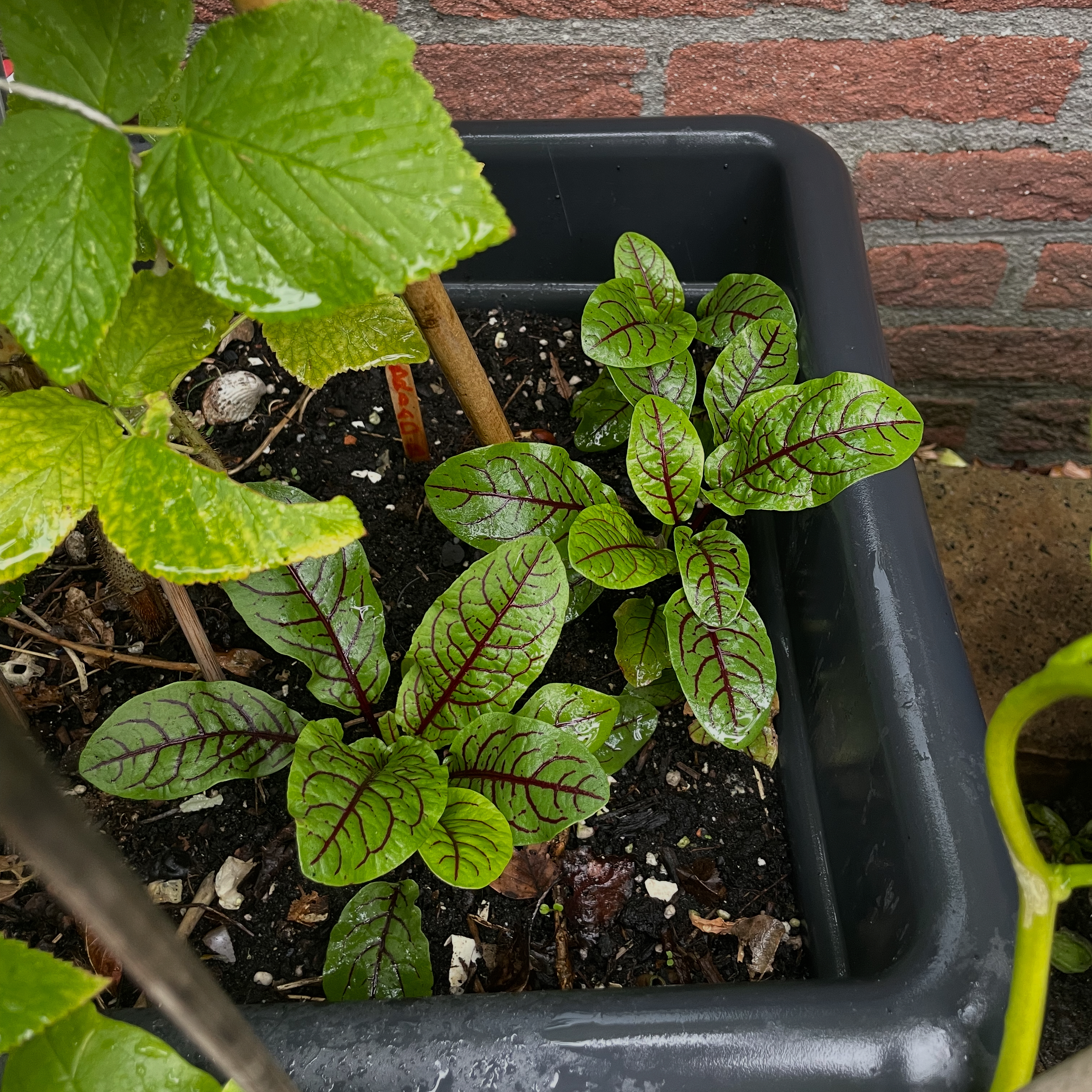
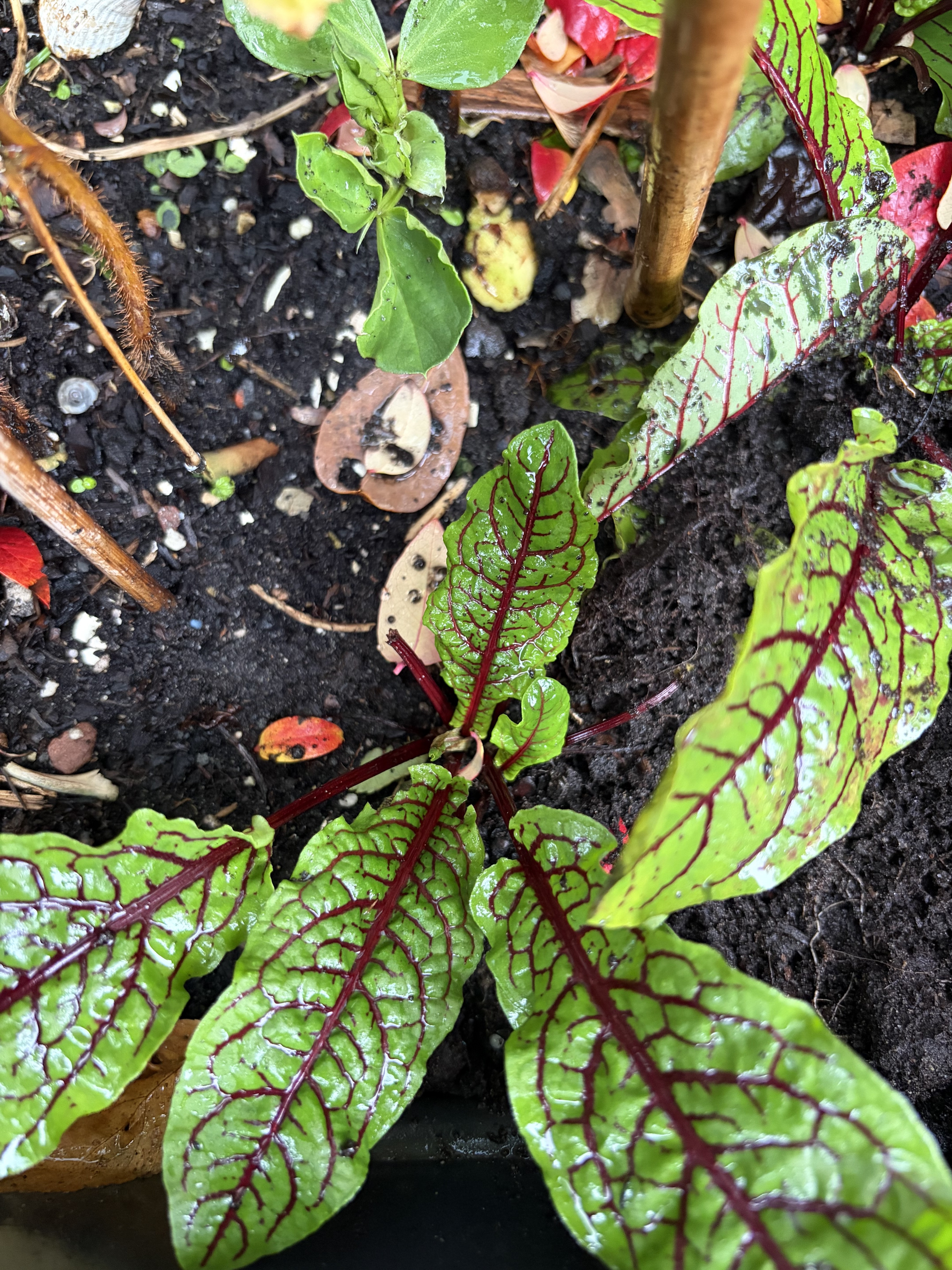
Because of its shade tolerance, sorrel is an ideal candidate for intensive planting with taller crops. (I have mine tucked on the side of a big container with tall raspberry canes.)
Medium: Ground, Container, or Raised Bed?
Sorrel grows well in all three. If you’re tight on space:
- Use a 12–15 cm (5–6 inch) deep pot with good drainage.
- A raised bed or a big container is ideal for growing 2–3 clumps of sorrel alongside other herbs, greens, or soft fruits.⠀
Plant Care
Watering
Keep the soil consistently moist, especially during dry spells. Water deeply once or twice a week. In smaller containers, check more often as they dry out faster.
Feeding
Sorrel isn’t a heavy feeder. Add compost at planting and give a light organic liquid feed monthly during the growing season if the plant seems sluggish.
Protecting
- Mulch around the base to retain moisture and suppress weeds.
- In wet weather, watch for slugs and snails—especially in spring. Use organic slug pellets or physical barriers like copper tape around the pot.
- If sorrel grows tall and floppy, insert a small support cane or loop a soft tie around the clump to keep it upright.
Propagating
Sorrel can be divided every 2–3 years in spring or autumn. Dig up the clump, separate the roots, and replant.
If you are enjoying this post, you might also appreciate our FREE cheat sheet with 12 Tested Gardening Ideas for Small Spaces.
Provide your info for a link to the downloadable resource and be opted into our email list for the (very) occasional product promotion.


Problems
Sorrel is mostly pest-free but can sometimes suffer from:
- Rust (orange spots on leaves) in humid weather. Remove affected leaves and ensure good air circulation.
- Young sorrel plants are especially vulneratble to slugs/snails. See Protecting above for measures.
- In containers, watch for drying out or nutrient depletion, which can lead to slow growth or pale leaves.
Harvest
When harvesting, pick outer leaves first, leaving the inner ones to continue growing. The more you pick, the more leaves your sorrel plant will grow.
In a small space, 2–3 established plants will provide a steady supply from spring through autumn.
🥬 Use fresh in green sauces, omelets, or to add tang to lentils and soups.

 Grow More With Less
Leave a reply to My 2025 in Planting: What I Grew, Moved, Learned, and Let Go – Grow More With Less Cancel reply