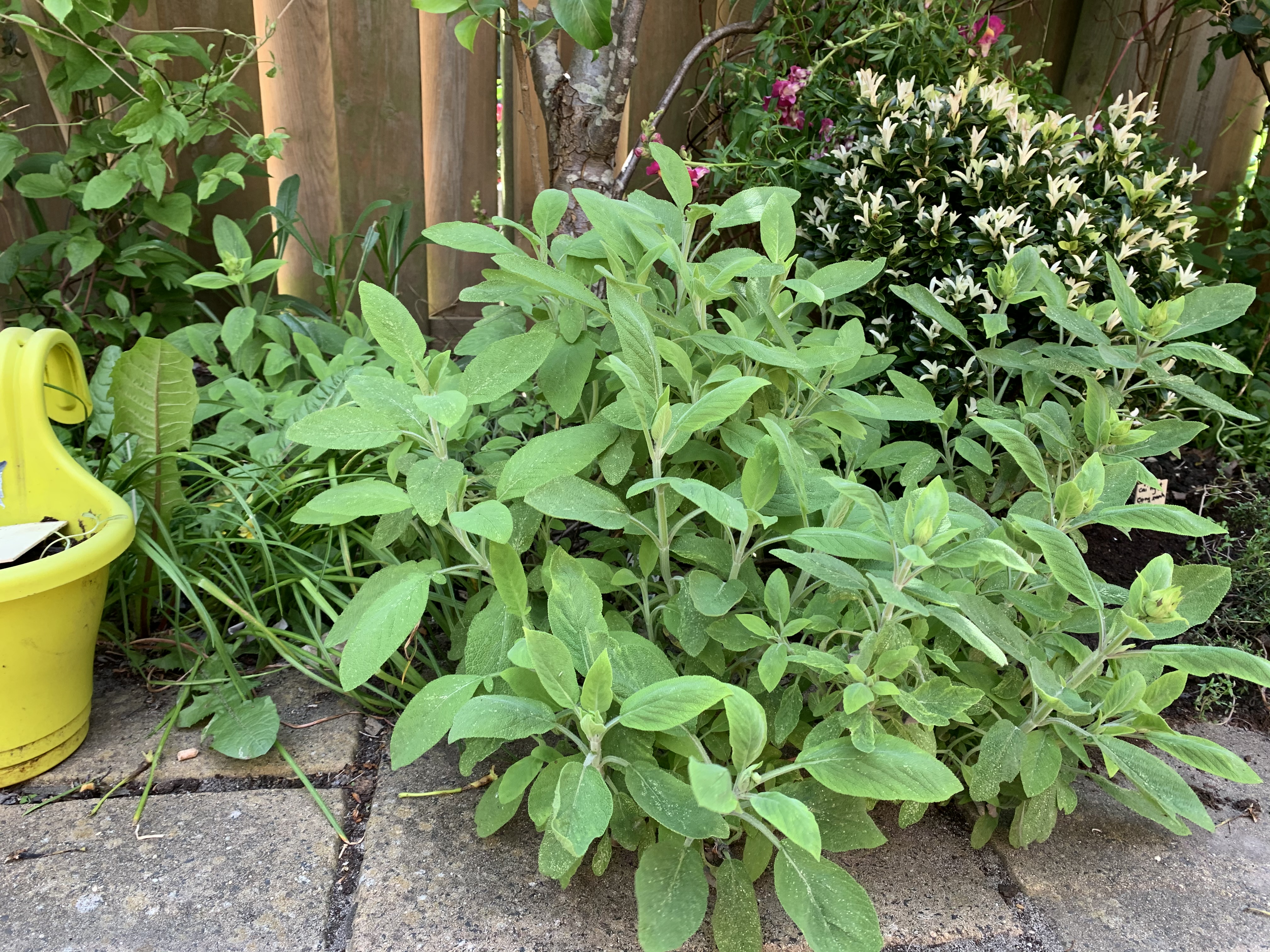
The textbooks say that sage thrives in full sun, needing at least 6-8 hours of direct sun. Yet, don’t give up on sage if you don’t have such a location available in your small shady garden and still want to harvest (a lot of) sage leaves.
After years of growing sage in seemingly less than optimal conditions, I’ve learned how adaptive it is. It doesn’t demand perfect conditions. It doesn’t take up much space.
I can tell you now that it is fine to keep sage in shaded spots. You can shelter a sage plant under a tall tree, and it will be able to grow tall with a lot of leaves.
Also, sage thrives in containers, giving you more options, such as chasing the sun on wheels.
So, what is actually possible with sage in a small garden? Not the idealised version—but the real one, shaped by light, soil, and space constraints.
Here’s what I’ve learned.
Starting with Seedlings
If you’re working with limited space, starting with seedlings is almost always the better choice.
Why Seedlings Make Sense in Small Gardens
- They save time—you’re not waiting weeks (or months) for establishment
- They reduce uncertainty—what you see is what you get
- They allow you to be selective about placement from the start
Growing plants from seeds can be very rewarding, but it is not so when germination is slow, as with sage. Also, most small gardens can only accommodate a few plants, not a few rows of sage. Then it is almost not worth fiddling with small pots and seeds.
The Spots for Sage
Sage is adaptive, but where you place it will shape how it grows.
Sunny Ground
If you have a ground space with 6+ hours of sun for your sage plant, you can expect that your plant
- produces strongly scented, flavourful leaves
- grows vigorously, and
- flower in summer
This is ideal if you want pollinator-friendly flowers—but less ideal if your focus is continuous leaf harvest.
Shaded Ground
If you want to make use of the ground under, say, the apple tree, you can place a sage plant there.

In the shade, a sage plant is likely to have
- a slower growth
- less distinctly flavoured leaves, and
- a lower tendency to bolt into heavy flowering
This setup works well if you want a steady, longer leaf harvest rather than bursts of growth. However, sage hates having “wet feet,” so avoid the ground area that often stays wet after rain.
Container in the Sun
Sage thrives in containers, especially if you find a sunny spot for it. You will see
- fast growth
- a compact form
- an abundance of scented leaves
This is often the best balance for small gardens—controlled growth with good flavour. However, you might need to repot within 1 or 2 years.
Container in the Shade
Potted sage plants in the shade tend to
- grow slowly
- have stunted growth due to waterlogging, especially in winter
- Needs careful watering and
It is possible to harvest enough sage leaves from this setting, but you will need to ensure the pot has excellent drainage and take proper protective measures during frosty weather.
If you are enjoying this post, you might also appreciate our FREE cheat sheet with 12 Tested Gardening Ideas for Small Spaces.
Provide your info for a link to the downloadable resource and be opted into our email list for the (very) occasional product promotion.


Soil for Sage
Sage is not demanding—but it is particular about drainage.
The best garden soil for sage
- Light, well-draining garden soil is ideal.
- Heavy soil can be improved with grit or sand to accommodate sage.
- Poorer soil is preferred to overly rich soil when growing sage.
The best pot mix for sage
- Use standard compost mixed with grit or sand.
- Avoid dense, water-retentive mixes.
In containers, soil structure matters even more than in the ground. Yet, you can always help a potted sage out with a few extra drainage holes.

General Care
Sage is low-maintenance—but not no-maintenance.
Water Sage
- Water young plants regularly
- Once established, water only when the soil dries out
- Be especially cautious in winter
Too much water is far more damaging to an established sage plant than too little.

Feed Sage
- Minimal feeding required
- A light compost top-up in spring is usually enough
Overfeeding reduces flavour and can lead to weak growth.
Prune a Sage Plant
- Trim regularly to keep plants compact and promote new leaves
- Avoid letting stems become too woody
- Cut back after flowering if needed
Pruning is what keeps sage productive over time.
Propagate Sage with Layering
I have propagated new sage plants using both the cutting and layering methods. The latter requires a longer wait but outweighs the former in both the strength of the new plants and the minimal work needed.
Why You Should Use Layering to Create New Sage Plant
- Uses the parent plant’s energy
- Produces strong, well-established new plants
- Low risk of failure
If you don’t know how to layer, this post will give you the ins and outs of layering, along with a comparison with other propagation methods. But you can find below layering in a quick review:
- Bend a low-growing stem to the ground
- Pin it into the soil while still attached
- Wait for roots to form before cutting it free

It takes time—but the result is a robust new plant without any extra work (like changing the water for the cuttings and potting attempts).
Possible Companions for Sage in a Big Container
Sage on its own can look a little sparse—especially when young. Pairing it with the right companions makes a big difference visually. Also, grouping herbs in a big container saves water and maximises your space.
Here are some herbs with similar growing conditions to sage, which make sage’s great planting companions in a big container:
- rosemary
- thyme
- oregano
- marjoram
Like the idea of combing herbs? Check out my container hack guide.
Final Thoughts: What Is Truly Possible
Sage doesn’t need perfect conditions to thrive—it just needs the right expectations.
In a small garden, you won’t always get ideal sun, perfect soil, or endless space. But sage adapts.
- Sage grows more slowly in shade, yet stronger in the sun.
- Sage grows tighter in pots yet looser in the ground.
And in all cases, it gives something back.
What’s truly possible isn’t perfection—it’s a resilient, useful plant that fits into your space as it is.