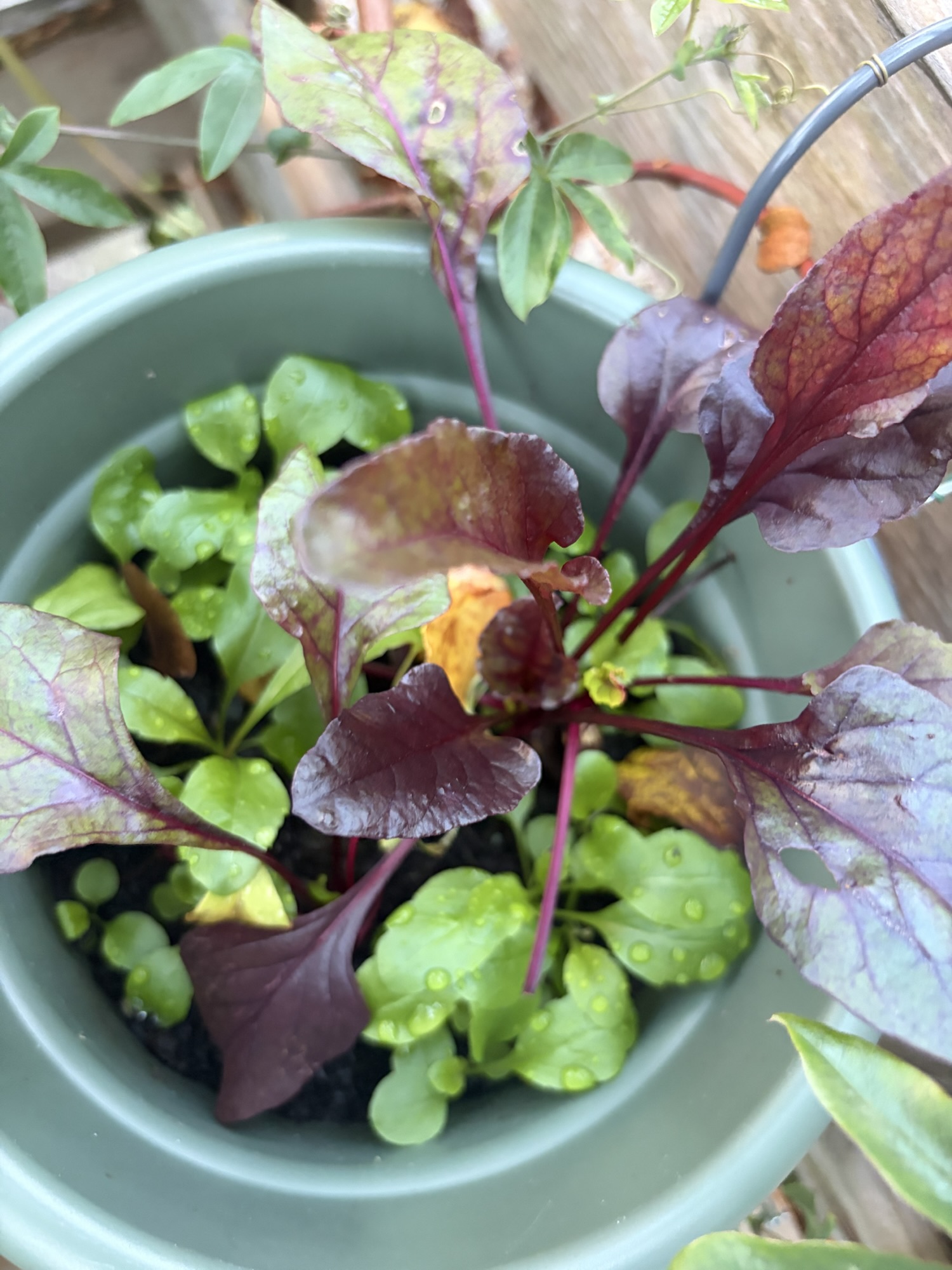
I only discovered chard (snijbiet in Dutch) a few years ago through a Dutch friend who grows it in her vegetable garden. The rainbow leaves cooked and tasted perfectly in a noodle soup the first time I ever used chard. Just like that, I was hooked.
Soon after, I started to grow chard in my own garden. I sowed the first few plants directly in the ground, but slugs soon found the seedlings and munched them down. But I was determined, so I started a new batch in a hanging container. And then many more after.
Chard is relatively easy to grow. tolerates cool weather and offers a long harvesting period. You can pick individual outer leaves as you need them, and more leaves will grow. Better still, its colourful stems and lush foliage make the vegetable containers a lot prettier.
Plant Profile: Chard (Swiss Chard)
- Preferred Soil:
Fertile, moisture-retentive, well-drained soil rich in organic matter - Preferred Place:
Full sun to partial shade - Edibility:
Leaves and stalks - Prune or Other Care Tips:
Remove older or damaged outer leaves regularly to encourage continuous new growth - Harvesting Notes:
Harvest outer leaves, leaving the centre intact for further growth
Why Grow Chard in Your Small Garden?
Here are the three things that chard has to offer to make it worth the investment of the precious space in your small garden:
Cut-and-Come-Again Harvests
Chard is one of those cut-and-come-again vegetables that offer you more leaves the more you pick.
You can cut the largest outer leaves while leaving the central growing point untouched. New leaves will continue to develop from the centre, allowing you to return to the same plant for more.

To make repeated harvesting work, you will want more than one chard plant.
If you really like the special taste of chard and want to use them in dishes that require quite a bit of leaves (like a stir fry or green smoothies), you might want to:
- plant several chards at each sowing
- repeat sowing (or buying new seedlings) after 3 weeks or a month throughout the growing season
- sow some seeds as late as July to have the young plants established before the winter and resume growing in spring for early green (more on this below 👇)
Cold Tolerant
Chard is a good choice if you want to have fresh salad leaves outside the summer, especially late in the autumn or early in the spring.
It tolerates cooler temperatures and light frost better than many tender leafy crops. Depending on your local conditions and the variety, it can sometimes last through winter (with some protective fleece and a sheltered spot during colder spells).
Edimentals
Chard is my number one choice when it comes to “edimentals”, the edible plants that look pretty.
Chard’s brightly coloured, textured leaves create a lush display, while the stems can be surprisingly colourful.
You can choose varieties with red, pink, orange, yellow or white stems. Mixed varieties, often sold as rainbow chard, are particularly attractive in containers.
Enjoy my garden writing? Buy my a coffee (or a bag of seeds)
How to Grow Chard in Containers
Chard is not particularly demanding, but a few considerations for container choice, potting mix, and care routines can mean better-growing plants and more tasty leaves to use in the kitchen.
What size of containers to use for growing chards?
I would say it depends on the type of chard you are growing and how much plants you want to have in one container.
Here are some more specific ideas for containers to grow chard:
- Individual pots: Useful if you want to move plants around and up, or combine them with other containers.
- Large troughs: Ideal for growing several chard plants in a row.
- Raised planters: A good option if you want to combine chard with herbs and flowers.
- Decorative containers: Particularly suitable for colourful varieties that you want to display near a seating area or the path (see photo 👇)

As for the pot size, I won’t be too worried about the exact measurements. I have squeezed chard plants into the smallest, most densely packed container and found that they did fine.
Instead, I suggest prioritising containers that can be lifted off the ground to keep the young chard plants a bit further away from munching slugs. So go for a hanging basket or lighter-weight pots if you can.
Whichever container you choose, make sure it has drainage holes. Chard likes moisture, but its roots should not sit in waterlogged compost.
Choose the Right Potting Mix
Chard grows best in a fertile potting mix that holds moisture while allowing excess water to drain away.
A good-quality multipurpose compost is a suitable starting point.
To improve the mix, you can incorporate some mature homemade compost like your leaf mould. This adds organic matter and helps the growing medium retain moisture and nutrients.
Plant Chard: Seeds or Seedlings?
I have always grown chard from seeds. It is easy and affordable, so buying seedlings isn’t necessary.
- The big chard seeds are very easy to handle.
- Seed germination is relatively fast and reliable.
- Chard seeds can be sown outdoors in their final containers in spring (no repotting and hardening fuss).
Water Container Chard
Chard needs consistent moisture to produce healthy leaves.
Check the compost regularly, particularly during warm or windy weather.
As a general rule, smaller containers tend to dry out faster than larger pots and garden soil, so you will need to check and water them more often.
However, it is always better to water deeply every few days than to splash a little water every day.
Care for Potted Chard
Other than watering the containers, I mostly let chard plants grow on by themselves. If I mulch the containers in spring when I sow the seeds, they usually get on fine through autumn without additional feeding.
If you see yellow or damaged leaves, it might be worth removing them to improve circulation, especially in densely planted pots.
Protect Container Chard in Winter
I like to sow chard seeds as late as July for some plants to overwinter.
My garden has many sheltered corners. Also, being close to the ocean means my plants rarely endure very harsh winter conditions. As a result, I often manage to overwinter a few pots of chard.
Container-grown plants do need some extra attention during winter, though.
The compost in pots can freeze more quickly than garden soil, exposing the roots to colder conditions.
When a prolonged cold spell is forecasted, you might want to
- move containers close to a sheltered wall
- raise pots off the ground, if you haven’t done so in autumn, to improve drainage
- wrap the container with insulating material
- use horticultural fleece to protect the foliage (but do remove or open the protective cover when temperatures rise to allow better circulation)

Companion Planting: What to Grow Well with Chard in Containers
I always mix various plants in one big container when I can, to use the space better and reduce watering.
Also, companion planting can create containers that look more like works of art than monoculture fields 😋.
I find companion planting with chard straightforward and rewarding. Chard is a beautiful and easygoing plant that can grow well side by side with many herbs and vegetables.
Nevertheless, it’s worth considering some criteria before picking companion plants for chard:
- Does the companion plant like (or tolerate) moisture?
- Does the companion plant compete with or complement the upright form of chard?
- Do the colours of the foliage and flowers blend well with the bright, strong colours of chards?
- Does the companion plant peak at the same time as chard, or will it add interest before and after the chard’s growing season?
I know it might sound like a lot to consider. But working out the puzzle is part of the fun, right?

If you’d rather have some already tested ideas, though, here are some growing plans that mix chard with other vegetables and herbs in one container:
- chard, chives, and dill
- chard, marigolds and thyme
- chard, oregano, and parsley
- chard, spring onion, and coriander
Fancy more tested ideas for gardening in a small space?

