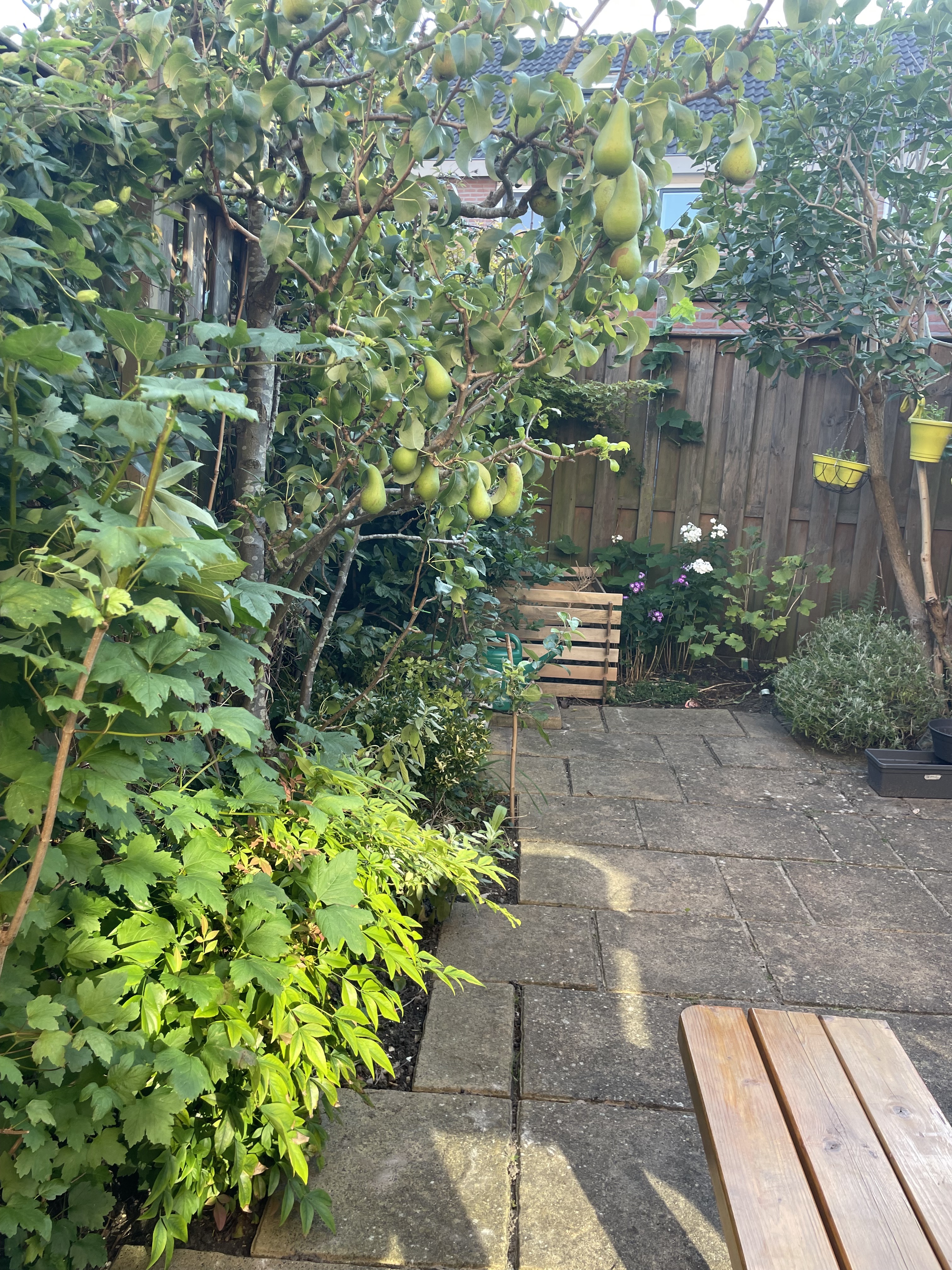
Do you stomach squeeze a little when you realise that the struggling plant in your garden is not going to make it through this season?
I was there—multiple times. Putting a plant down in the garden, watering it with love, and even feeding it as advised. Still, it struggled. Then it gave up on me 🥹.
I reckon, though, 4 out of 5 times it’s not my care routine that was to blame. It’s my choice of the plant itself.
When you feel like you want that pretty plant at the garden centre and you spontaneously bring it home because, surely, you can find a place for it in your garden.
Or when you eat some particularly sweet nectarines and decide that you should grow the tree that gives the fruits.
Take a pause. Replace “Should I get this ABC plant for my garden?” with “Will this ABC plant grows well in the garden that I have?”
Or go back even further and start by asking a different question:
“What kind of soil do I have, and which plants will actually enjoy growing in it?”
Why Start by Understanding Your Soil?
When we were looking to buy our first home, we went to see a house that seemed perfect. It had all the rooms that we needed. It was modern and beautifully designed. Then we saw this house, with its blue leaky bathroom and its red-painted room in the attic. Yet, our real estate agent sat us down and told us to consider not just the house but what is around it: the greenery, the shops, and the schools. “You can change the house”, she said, “but you can’t change its location.”
So we went with the leaky blue bathroom, and we have been very happy that we did.
Now that I know better, I believe that housing a plant is a very similar process.
Before setting your heart on a certain plant, you want to know what is present in the surrounding area where you will house it.
In other words, what are there in the soil in your garden?
The particles, big and small, in your garden soil are the deciding factors for the soil’s fertility, drainage, and chemistry.
Understanding these characteristics helps you make better choices about both what plants to grow so that they will thrive.
The Different Components of Your Garden Soil
So what’s often there in garden soil, you might ask?
In a nutshell, there could be inorganic matter and organic matter present in your garden soil. The inorganic matter is what’s already there in your garden, while the organic matter often comes from your keeping of plants and animals and your interventions to amend the soil.
Inorganic matter commonly found in garden soil is:
- clay
- slit
- sand
- stone
These inorganic components differ in size, with clay being the smallest and rock being the largest.
You might have soil that contains predominantly clay particles, predominantly sand particles, or a bit of both. These types of soil would differ greatly in their ability to retain the nutrients from the organic matter added to the soil and the water from rain or your bucket. (More on the specifics later.)
On the other hand, the organic matter in garden soil could come from:
- the fallen leaves that remain there and decompose over time
- mushroom mulch that you buy and add to the soil surface, then being brought down and mixed up by the earthworms
- droppings from animals running around your garden, be it some little mouse or a big fat chicken
- bought-in well-rotted manure
In short, soil types are the consequences of the inorganic matter (clay, silt, or sand) originating in your garden. In contrast, soil amendments are the results of your adding organic matter to the soil in one way or another.
Here is an example:
If you allow organic matter to build up on top of clay soil that holds nutrients well, you will have fertile soil that supports hungry plants like tomatoes.
Enjoy my garden writing? Buy my a coffee (or a bag of seeds)
Find Out The Type Of Your Garden Soil Through a Simple Test
“Knowing your soil” is particularly useful in a small garden. When space is limited, you don’t want to spend a whole season trying to rescue a plant that was never suited to the conditions in the first place.
And you don’t need laboratory analysis to learn about your soil. You can start with a simple Roll-a-Ball test.
The Roll-a-Ball Test
Take a handful of slightly moist soil.
Squeeze it together and try rolling it into a ball.
- If It Won’t Hold Together
If the soil feels gritty and falls apart easily, it likely contains a significant amount of sand.
This usually means good drainage but potentially lower water and nutrient retention.
Sandy soil tends to feel gritty and drains quickly.
Sandy soil can be wonderful for Mediterranean herbs but challenging for plants that need consistently moist conditions.
Suitable plants can include:

The main challenge is often keeping plants supplied with enough water and nutrients. The hack would be to add a layer of organic matter, like leaf mould, on top of the soil, allowing a low dose of nutrients to drip down over time while preventing water from evaporating too quickly.
- If It Forms a Firm Ball
If the soil holds together easily and feels smooth or sticky, it may contain a significant amount of clay.
Clay soil can hold water and nutrients very well.
If you have heavy clay, look for plants that tolerate moisture.
Good choices can include:
- hydrangeas
- roses
- hellebores
- Japanese anemones
- currants
- ornamental grasses
But clay soil is prone to waterlogging and compaction. Adding organic matter as a soil amendment could help to improve clay soil. The presence of leaf mould and manure will attract earthworms to travel up and down the different levels of the soil, loosing and aerating it.
- If It Holds Together but Breaks Apart Easily
You may have a useful mixture of sand and clay, potentially with a loam-like texture.
Loamy soil is often considered the gardening ideal because it provides a useful balance between:
- drainage
- moisture retention
- aeration
- nutrient availability
If you’re lucky enough to have it, your plant choices are generally broader.
In brief, understanding the inorganic components in your soil can tell you a surprising amount about what your garden can support, how often you need to water, and how plants might cope when the weather turns particularly hot or cold, wet or dry.
Check The pH Level of Your Soil
Some plants, such as blueberries or camellias, are particularly sensitive to the pH level of your soil. If you want to grow one of those plants, it’s best to check the soil before making a purchase.
A simple pH testing kit or meter can give you a quick indication. The result will broadly place your soil into three categories:
Acidic
A pH below 7.
Some plants particularly suited to acidic conditions include:
- blueberries
- rhododendrons
- azaleas
Neutral
Around pH 7.
Many common garden plants are comfortable around neutral conditions.
Alkaline
Above 7.
Some plants are particularly tolerant of or suited to alkaline soils, including many Mediterranean herbs.
If you still want a plant that’s not suited to the chemistry of your garden soil, you can either amend the soil or grow it in a separate container or raised bed with a customised potting mix.
Embrace Containers As An Alternative
Sometimes your soil simply isn’t suitable for the plant you desperately want.
That’s where containers become incredibly useful.
A pot allows you to create a completely different growing environment.

For example, you can grow:
- blueberries in ericaceous compost (because your garden has a pH around 7)
- rosemary in a sharply draining mix (because your garden soil is heavy and water retentive)
- tender plants in containers that can be moved to shelter as the soil temperature drops in the winter
For small gardens, containers don’t just save space. Containers let you change the soil.
Improve Your Soil With Organic Matters
Whatever your soil type, adding organic matter is usually one of the best ways to improve its long-term condition.
Organic matter can help:
- improve soil structure
- support soil organisms
- increase moisture retention
- improve nutrient availability
- reduce compaction
- gradually improve fertility
But not all organic matter should be treated in exactly the same way.
Wood Chips
Wood chips are particularly useful as a surface mulch.
They can:
- reduce evaporation
- suppress weeds
- protect soil from temperature extremes
- gradually contribute organic matter as they break down
- and give the border a neat look
Fresh wood chips are generally better used as a surface mulch rather than mixed directly into soil around plants, where their decomposition can temporarily affect available nitrogen.
Leaf Mould
Leaf mould is one of my favourite soil improvers, and its usefulness changes as it decomposes.
Partially decomposed leaf mould can be an excellent surface mulch.
Well-rotted leaf mould becomes a dark, crumbly material that can improve soil structure and moisture retention, and is particularly useful for seed and potting mixes when sufficiently mature.
It is also wonderfully easy to make from a resource many gardens produce for free every autumn: fallen leaves.
Manure
Well-rotted manure can add organic matter and nutrients to fertile growing areas.
It is particularly useful before planting hungry crops such as tomatoes, aubergines, and cucumbers.
The manure must be well-rotted. Fresh manure can be too strong for many plants and may contain weed seeds or pathogens, depending on its source.
Green Manure
Green manure involves growing particular plants primarily to improve the soil rather than for harvesting.
Depending on the plant used, green manure can help:
- protect bare soil during colder months when not many crops thrive outside
- suppress weeds
- add organic matter
- support soil structure
Leguminous green manures can also contribute nitrogen to the soil through their relationship with nitrogen-fixing bacteria.
For a small garden, even a modest area of green manure can be useful when a bed would otherwise remain empty.
How to Add Organic Matter For Long-Term Soil Care
One application of leaf mould or manure won’t permanently transform a difficult soil. Instead, consider adding organic matter as a seasonal task to improve your garden over time.
A simple regime of adding organic matter for a small garden could be:
Spring: add compost or well-rotted manure where hungry crops will grow.
Summer: maintain mulch around plants to reduce moisture loss in sun- and wind-exposed locations.
Autumn: collect leaves for leafmould and sow seeds for green manure.
Winter: Cover bare soil with a surface mulch and green manure.
Final Thoughts
Understanding your soil doesn’t have to involve complicated tests or expensive equipment.
Start by the simple roll-a-ball test. Throw in a pH measurement if you want to grow plants with specific requirements.
Then use what you’ve learned to make better planting decisions.
The goal isn’t to have perfect soil. It’s to understand the soil you have—and work with it. You can always improve your soil over time with organic matter; some can be sourced directly from your garden.

