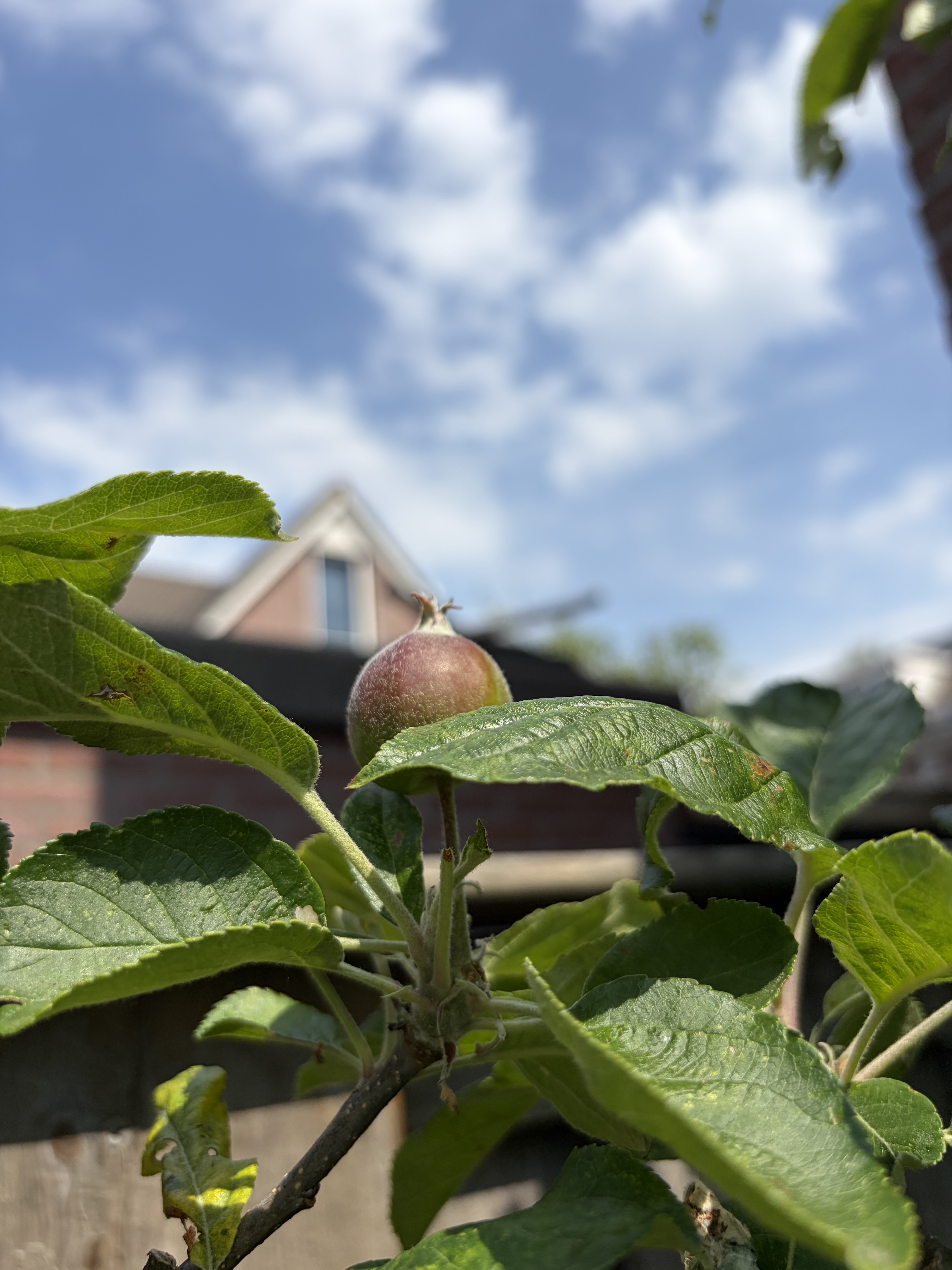
As a gardener, I love June. The sky is often blue, and the garden is of a glorious green. It’s a young green that promises more growth: taller plants and bigger fruits (rather than the darker, older green that comes just before things turn autumnal brown).
Though it seems like the sowing and nurturing over the colder months has finally paid off, I’ve learned from experiences that I can’t just step back and watch things grow in June. I need to sharpen and clean my secateurs for thinning, cutting, and deadheading.
These June cuts are to guide the rest of the growing season:
- improving airflow
- encouraging better fruiting and longer flowering
- propagating new plants
Here are the key cuts worth making in June.
Thin Out Fruit Clusters
In June 2024, my dad took the 19-hour, 2-flight journey from Vietnam to the Netherlands to see our new house, with the garden and the apple trees.
One of the first things he did when he arrived, jetlagged and all, was to go out in the garden and pinch off a bunch of smaller developing apples. Apparently, it was a job that needed to be done without any further delay.
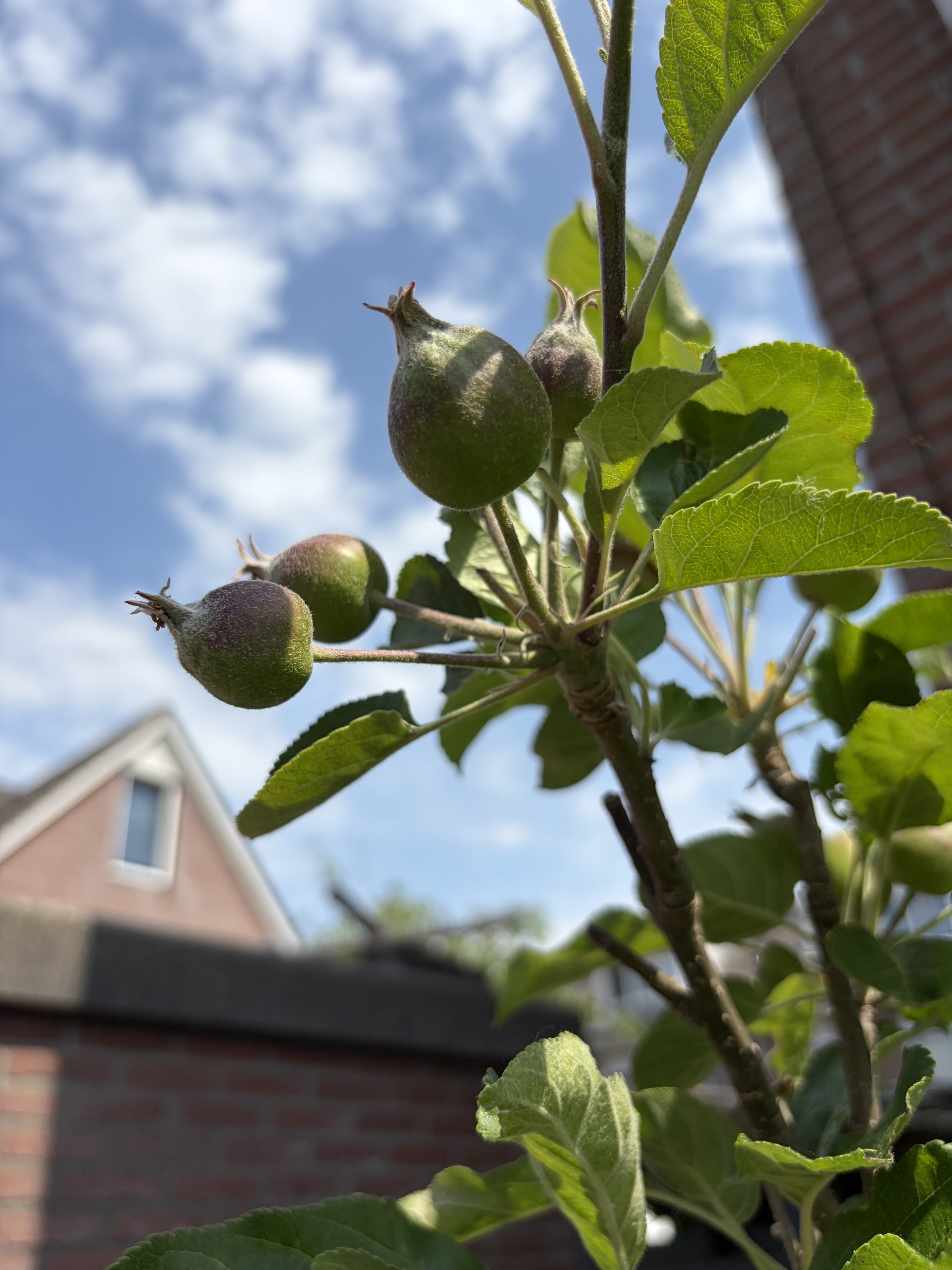
Many fruit trees (apple, pear, plum) tend to overfruit. If the conditions are favourable when the flowers are out, they can develop multiple fruits from a single bud. (I have seen as many as 8 on my pear tree.)
When fruit trees set heavily, it’s tempting to leave every developing fruit in place. (We want more tasty, crunchy apples, right?).
But overcrowded fruits compete for energy, leading to:
- smaller harvests
- broken branches
- poor ripening
- biennial cropping (heavy crop one year, little the next)
June is the perfect time to thin fruits while they are still small.

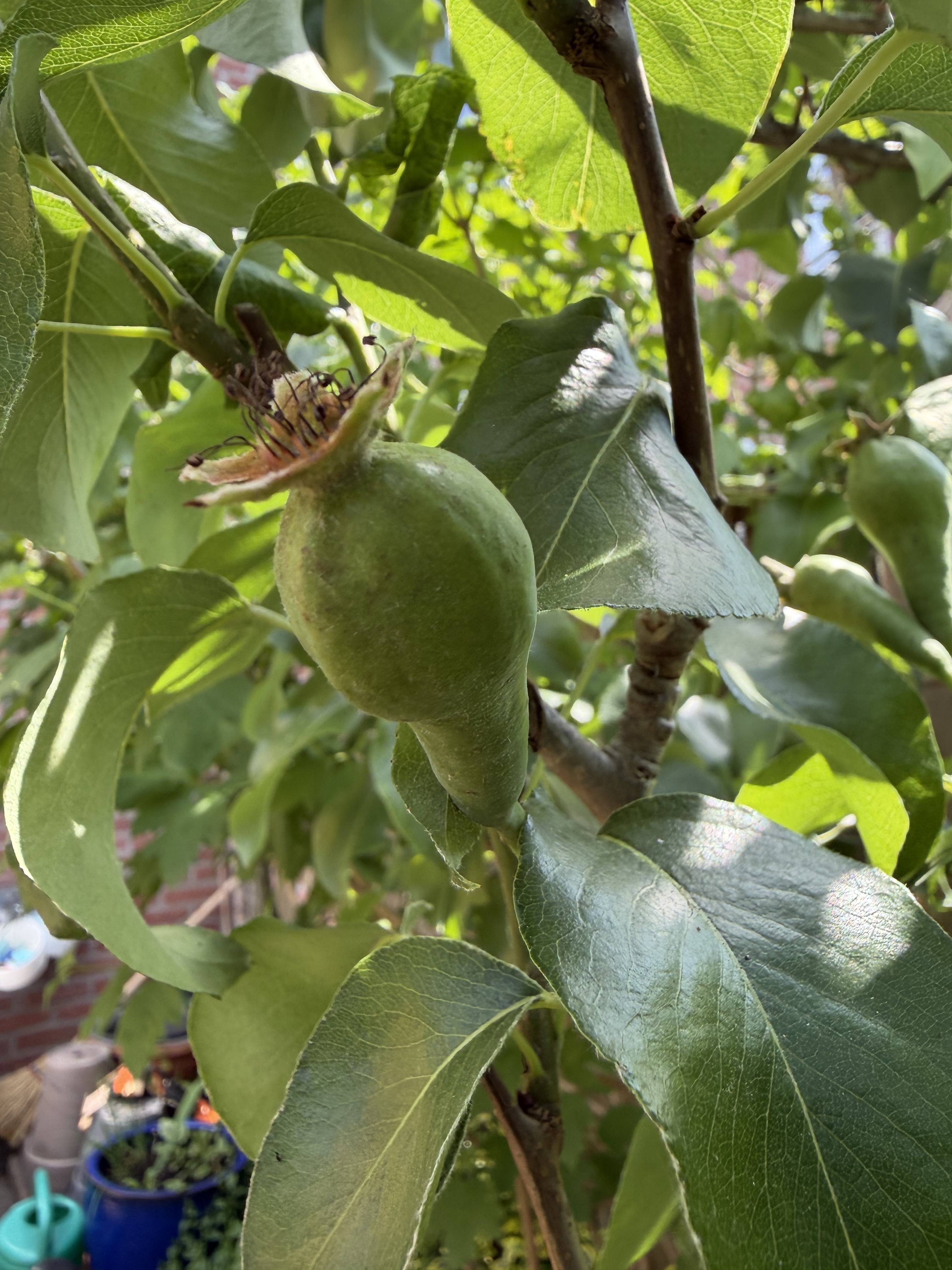
Fruit Trees That Might Benefit From a Thinning-Out
- 🍎 Apples
- 🍐 Pears
- Late-ripening plums, peaches, and nectarines
How to Thin Out Fruit Clusters
- Remove small and damaged fruits
- Leave the strongest-looking fruits
- Reduce to one or two fruits per cluster
- Leave enough space in a two-fruit cluster so the fruits do not touch as they grow
- Further remove fruits on laden branches to avoid snapping as the fruits grow bigger
Open Up Centers To Increase Air Circulation
If you intensively plant your small garden (which is my case), there would be a moment in June when you suddenly face an entangled mass of green everywhere you look. Corners become inaccessible. Vines hook tight on tree branches. Thick leaf curtains.
The green colour is so pleasing to the eye. And the shade is much appreciated on hot days. Yet, it might not be best for most plants.
By June, dense spring growth can begin to trap moisture and reduce airflow. This creates ideal conditions for:
- fungal diseases
- mildew
- pest buildup
How to Increase Air Circulation With Pruning
Use a sharp and clean pair of secateurs to remove
- crossing stems
- inward-facing branches
- stems that grow near walls or fences with lower air circulation.
I would do these June cuts on most established shrubs and vines that experience vigorous summer growth and reach the limit of their space.
If you are enjoying this post, you might also appreciate our FREE cheat sheet with 12 Tested Gardening Ideas for Small Spaces.
Provide your info for a link to the downloadable resource and be opted into our email list for the (very) occasional product promotion.


Deadhead Spring Flowers
As spring-flowering plants begin to fade, June is the perfect time to remove spent blooms. Deadheading not only tidies up the garden but also helps many plants redirect their energy away from seed production and into healthy roots, foliage, and, for some plants, a second flush of flowers.
Deadheading can:
- extend the flowering season
- encourage repeat blooms
- prevent unwanted self-seeding
- keep borders looking fresh and maintained
Not every flower needs deadheading, but many popular garden plants benefit from it.
Roses
June is prime deadheading season for repeat-flowering roses.
Remove:
- faded flowers
- flower clusters that have finished blooming
Cut back to:
- the first healthy outward-facing leaf below the spent flower
This encourages the plant to produce new flowering shoots rather than developing rose hips.
Salvias
Many ornamental salvias will flower again if deadheaded promptly.
Remove:
- spent flower spikes
- faded blooms
Cut back to:
- a healthy pair of leaves lower down the stem
Often, a second flush of flowers follows later in summer.

Geraniums (Hardy Cranesbills)
Early-flowering hardy geraniums can become tired and untidy by June.
Remove:
- spent flowers
- scruffy foliage
For some vigorous varieties, you can even shear the entire plant lightly after flowering.
This often encourages:
- fresh new foliage
- a neat mound of growth
- occasional repeat flowering
Aquilegia (Columbine)
Aquilegias readily self-seed throughout the garden.
Remove:
- fading flowers
- developing seed heads
Unless you want seedlings appearing everywhere next spring, deadheading is worthwhile.
Spring Bulbs
For bulbs such as:
- tulips
- daffodils
- ornamental onions (alliums)
Remove:
- spent flower heads
But leave:
- all green foliage
The leaves continue feeding the bulb for next year’s display. Resist the temptation to tidy them away too soon.
🌺 Peonies
Once the spectacular flowers fade, deadheading helps the plant stay tidy.
Remove:
- spent blooms
- petals that have fallen onto foliage
Leave the healthy foliage intact, as it helps build energy reserves for next year’s flowering.
Take Cuttings For Making New Plants For Free
June is one of the best months for taking softwood and semi-ripe cuttings. Growth is active, stems are flexible, and rooting happens relatively quickly.
This is an excellent way to:
- multiply favourite plants
- fill gaps in the garden
- create free plants for next year

Plants to Take Cuttings in June
Herbs
Good herbs for June cuttings:
Flowering Perennials
- salvia
- penstemon
- lavender
- verbena
Shrubs
June is also good for:
- hydrangeas
- fuchsias
- hebes
How To Take Cuttings in June
- Use a sharp, clean instrument to take cuttings
- Choose healthy non-flowering stems as your material
- Pick stems that are soft enough to root but strong enough to survive handling
Final Thoughts
June pruning is less about cutting plants back hard and more about working with the momentum of the season.
A few careful cuts now can:
- improve harvest quality
- reduce disease
- create healthier airflow
- and prepare plants for stronger long-term growth
In a small garden especially, these small interventions help prevent summer abundance from turning into overcrowding.