Gardening in a small space is like moving pieces around a chessboard. There are restrictions. Yet, there’s always a chance to turn a common pawn into the majestic queen. You will need to plan a few steps ahead and move things around fluidly, but that transformation is a possibility.
Displayed containers are like the prized pawns. When planned and promoted with care, display containers can become the queen of the garden, making overlooked areas greener, adding colour throughout the year, and creating visual interest without taking up valuable planting beds.

I’ve been working on displayed containers for a couple of years now. And I can say that it is totally possible to have both beauty and function.
You can have display containers that don’t compete with your growing space. In fact, when used thoughtfully, they can make overlooked areas prettier with colours and create visual interest without sacrificing the harvests.
The key is to place display containers where they enhance the garden rather than interrupt it. And find the right plants for those specific spots.
Here are five ideas that have worked well in my own small garden.
1. Create Edible Displays That Look Ornamental
I’ll admit slug-munched lettuce leaves and caterpillar-punched kales are not display materials. Yet, there are many other options for those who look.
Enter Edimentals, edible plants that can elevate the look of a container.
Get to know these plants, and you can create the most attractive, productive container displays.

Mix edible plants with ornamental appeal to create arrangements that are both beautiful and useful.
For example:
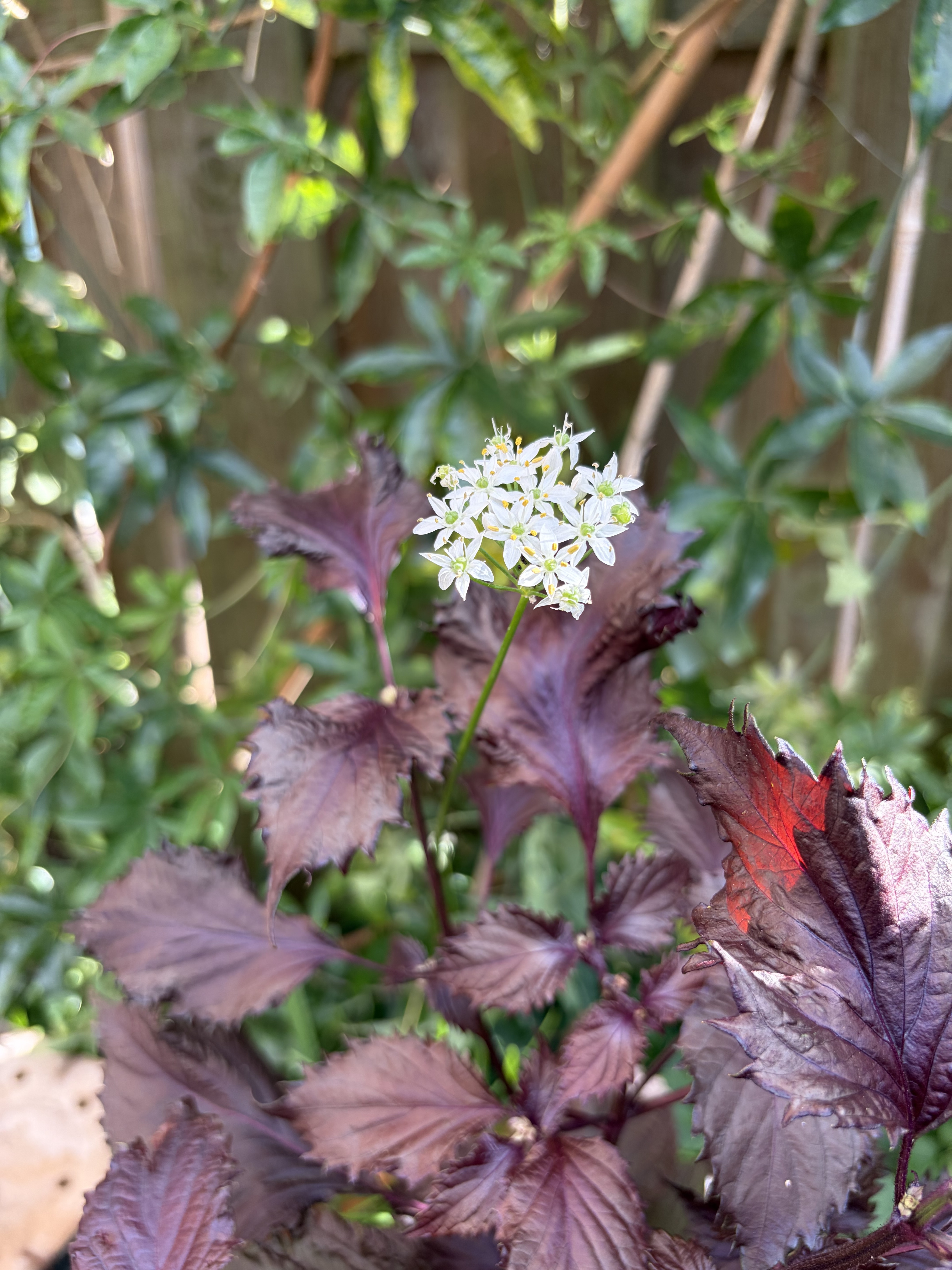
- rainbow chard alongside purple shisho, yellow-flowered dill, red-veined sorrel, and lush green chives (photo ☝️ above)
- strawberries spilling over the edge of a pot
- rosemary underplanted with soft herbaceous plants carrying bright coloured flowers
- purple basil and curly parsley


2. Turn Empty Paved Corners into Focal Points With Statement Pot(s)
Corners are often underused. Whether it’s the edge of a patio, a front porch, or a sheltered spot beside a shed, these spaces could accommodate a beautiful container.
I used to forgo these places because corners are often shaded. Not good for growing vegetables.
Yet, if you look hard enough, it is likely that you will find a niche, a certain corner for certain potted plants.
After hours of watching my garden, one day, I had an epiphany. The right side of my front door, despite the surrounding big, tall structures and its northeast-facing orientation, does get sunlight about two to three hours earlier in the day. It won’t be enough to grow spinach, cucumber or tomatoes, but sufficient for many other plants that would draw the eyes away from the rather drab paving stones of our front garden as they walk to our door.

Tips for creating a green focal point with containers:
- Use a single pot as large as the space can accommodate, as a large pot works better at drawing the eye away from boundaries, softening the hard angles, and making the space feel fuller.
- Repeat the same pot style and/or colour for a more cohesive look when using a group of pots.
- Take the time to research and test for the right plants (especially if sunlight is limited) so that they are more likely to thrive in their corner. Because struggling plants don’t make good focal points.
- Remember that you have the flexibility to rotate plants or pots through the seasons, so you can always have something pretty in a certain corner as long as you plan ahead.
3. Frame a Doorway or Garden Gate
Matching containers on either side of an entrance instantly create a sense of welcome and structure.
This simple design trick makes even a modest entrance feel more intentional and elegant.
Choose evergreen plants to provide year-round interest, or change seasonal underplanting to refresh the display.
Good choices include:
- ornamental grasses
- bay trees
- lavender
- dwarf conifers
- box alternatives such as Japanese holly
If you are enjoying this post, you might also appreciate our FREE cheat sheet with 12 Tested Gardening Ideas for Small Spaces.
Provide your info for a link to the downloadable resource and be opted into our email list for the (very) occasional product promotion.


4. Soften Walls and Fences with Containers Placed At Higher Levels
Rather than spreading pots across the ground, think upwards.
- Plant stands, tiered shelving, or sturdy steps allow you to display multiple containers in the footprint of a single pot.
- Hanging pots at eye level are perfect for trailing flowers, strawberries, or tender herbs.
- A tall and big container can accommodate a tall shrub or a climber that goes up, as well as trailing herbaceous plants that drop out, adding colour along the whole length of the fence

These tier settings create:
- more visual depth
- easier watering
- better use of limited space
5. Place Display Containers Where They Count The Most
You want to show off the display containers where they’ll naturally catch the eye. Think paths and entrances.
Also, consider the area around your outdoor table or your resting bench:
- Where would you look when you sit down for a cup of coffee or a little break between gardening bursts?
- What stands in your view?
- Are you able to smell the beautiful scents: the rosemary, the plox or the star jasmine, or are those plants potted too far away?
Final Thoughts
Display containers aren’t just decorative extras. In a small garden, they’re valuable design tools that can add colour, height, fragrance, and personality without taking over your main growing space.
By making use of corners, walls, and paved surfaces, you can introduce far more planting than you might think possible.
The beauty of containers is their flexibility. As your garden changes, they can move with it—allowing you to refresh your displays, experiment with new plants, and make every corner feel alive.