
Gardening to-dos might not be your priority in August. You are busy holidaying by the sea, or crisscrossing countries so that your children can see their grandparents. I know. I’ve been there.
Yet, you want to know about these five jobs, especially when you garden in a small space.
Getting them done right will help keep your containers productive, extend your harvests, and make future garden improvements easier.
1. Water Your Containers Correctly
August often comes with many hot days. Now is the time that the potted plants need to be watered correctly.
Note that correct watering doesn’t necessarily mean doing it every day.
You water your containers correctly when you water a pot deeply and let the top level of the soil (1-2 cm) dry out before the next watering.
It means that you need to check pots individually, remembering that smaller pots standing in a sunny spot are likely to dry out faster. Also, pay close attention to pots on higher ground (such as hanging baskets) for the same reason.
I know it is more work to “itemise” your watering task according to individual pots. Yet, it would be much better for your potted plants.
The generic approach of watering every single pot a little bit every single day might be easier to remember and implement, but it has consequences:
- Diseases spread faster when the top layer of soil is kept constantly damp.
- Because the water is always available on the top layer, roots are encouraged to spread wider rather than grow deeper. Deeper roots tend to be stronger and better at keeping a plant stable when being battered by, say, strong autumn wind gusts.
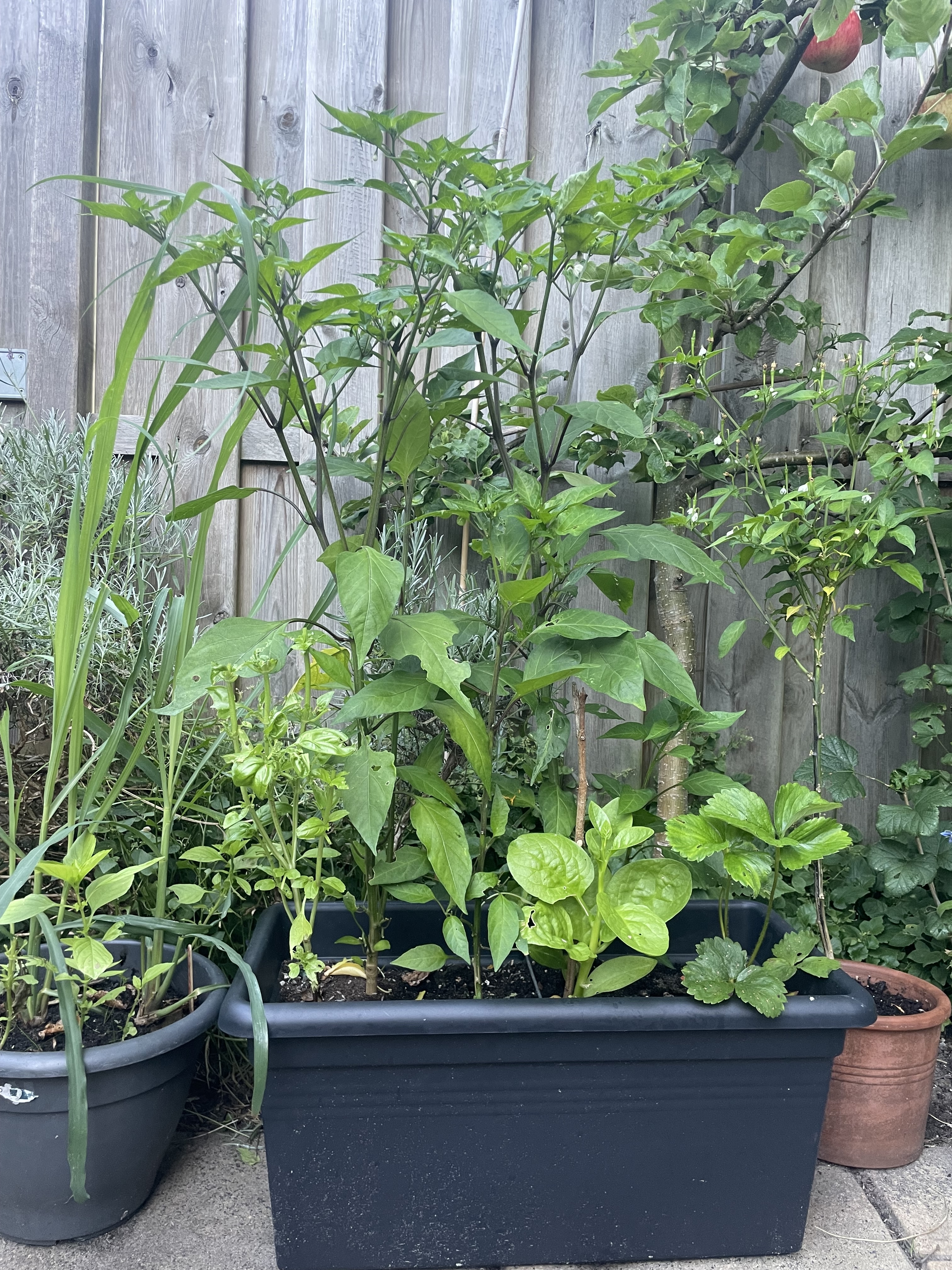
Some other better watering habits include:
- do it early in the morning
- pour around the plant’s base instead of on its leaves
- use collected rainwater, when available, for acid-loving plants such as blueberries
Yet, don’t be rigid with these “best practices.” Stay flexible according to your other life commitments and the weather. For example, when a plant looks withering in the hot midday sun (and its small pot has dried out), you should give it water immediately, even if the morning has long gone.
2. Feed Container Plants That Are Still Growing
By late summer, much of the nutrition in container compost has been used up. Plants that are still actively producing flowers, leaves, or fruit will usually benefit from continued feeding.
Continue feeding:
- tomatoes
- chillies
- cucumbers
- strawberries
- flowering annuals
- annual heat-loving leafy vegetables

A balanced liquid feed or a crop-specific fertiliser every week or two is usually enough.
Know When to Stop Feeding
Not every plant should continue receiving fertiliser.
As days begin to shorten, some plants naturally slow down and start preparing for autumn. Feeding them at this stage often encourages soft new growth that may not mature before cooler weather arrives.
Signs that a plant is naturally slowing down include:
- noticeably slower growth
- fewer or no new leaves
- flowering coming to an end
- fruit finishing its final flush
- leaves beginning to yellow naturally with age
Perennial herbs, shrubs, and trees generally need very little feeding by late summer. Allowing them to gradually slow down helps prepare them for winter dormancy.
If you are enjoying this post, you might also appreciate our FREE cheat sheet with 12 Tested Gardening Ideas for Small Spaces.
Provide your info for a link to the downloadable resource and be opted into our email list for the (very) occasional product promotion.


3. Take Semi-Ripe Cuttings to Grow New Plants for Free
August is one of the best months for taking semi-ripe cuttings. Stems are firm enough to handle but still young enough to root relatively easily.
This is one of the simplest ways to:
- expand your planting
- replace ageing plants
- share with friends, and
- all for free

Excellent plants for August cuttings include:
Herbs:
Flowering shrubs and vines:
- lavender
- hydrangea
- honeysuckle
- penstemon
- salvia
- hebe
- fuchsia
Choose healthy, non-flowering shoots where possible, remove the lower leaves, and place the cuttings into a free-draining compost mix. Detailed instructions to take cuttings are available here.

4. Sow Seeds for an Autumn Harvest
While summer crops are still producing, August also opens the door to another growing season.
Many fast-growing vegetables and herbs can still be sown for harvesting well into autumn.
Good choices include:
- rocket
- spinach
- mizuna
- pak choi
- lamb’s lettuce
- coriander
- dill
- radishes
If temperatures are particularly warm, providing a little afternoon shade during germination can improve success.
For small gardens, succession sowing is key to producing more within your spatial restrictions.
5. Make a Garden Outline Sketch for Next Year’s Improvements
One of the most valuable August jobs doesn’t involve planting at all. This is the month when your garden shows you exactly what works—and what doesn’t.

While everything is still growing, take a simple notebook and sketch the layout of your garden.
Mark things like:
- where vegetables performed well
- shady corners
- areas that dried out quickly
- successful companion plantings
- overcrowded beds
- empty spaces that could be planted better next year
Also note ideas such as:
- where another raised bed might fit
- places for additional climbers
- locations for fruit bushes
- opportunities to remove unnecessary paving
- seating areas that would benefit from more fragrance
You don’t need an artistic drawing—just a rough plan with notes.
By winter, it’s surprisingly easy to forget exactly how the garden looked in summer.
By spring, you might be in a state that you remember nothing but the greyish colours of the outside.
The simple sketch you make now in August will become an invaluable reference when planning improvements for next season.